
How do BPO companies implement client training?

How do BPO companies implement client training?
BPO companies implement client training by assessing the client’s needs, setting clear and measurable goals, and keeping communication open so both sides work toward the same outcomes.
In short, client training sets expectations before the real work starts. So the partnership runs smoothly from day one. Here is what strong client training covers:
- A close look at the client’s industry, goals, and challenges.
- Clear targets that both teams can measure.
- Regular, two-way updates on staff and processes.
In outsourcing, effective client training and clear expectations are crucial for success. So this article looks at why client training matters, what makes a program work, and the challenges teams face in remote work.
What is client training?
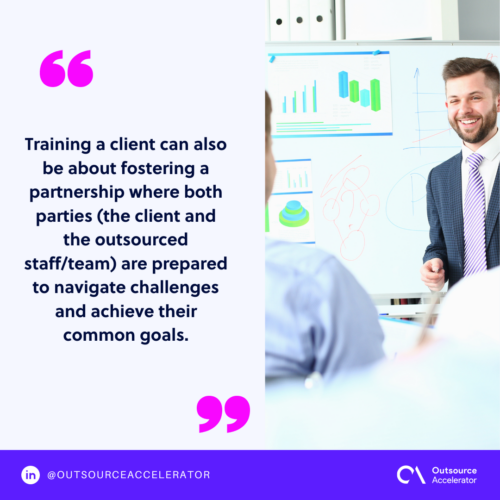
Client training is the backbone of Business Process Outsourcing (BPO) operations. It builds seamless collaboration and understanding between the provider and its clients. Everyone knows that outsourced staff go through rigorous training. However, did you know that some BPOs also train the client? This is where they sit down with the outsourcer to discuss goals, expectations, and limits. So training a client is also about building a partnership. As a result, both parties are ready to handle challenges and reach their shared goals.
Key components of effective client training programs
Effective client training programs share a few key parts. So here are some essential elements to consider.
Thorough assessment
First, BPOs run a careful assessment of the client’s needs. For example, they study the client’s industry, unique challenges, and specific goals. As a result, the plan fits the client from the start.
Clear and measurable goals
Next, clear and measurable goals matter for both BPOs and outsourced teams. So BPOs must make sure the outcomes align with the client’s expectations. In addition, shared targets keep everyone honest about progress.
Effective communication
Finally, good communication must happen every step of the way. So the provider shares updates on the client’s staff and processes. Meanwhile, the client shares concerns and expectations. As a result, small gaps get closed before they grow. Strong team engagement also keeps both sides invested.
Client training programs for outsourcers
In the 474th episode of The Outsource Accelerator Podcast, Dean Pascoe, the President of Boomering, shared how their company trains clients to handle BPO remote workers. For more on this topic, see this guide to training an offshore team.
Use monitoring software
Dean shared the value of a monitoring system for remote workers. “Whether they’re in the facility or at home, we’ve got monitoring software on each of the PCs.” However, monitoring must fit each client’s needs. “We go through each different program, what’s productive, what’s not, and understand what processes each person’s supposed to be going through.” So the right tools also support steady BPO productivity.
Foster a sense of community and connection
Boomering also makes sure clients see the value of community among remote workers. “[For] work-from-home employees, we’ve got all our nice programs where we’re trying to involve online games to try and have those, let’s say, water cooler moments and bring them into the bigger Boomering team. [We want to] make them feel like part of the family. We’ve got everything from two big events a year to monthly or quarterly team-building activities that we try and encourage each staff to go as well.” Further, Dean touched on the impact of remote work on attrition. “We can see it’s a lot shorter with work from home than it is in the office.” So a warm start matters, and a clear remote onboarding checklist helps new hires feel part of the team early.

Utilized different touch points with remote staff
When training clients, the Boomering President stresses the value of “having different touchpoints with staff at home to try to engage them well and truly.” “We give them an optimized system and the best experience to make a work-from-home employee the most successful they can be.” For example, Dean cited a real client who gained from strong remote support. “One of my biggest clients has grown in the last year from four staff to 39, and all of his staff are working from home.” He also noted that marketing teams often do better in the office, because they thrive on collaboration. In contrast, roles like bookkeeping may do well in a focused, work-centric setting. So managing a remote team well takes the right mix of tools and touchpoints. In the end, outsourcing is a two-way street. While remote workers are expected to perform at their best, clients must also provide the right training and support. As a result, BPO firms like Boomering serve not just as your provider but also as your guide in the new world of outsourcing.
Frequently asked questions about client training
Why do BPO companies train their clients?
Client training sets clear expectations before the work begins. So both sides agree on goals, limits, and how to measure success. As a result, the partnership runs with fewer surprises.
What happens if a client skips training?
Without training, goals and expectations often stay fuzzy. However, that leads to missed deadlines and frustration on both sides. So most strong BPOs treat client training as a must, not an extra.
How do BPOs train clients to manage remote staff?
They share monitoring tools, communication habits, and community-building ideas. For example, regular check-ins and team events keep remote workers engaged. So clients learn to lead at a distance.
How long does client training take?
It depends on the client’s size and the work involved. Still, most programs cover the basics in the first few weeks. Then updates continue as goals and processes change.
Does client training reduce staff turnover?
Yes, better-trained clients support their teams more effectively. As a result, remote workers feel valued and stay longer. So strong client training can lower attrition over time.






 Independent






