
What are chart abstraction services?

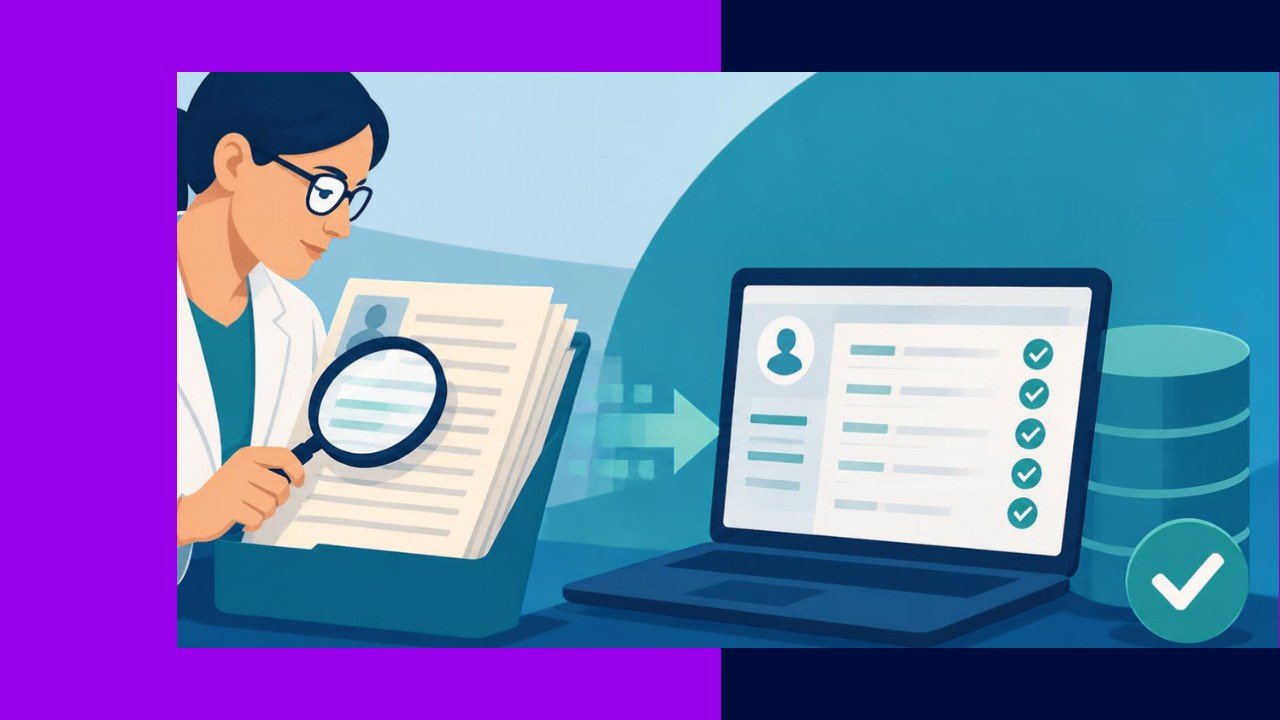
- Chart abstraction services pull set facts out of patient records and turn them into clean, sorted data for reporting and research.
- The work feeds registries, quality programs like HEDIS, official reporting, and clinical studies, so accuracy matters more than speed.
- Providers range from in-house nurse abstractors to specialist vendors, and strong quality checks separate a safe partner from a risky one.
Chart abstraction services are the quiet engine behind healthcare data. A trained abstractor reads a patient’s medical record. Then they pull out set facts: diagnoses, procedures, drugs, lab values, dates, and outcomes. That raw detail becomes data a computer can count and compare. Hospitals, health plans, research teams, and registries all lean on this work. Without it, most quality scores would have nothing solid to stand on.
The records are messy. One chart can hold doctor notes, scanned faxes, discharge summaries, and lab reports. They often come in different formats. The abstractor has to find the right value and record it the same way every time. It sounds simple, but it takes real judgment. Two abstractors reading the same note must reach the same answer. If they do not, the data loses its meaning.
What chart abstraction actually involves
At its core, abstraction is careful reading against a rulebook. Each project comes with a data dictionary. That guide defines every field. It says what counts as a qualifying diagnosis. It says which dates matter and how to handle missing facts. The abstractor works case by case. They find each element and enter it into a database or registry tool.
Abstraction is not the same as medical coding. Coders assign billing codes. Abstractors capture clinical facts for measurement and research. The two jobs overlap, but they answer different questions. Many teams run both side by side.
Where chart abstraction services are used
Demand for this work is broad. A few common use cases stand out.
Quality reporting and payment programs
Regulators still rely on abstracted data. The Centers for Medicare and Medicaid Services says its measures “collect data derived from various methods, including chart-abstraction, claims information, web-based entries, and surveys.” That line comes from its Hospital Outpatient Quality Reporting Program. Hospitals that miss these deadlines can face payment cuts. So accurate abstraction has real money at stake.
Clinical registries
Registries for stroke, heart care, cancer, and transplants depend on abstracted records. These databases track outcomes across thousands of patients. They only work when every site abstracts to the same standard.
HEDIS and health plan reporting
Health plans use chart review to back up their claims data for HEDIS measures. Sometimes a claim cannot prove a test or screening happened. Then an abstractor checks the record. This mix fills gaps that billing data alone would miss.
Research and clinical studies
Study teams abstract charts to build datasets for research. Clean, steady extraction lets them trust their findings later.
The typical workflow
Most projects follow a set path. First, the team defines the scope and the data dictionary. Next, abstractors train on that guide and practice on sample charts. Then real abstraction begins. It runs inside a secure system that logs every entry.
Quality checks run alongside the work, not just at the end. Supervisors re-abstract a share of cases. Then they compare answers. Finally, the checked data goes to the registry, the health plan, or the research team. Timing varies. A quality cycle may run monthly. A research pull might finish in weeks.
Accuracy and quality assurance
Accuracy is the whole point. So quality checks are built in. The most common one is inter-rater reliability. Two abstractors review the same chart on their own. Then their answers are compared. High agreement means the process is stable. Low agreement flags unclear rules or weak training.
Good providers also use blind re-abstraction, steady feedback, and clear paths for hard cases. Software helps too. Electronic quality measures pull data straight from the record. In the words of the eCQI Resource Center, they “reduce the burden of manual abstraction and reporting.” Even so, people still handle the fuzzy cases that software cannot judge.
Who provides chart abstraction
Staffing models differ. Some hospitals keep in-house nurse abstractors. These staff know local workflows well. Others hire specialist firms that abstract at scale for many clients. A growing number use offshore teams to manage cost and volume. That option is covered in this guide to clinical abstraction handled by teams overseas.
Each model has trade-offs. In-house teams offer control, but they cost more per chart. Outside partners bring extra capacity and firm process. They do need close oversight. Before you decide, it helps to weigh the pros and cons of sending this data work to an external partner. Whatever the model, the key factors stay the same. Look for proven accuracy, strong privacy safeguards, and abstractors who grasp the clinical detail.
Frequently asked questions
Do chart abstractors need clinical credentials?
It depends on the project. Registry and quality work often prefers nurses. Judgment matters there. Research abstraction sometimes uses trained non-clinical staff who work under a doctor’s review. The rule usually sits in the study plan or the measure guide. There is no single answer.
How is patient privacy protected during abstraction?
Abstraction runs under HIPAA, the US health privacy law. Offshore work also needs a business associate agreement, a signed privacy contract. Providers use encrypted access and limited logins. Many keep no data on local machines. Some route work through remote desktops, so records never leave the health system. Every user action is logged.
How much does chart abstraction cost?
Pricing is usually per chart or per hour. It shifts with complexity. A short screening measure costs far less than a full cancer case with many data points. Volume discounts are common. Rework is costly. So buyers should weigh a provider’s error rate, not just the price per chart.
Will AI replace manual chart abstraction?
Not fully, at least not yet. Software can scan records and flag likely values. That speeds the work. But messy notes, conflicting entries, and strict rules still need a human call. For now, the smart model is software plus skilled abstractors. It is not one instead of the other.






 Independent





