
5 reasons to invest in blockchain development outsourcing

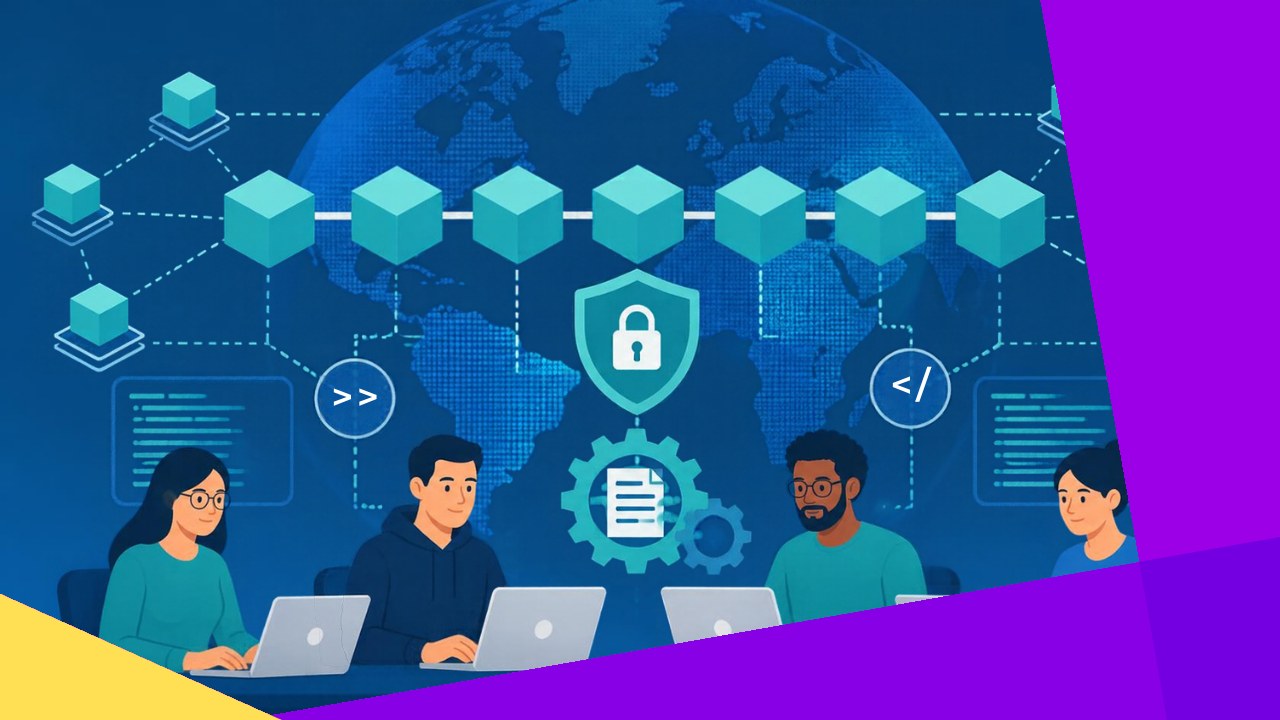
- Outsourcing gives you fast access to blockchain engineers who are hard to hire and expensive to keep in-house.
- A good partner cuts build costs, speeds up delivery, and brings security skills most teams lack.
- External teams also flex up or down as your project grows, so you pay for the capacity you actually use.
Blockchain is a shared digital record that many computers keep at once. Once an entry is written, it is very hard to change without everyone noticing. That makes it useful for payments, supply chains, digital ownership, and contracts that run on their own. The problem is building it. The skills are rare, and the work is unforgiving. This is why blockchain development outsourcing has become a practical first move for companies that want these systems without a long hiring cycle.
Outsourcing simply means hiring an outside team to build the software for you. For blockchain, that choice carries extra weight. A single coding slip in a smart contract can lock up funds or expose user data. So the question is not only “can we build this?” but “who already knows how?”
Here are five reasons the outsourcing route makes sense.
1. Access to scarce blockchain talent
Blockchain engineers are in short supply. Few developers know languages like Solidity, Rust, or the quirks of a specific chain. Demand keeps climbing while the talent pool stays thin. The wider software field shows the pressure: the U.S. Bureau of Labor Statistics projects that employment of software developers will grow 10 percent from 2025 to 2035, “much faster than the average for all occupations.” Blockchain roles sit at the sharpest end of that demand.
An outsourcing partner has already gathered these people. Instead of fighting a nine-month hiring race, you plug into a team that has shipped similar systems before. That access alone is often the deciding factor for a first project.
2. Lower and more predictable costs
Hiring a senior blockchain developer in a major tech hub is costly. On top of salary, you carry recruiting fees, benefits, tools, and training. If the project is short, that investment is hard to justify.
Outsourcing turns a fixed cost into a flexible one. You pay for the work, not the overhead. Many providers operate in regions with lower labor costs, which stretches your budget further without lowering the quality of the code. Pricing is usually agreed upfront, so finance teams can plan around a clear number. The same logic drives a lot of handing software work to an external team, and blockchain is no exception.
3. Faster speed to market
Blockchain projects move quickly, and so do their rivals. If a feature takes a year to build, the market may have moved on by launch.
A seasoned team starts producing on day one. They already have the tools, the testing setup, and the patterns that work. They have seen the common traps, so they do not repeat them. That shaves weeks or months off the timeline.
Outsourcing also lets you run work in parallel. While one group builds the core system, another can handle the user interface or testing. For a startup chasing a funding round or a launch date, that pace can decide whether the product ships on time.
4. Specialized security expertise
Security is where blockchain punishes mistakes hardest. Code often controls real money, and once it is live, it is very hard to patch. NIST describes blockchain as a “shared, tamper-evident, and tamper-resistant digital ledger,” which is exactly why flawed code is so dangerous: the system is built to resist change, including your fix. You can read more in the NIST overview of blockchain technology.
Specialized partners bring security into the work from the start. They write contracts carefully, test for known attack types, and run formal audits before anything goes live. Many keep dedicated reviewers who do nothing but hunt for weak spots.
Most in-house teams simply have not faced these threats before. An outside expert who has audited dozens of contracts spots problems a newcomer would miss. On a system holding user funds, that experience is worth paying for.
5. Scalability that matches your needs
Project demand is rarely steady. Early on, you may need a small team to prove an idea. After launch, you might need many more hands to add features and handle growth. Later, you may only need light support.
An in-house team cannot shift that fast. Hiring takes months, and letting people go is painful and slow. Outsourcing removes that friction. You scale the team up for a busy phase and trim it back when things settle. You pay for the capacity you use, nothing more.
This flexibility also lowers risk. If a project changes direction, you adjust the team instead of carrying staff you no longer need. For a field that shifts as fast as blockchain, that ability to adapt is a real advantage.
Frequently asked questions
How do I protect my idea when outsourcing a blockchain project?
Sign a clear non-disclosure agreement before sharing details, and confirm in writing that your company owns all code and intellectual property produced. Share access to sensitive systems in stages rather than all at once, and keep private keys under your own control, never the vendor’s.
What should I check before hiring a blockchain outsourcing partner?
Ask to see live projects on the same chain you plan to use, not just demos. Request a recent third-party security audit report as proof of their standards. Then run a small paid pilot, such as a single smart contract, to test code quality and communication before committing to the full build.
Does outsourcing mean I lose control of the project?
No, if you set it up well. Keep a product owner on your side who approves each stage and holds the roadmap. Agree on short check-in cycles and shared access to the code repository from day one. Control comes from clear ownership and visibility, not from where the developers sit.
Is blockchain outsourcing only for cryptocurrency companies?
Not at all. Banks use it to speed up settlements, retailers track goods across supply chains, and healthcare groups secure patient records. Any business that needs a tamper-resistant shared record can use the technology, whether or not a coin is involved.






 Independent





