
What AI orchestration means for multi-vendor outsourcing

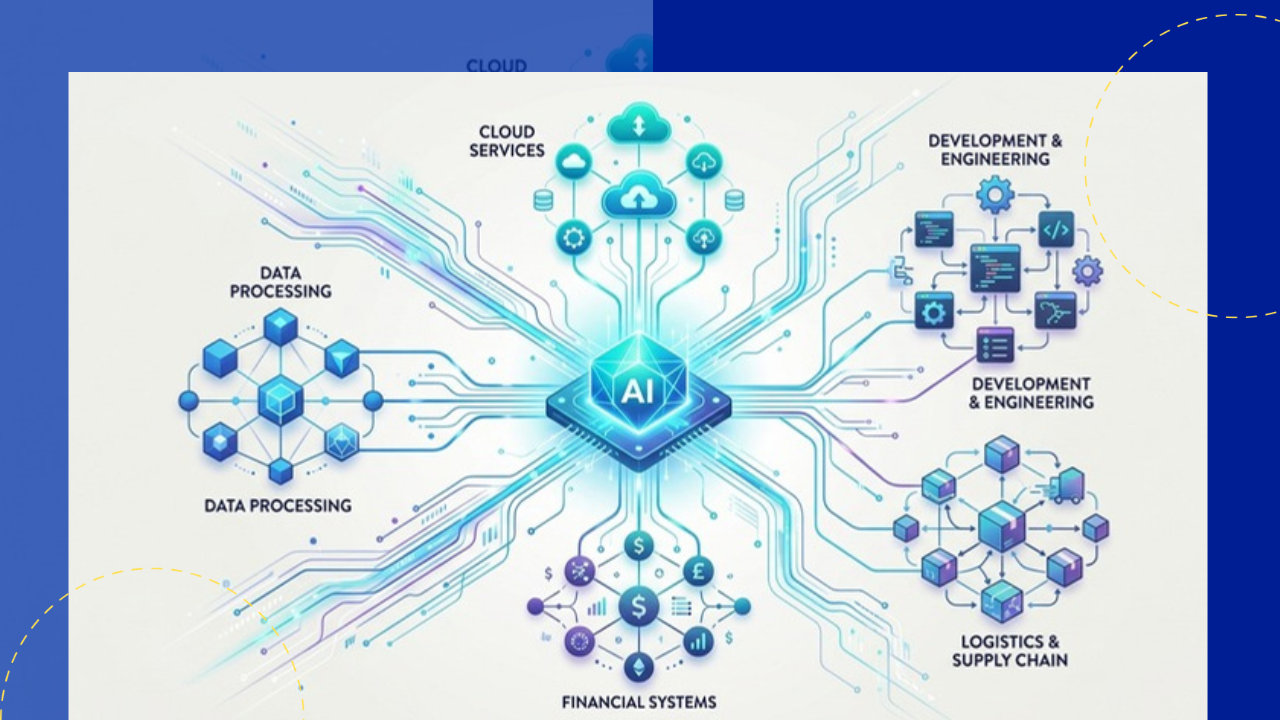
- AI orchestration coordinates multiple AI agents, tools, and data flows so they behave like one system rather than separate parts.
- In multi-vendor outsourcing, it links the work of several providers and platforms under a shared set of rules.
- The payoff is faster handoffs and cleaner data; the exposure is weaker accountability, wider security surface, and governance gaps.
- Buyers and providers both need clear ownership, logging, and human oversight before scaling it.
When a company hires several outsourcing partners, work rarely moves in a straight line. Each vendor runs its own tools, teams, and records. AI orchestration outsourcing is the practice of coordinating those moving parts so the combined operation acts like a single system instead of a stack of disconnected contracts.
This guide explains what AI orchestration means, how it coordinates agents and data across vendors, and why it matters once you use more than one provider. It is written for buyers weighing the approach and for BPO firms that want to deliver it well.
The short version: orchestration is the conductor, not the musician.
What AI orchestration means
AI orchestration is the coordination layer that decides which agent or tool runs, when it runs, on what data, and with what permission. It sits above individual applications and directs traffic between them.
Inside one company, that layer might connect a chatbot, a data pipeline, and a scheduling tool. Across an outsourced operation, the same idea stretches over several organizations at once, each contributing part of the workflow.
Orchestration versus a single AI tool
A lone AI tool completes one task and stops. Orchestration strings many tasks, agents, and systems into an end-to-end process, passing the output of one step into the next and keeping track of where things stand.
Why it matters in multi-vendor outsourcing
Few buyers rely on a single supplier. A firm might use one partner for customer support, another for finance, and a platform vendor for data, an approach often called multisourcing.
Every added relationship raises coordination cost. Orchestration eases that friction by giving each vendor’s agents a shared set of instructions and a common path for data, so a task can cross company lines without a manual reset at every border.
How it coordinates workflows, agents, and data across vendors
Picture an incoming order. One vendor’s agent validates it, a second processes payment, and a third arranges fulfillment. The orchestration layer routes the task between them, tracks its state, and keeps one authoritative record.
That pattern is spreading. According to recent survey findings on enterprise AI adoption, many organizations are “connecting systems, data, and applications into a governed layer that can safely power AI agents at scale” before they expand automation across the business.
Benefits for buyers and providers
The gains land on both sides of the contract. Buyers get fewer manual handoffs, shorter cycle times, and reporting that reconciles across suppliers. Providers get a way to stand out by plugging cleanly into a client’s wider operation.
Strong coordination also strengthens vendor relationship management, because shared visibility replaces the finger-pointing that tends to follow a missed handoff.
| Aspect | Manual multi-vendor model | AI-orchestrated model |
|---|---|---|
| Task handoffs | Email, tickets, and rekeying between teams | Automated routing between agents |
| Data consistency | Separate records per vendor | Shared, reconciled record |
| Visibility | Partial, gathered after the fact | Real-time across the chain |
| Scaling volume | Add headcount at each vendor | Add capacity within the workflow |
| Accountability | Traceable but slow to reconstruct | Clear only if every action is logged |
Risks and governance
Coordination in one layer cuts both ways. Because decisions concentrate there, a single fault can spread quickly. The security surface widens as agents exchange data across company boundaries, and accountability blurs when an automated chain touches three vendors at once.
Governance is the answer, not a bolt-on. The voluntary NIST AI Risk Management Framework is designed to “better manage risks to individuals, organizations, and society associated with artificial intelligence,” and it gives multi-vendor programs a common vocabulary for trust and control.
In practice, that means naming an owner for the orchestration layer, logging every agent action, and keeping a human in the loop for high-stakes decisions. Hosting these standards inside a center of excellence keeps them consistent as vendors join or leave.
Frequently asked questions
Buyers and providers tend to ask the same questions when they first meet this model. The answers below cover the essentials.
What is AI orchestration in outsourcing?
It is a coordination layer that directs AI agents, tools, and data across one or more vendors so a whole workflow runs end to end instead of stopping at each supplier’s edge.
How is it different from ordinary automation?
Automation handles a single repeatable task. Orchestration sequences many tasks and agents, decides the order, and manages the data that flows between them.
Do I need one vendor to run the orchestration?
No. The layer can be owned by the buyer, by a lead provider, or by a neutral platform. What matters is that ownership and permissions are defined before agents start acting.
What are the main risks?
The three to watch are concentrated failure, a broader security surface, and unclear accountability. Logging, access limits, and human review of critical steps keep each one in check.
Key takeaways
AI orchestration turns a set of separate vendor relationships into a coordinated operation, which is a meaningful shift for anyone managing more than one provider.
- Orchestration coordinates agents, tools, and data; it does not replace the underlying work.
- Its value grows with vendor count, because coordination cost is what it removes.
- Benefits and risks scale together, so governance has to be built in from the start.
- Clear ownership, complete logging, and human oversight are the difference between a resilient model and a fragile one.






 Independent





