
Performance review questions employees should know

What performance review questions should employees know?
Employees should know forward-looking performance review questions about career growth, extra projects, company goals, and how their work supports the business, not just questions about strengths and weaknesses.
- A performance review is a formal check of an employee’s work against set goals and metrics.
- The best questions show loyalty and real interest in the company’s future.
- What you do after the review matters as much as the review itself.
Performance reviews can feel daunting yet rewarding. First, key wins and progress get celebrated. Meanwhile, lapses get fleshed out so a concrete plan can follow.
However one views the process, it is a vital one. It confirms that the company is happy with its people’s work. At the same time, it lets employers thank exemplary staff with bonuses and incentives. Teams that fall behind get useful feedback and best practices to improve.
Many see a performance review as a periodic chore. Only a few spot the other side of it: a chance to grow and get noticed by their leads. In this article, we cover the openings to explore during the review cycle. Through the most common questions, employees can learn how to seize that chance.
What is a performance review?
A performance review is a formal process where managers assess their staff against a set of performance metrics. These metrics flow from the nature of each role, plus the values and goals of the company.
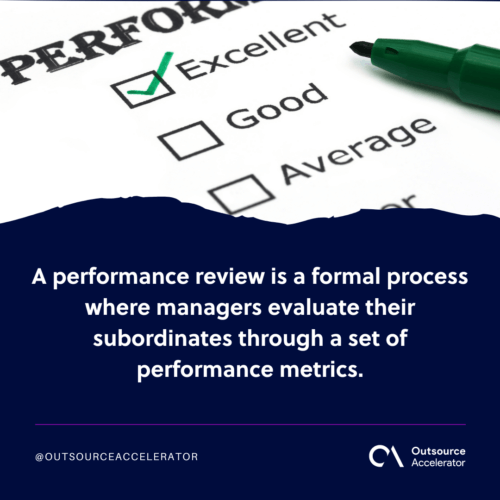
Normally, HR and department leads prepare a questionnaire for the review. The questions cover how well someone does the job. They also cover how the company’s values show up in that work.
Generally, employees rate themselves from 1 to 5, with 5 as the highest. A set formula then turns those ratings into a score. As a result, the number reflects each person’s contribution to the company. A clear performance management system keeps that scoring fair and consistent.
How often is a performance review conducted?
How often reviews happen depends on the industry and the type of business. Some firms run annual performance reviews. Others, like large multinationals, run quarterly ones to keep staff aligned with their goals.
Meanwhile, managers can quickly read the overall health of the company. So they can add strategies to improve a weak spot. They can also realign goals when they spot a new opportunity mid-year. This is where good HR analytics turn review data into clear next steps.
Who is involved in the performance review process?
Of course, HR is the main actor in performance management. First, it starts the process. It also builds the analysis in the final steps.
Alongside HR are the department heads, managers, team leaders, and supervisors. They hold leadership roles in the company. So they assess their juniors, their peers, the company, and themselves.
The process is not one-sided. Employees get to voice their views, highlight their wins, and raise ideas for their leads and the firm. In this way, the review becomes a dynamic, team-wide affair. It draws out best practices and also tackles work that falls short.
Performance review questions to know
Certainly, there are many strong questions for a review. They range from strengths and weaknesses to areas for growth and setting expectations. However, most of these are common and repetitive.
Employees will grow in their careers; that much is a given. Employers like that drive. Still, loyalty makes a worker more desirable and more likely to earn a promotion or extra benefits.
So during the review process, questions about your part in the company’s future play better. Below are some questions that signal loyalty:
- Is there anything I can do to support my teammates more effectively?
- Does the company offer career advancement opportunities?
- Are there any additional projects or tasks I can work on?
- Which business goals are currently being pursued?
- In what ways do we plan to overcome the biggest challenge facing the company?
- How does the business expect to fare in the next year?
These questions do more than fill the silence. They also show initiative, which often weighs into an employee promotion decision later on.
What to do after a performance review?
Constructive feedback can sting at times. Many people struggle to assess their own work and growth. So the value of the feedback comes down to how open and receptive they are.
Ultimately, the key is a clear sense of your strengths, weaknesses, and skills. With that awareness, you can absorb the feedback. Then you can turn it into the behaviors employers want to see.
On the other hand, you may have cause to celebrate. Often, a review is the catalyst for a raise or extra benefits. Whether across the board or for one person, it is a good moment to lift loyalty and satisfaction. A fair performance bonus can make that recognition concrete.
For managers and leaders, the review is a mirror too. It lets them check their own leadership brand. Gaps can then improve, guided by the suggestions staff raise. Strong reviews also feed broader employee engagement across the team. Finally, it is a good time to reassess the goals and direction of the firm, so small tweaks can keep it growing.
Frequently asked questions about performance review questions
Here are the questions employees raise most often about the review process.
What is the best question to ask in a performance review?
Specifically, ask how you can add more value to the team’s goals. This shows you think past your own tasks. It also signals that you want to grow with the company.
How often should performance reviews happen?
Many firms still run one review a year. Others hold quarterly check-ins to keep staff aligned. In general, shorter cycles catch problems sooner.
What should you do after a bad performance review?
First, stay calm and ask for clear examples. Then turn the feedback into a short action plan. Regular follow-ups show real effort to improve.
Can a performance review lead to a promotion?
Yes. A strong review often opens the door to a raise or a new role. It also gives managers a clear record to back the decision.
Who takes part in a performance review?
Generally, HR leads the process. Managers, team leaders, and the employee all take part. As a result, the review becomes a two-way talk, not a one-sided verdict.






 Independent






