
11 toxic workplace behaviors and how you can address them


How do you spot and stop toxic workplace behaviors?
Toxic workplace behaviors are harmful habits, like gossip, aggression, and micromanagement, that hurt morale and must be spotted early and addressed with clear action.
- They lead to stress, burnout, and high staff turnover.
- Common signs include gossip, procrastination, and bullying.
- Clear policies and open talk help you fix them fast.
There is no such thing as a perfect work culture. Still, as a leader, you want a place where people work well and in peace.
Sadly, bad workplaces are common today. In a study of 14,000 employees, the Harvard Business Review found that rude behavior made over half of them work poorly or lose commitment.
Toxic behaviors lead to a broken workplace. If left alone, they can even bring down your whole organization.
So, you should learn to spot toxic workplace behaviors early. Then you can plan clear steps to deal with them.
In this article, we cover the top 11 toxic workplace behaviors you should not ignore. In addition, we share simple tips to stop them from hurting your team.
How can you spot toxic workplace behaviors?
Toxic workplace behaviors come from staff or leaders and harm the wider work culture. If you do not address them, they lead to:
- Stress
- High turnover rate
- Burnout
- Low morale
- Low productivity
- Poor work-life balance
Given these serious effects, you must watch how your staff act over time. As a result, you can stop small issues before they spread.
11 toxic workplace behaviors and how you can take action
Here are 11 toxic workplace behaviors you must watch out for:
1. Office gossiping
Water cooler talk is normal in every office environment. In most cases, it helps staff destress and build bonds.
However, it turns toxic when a coworker becomes the target. After all, rumors should never hurt someone’s feelings or good name.
Too much negative gossip drags down output. As a result, staff miss deadlines and lose focus. It also breeds tension, mistrust, and distraction.
What you can do:
You cannot stop small talk fully. Instead, give staff time to chat during breaks.
You can also plan after-work meetups. So, people relax and talk freely after a hard day.
2. Procrastination
Procrastination is a bad habit that can turn toxic. In short, these staff delay tasks rather than do them.
They often scroll social media, chat too much, or shop online. As a result, they add little to the team’s progress.
Open talk, fair conflict handling, and respect all help here. Because of this, the workplace stays more supportive for everyone.
What you can do:
To tackle this, use staff management tools to track daily output. So, you can see where time goes each day.
These tools also show time spent on tasks versus idle apps. If someone lags, help them manage time to improve their productivity.
3. Aggressive behavior
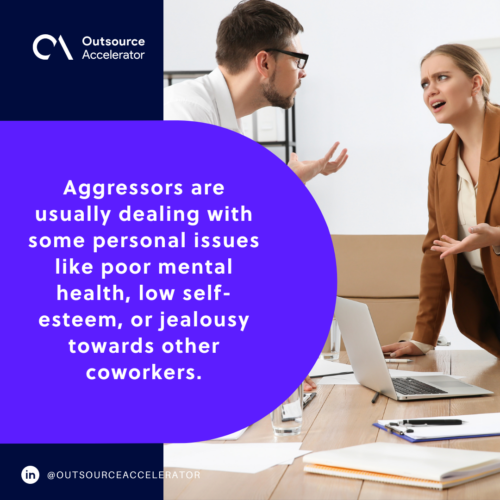
Aggressive behavior can be verbal or physical. It happens when staff bully or attack coworkers.
It shows up in two forms:
- Passive aggression is when staff show anger in indirect ways.
- Active aggression is when staff attack others, in words or actions.
Aggressors often deal with private struggles. For example, poor mental health, low self-esteem, or envy can be the cause.
What you can do:
You can lower aggression at work by:
- Screening candidates with behavior tests before you hire them.
- Offering anger management training to help staff handle temper issues.
- Setting clear rules against aggression and bullying.
4. Narcissism
Narcissism at work is when staff always seek to look best. They do not care if it costs the team.
They often demotivate others and meddle in their tasks. A toxic narcissist usually shows these traits:
- A constant need for praise and attention.
- Using teammates for their own gain.
- A lack of empathy.
Narcissists also steal credit. For example, they present others’ work as their own.
What you can do:
First, talk with the person directly. As a result, you can hear their side and weigh it fairly.
Then point out their blind spots. Encourage them to work collaboratively with others, and remind them it is fine to ask for help.
5. Disorderliness
Disorderliness causes many delays, especially near deadlines. Staff with poor organization often fall behind and hold up the team.
This slows everyone’s progress, above all on client projects. Because of this, it fuels a negative culture and even bullying.
What you can do:
This behavior takes time to improve. So, help staff build better work and time habits by:
- Splitting tasks into small subtasks.
- Showing them the perks of staying organized.
- Making sure they follow a clear work schedule.
Show support and patience. As a result, these small steps push them to stay organized.

6. Absenteeism
Frequent absenteeism can become a habit. In some cases, it does not involve paid or approved leave.
This behavior hurts both staff and managers. For one, the absent worker loses pay for the missed day.
Meanwhile, others must cover the extra load. As a result, stress builds across the team.
High absenteeism can also point to a toxic culture. In fact, it often signals stress and burnout.
What you can do:
You can run surveys to learn why absenteeism is high. Then plan clear steps to fix it.
You can also allow flexible hours. So, staff can plan their days and enjoy a better work-life balance.
7. Passiveness
A passive worker is often the “yes employee.” Out of these behaviors, this one is hard to spot.
Passive staff can quietly enable a toxic culture. However, they rarely share input, raise concerns, or ask questions.
They also give little effort and stay detached. So, they seldom grow or push work forward.
What you can do:
You can help passive staff by:
- Encouraging them to speak up in meetings.
- Hearing their concerns with empathy so they open up.
- Acting as a leader, not just a boss who gives orders.
8. Negative thinking
Pessimism can ruin the office mood. Negative staff often complain, stay unhappy, and dwell on the worst.
This kind of thinking spreads fast. As a result, it drags down productivity and team morale.
What you can do:
Teach pessimistic staff to see the good in hard moments. For example, show them how to treat feedback as useful advice.
Help them focus on growth instead of setbacks. In addition, praise small wins to shift their mindset.

9. Micromanagement
Micromanagement is never a healthy habit. It pushes staff to fear you or resent you as a leader.
As a result, they hold back ideas and avoid working closely with you. Meanwhile, trust breaks down and creativity fades.
What you can do:
Learn to trust your staff. Also, watch for other leaders who micromanage their teams.
Act on this early. Otherwise, you risk losing your most valued people.
10. Always making excuses
The excuse-maker is much like the procrastinator. Both want to dodge responsibility.
An excuse-maker often signals a toxic culture. For example, they shift blame and avoid accountability.
Still, there is a key difference. Procrastinators finish tasks late, while excuse-makers stay unreliable.
What you can do:
To handle excuse-makers, you can:
- Talk to them directly about their behavior.
- Warn them about poor performance.
- Have them submit weekly reports.
On top of this, hold them accountable for every task.
11. Unwelcome sexual behavior
Sexual harassment can happen to anyone at work. It may take the form of remarks, unwanted advances, or requests for favors.
What you can do:
Here is how to handle this serious behavior:
- Set a zero-tolerance policy on sexual harassment.
- Treat every complaint as a top priority.
- Assign trained HR staff to handle these concerns.
Take note that firing the harasser is not always the only step. Instead, follow a clear and fair process every time.
Final thoughts on toxic workplace behavior
Toxic workplace behavior has a wide reach. In fact, it drives turnover, mental stress, and poor culture.
These habits do not just hurt one person. Over time, they disrupt the whole team.
So, managers and coworkers must work together to address them. As a result, the workplace grows healthier for all.
If you ignore these behaviors, bad culture takes hold. Still, strong culture drives engagement and a positive mood.
Use our tips to keep these toxic workplace behaviors from harming your team.
Frequently asked questions about toxic workplace behaviors
What are the most common toxic workplace behaviors?
Common ones include gossip, procrastination, and aggression. In addition, micromanagement and constant excuses show up often.
How do toxic workplace behaviors affect a business?
They lower morale, trust, and output. Over time, they raise stress and push good people to quit.
How can leaders address toxic workplace behaviors?
First, spot the behavior early. Next, talk to the person directly. Finally, set clear policies and follow through.
Can toxic workplace behaviors be prevented?
Yes, in many cases. For example, clear rules, open talk, and respect help a lot. In addition, good hiring screens out risk.
Why is it important to act on toxic behaviors fast?
Because these habits spread quickly. As a result, one issue can harm the whole team if left alone.
Key takeaways
- Toxic workplace behaviors quietly harm morale, trust, and output.
- The 11 types include gossip, aggression, narcissism, and micromanagement.
- Spot them through turnover, low morale, and missed deadlines.
- Use clear policies, open talk, and direct feedback to address them.
- Act fast, since these behaviors spread across the whole team.






 Independent





