
What are hybrid-first workplaces?

At a glance
- A hybrid-first workplace treats remote work as the default and the office as an intentional, optional choice.
- It differs from office-first (office as the norm) and from plain hybrid, which splits time without naming a default.
- Hybrid-first is about location, while digital-first is about tools, so a company can be one, both, or neither.
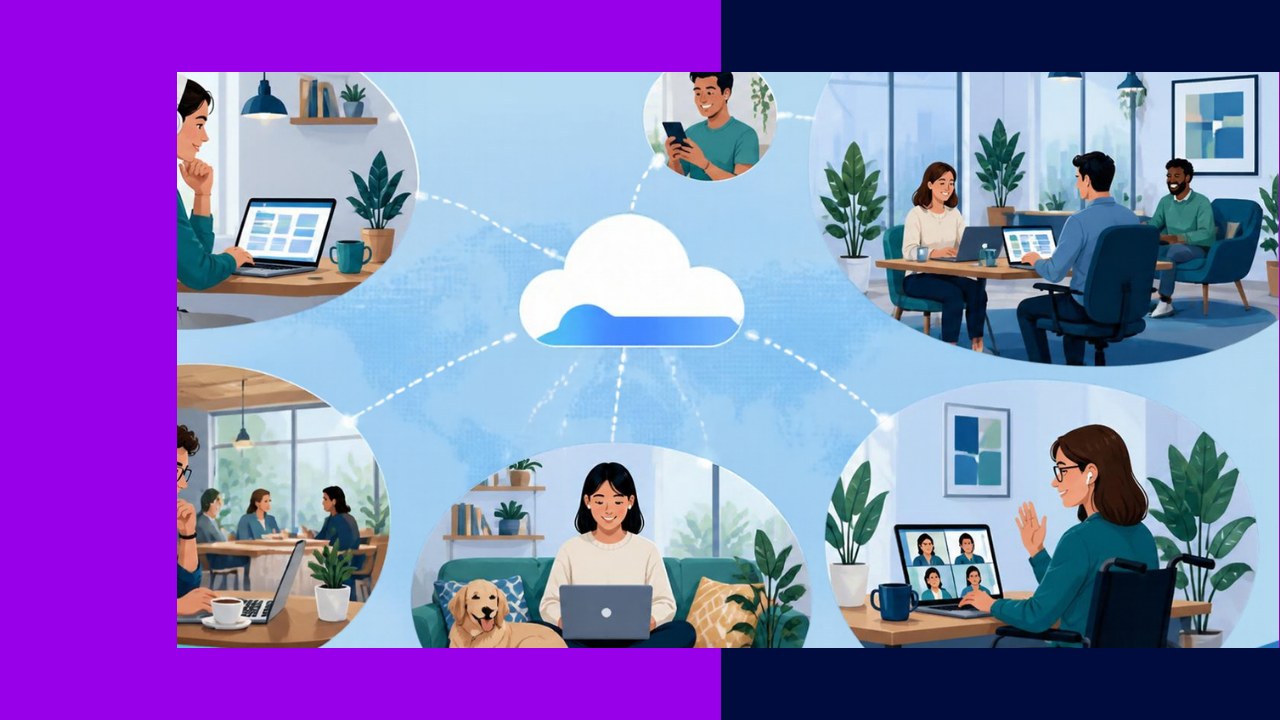
Many companies now say they are “hybrid,” but the word hides big differences. Some expect staff in most days. Others barely keep a desk at all. Hybrid-first workplaces sit toward the flexible end, because they make remote work the starting point and treat office time as a deliberate decision.
That small shift in default changes almost everything else, from how meetings run to how trust is built. This article explains what hybrid-first means, how it differs from related models, and what you gain and give up.
What is a hybrid-first workplace?
A hybrid-first workplace is one where remote work is the baseline and the office is used on purpose, for specific reasons. People do not need permission to work from home. Instead, they choose to come in when there is a clear benefit, such as team planning, onboarding, or client visits.
The office still exists, so this is not fully remote. The difference is the default. In a hybrid-first setup, “where do I work today?” has a built-in answer: wherever you are most effective, usually home, unless a task calls for the office.
This matters because defaults shape behavior. When remote is the norm, processes get designed for distance first. Documentation and flexible schedules become standard rather than nice extras.
Defining characteristics of hybrid-first
A few traits separate a true hybrid-first workplace from a company that simply allows some remote days.
Remote as the default
Staff are trusted to work from anywhere suitable. The office is one option among several, not the assumed home base. Attendance is tied to purpose, not to habit or monitoring.
Flexibility by design
Schedules often flex, too. Many hybrid-first teams let people choose their hours within reason, so output matters more than visible desk time. According to the U.S. Bureau of Labor Statistics, about 34 percent of wage and salary workers “worked at home at least occasionally,” which shows how normal flexible location has become.
Intentional office use
The office is reframed as a tool for connection, not a container for work. Companies book it for workshops, social events, and moments that benefit from being face to face. The rest of the week runs remotely.
How hybrid-first differs from office-first and plain hybrid
The clearest way to understand hybrid-first is to compare it with its neighbors. All three mix office and remote work, yet they set very different defaults.
| Model | Default location | Role of the office |
|---|---|---|
| Office-first | The office, most days | The primary place of work; remote is the exception |
| Plain hybrid | Undefined; a split with no stated default | Shared roughly with home, often by fixed days |
| Hybrid-first | Remote, by default | Optional and purposeful; used for specific reasons |
Office-first workplaces still treat the building as the center. People are expected in, and working from home needs a reason. Plain hybrid is vaguer. It usually means a mix, such as three days in and two at home, but it rarely says which setting wins.
Hybrid-first removes that ambiguity. Remote is the answer unless there is a strong case to gather. Because the default is explicit, teams argue less about attendance and more about outcomes.
Hybrid-first is not the same as digital-first
People often blur hybrid-first with digital-first, but they answer different questions. Hybrid-first is about location. Digital-first is about tools and process.
A model where online tools and written records come first can exist in any office setup. A digital-first company defaults to shared documents, chat, and recorded decisions rather than hallway talk, even if everyone sits in one room.
The two often travel together, since remote-by-default teams need strong digital habits. Still, they are not identical. A company can be hybrid-first yet messy with its tools, or office-first yet highly digital.
Culture in a hybrid-first workplace
Culture shifts when presence stops being the proof of commitment. Managers cannot rely on seeing people, so they judge results instead. That tends to reward clear goals, written updates, and honest feedback.
Trust becomes the core currency. Teams agree on response norms, meeting etiquette, and how decisions get recorded. Inclusion also needs care, because remote staff can feel sidelined if office attendees dominate. Gallup warns that “when an employee’s location preference doesn’t match their current work location, burnout rises while engagement drops.” Matching the model to real preferences is therefore part of the culture work, not an afterthought.
Benefits and trade-offs
Hybrid-first appeals for good reasons. It widens the hiring pool beyond one city. It cuts commuting and can lower office costs. It also tends to boost autonomy, which many workers value highly. Preference data backs this up, since Gallup reports that “61% of remote-capable employees prefer hybrid.”
The trade-offs are real, though. Spontaneous collaboration is harder to engineer. New hires may take longer to feel connected. Keeping culture consistent across home and office takes deliberate effort.
None of these problems are fatal. They simply mean hybrid-first is a design choice, not a free lunch. Companies that name the default clearly, then invest in communication, tend to get the upside without the drift.
Frequently asked questions
Is hybrid-first the same as remote-first?
No, though they are close. Remote-first usually means no central office at all, with gatherings arranged occasionally in rented space. Hybrid-first keeps a standing office that staff can use whenever they choose. The default is remote in both, but hybrid-first retains a permanent physical home.
How many office days does hybrid-first require?
There is no fixed number, which is the point. Office time is tied to purpose rather than a weekly quota. Some people visit weekly for a team day, while others come in only for quarterly planning. The model measures value, not days logged.
Does hybrid-first work for every role?
Not fully. Roles needing physical presence, such as lab work or hands-on support, cannot default to remote. Many firms run hybrid-first for knowledge roles while using fixed on-site schedules for jobs that must be in person.
What size of company suits a hybrid-first model?
Both small and large firms use it. Startups often adopt it early to hire widely and save on space. Larger companies tend to phase it in by department, since legacy office habits take time to unwind. Readiness depends more on management maturity than on headcount.






 Independent






