
Data security risks in offshore outsourcing: the pros and cons

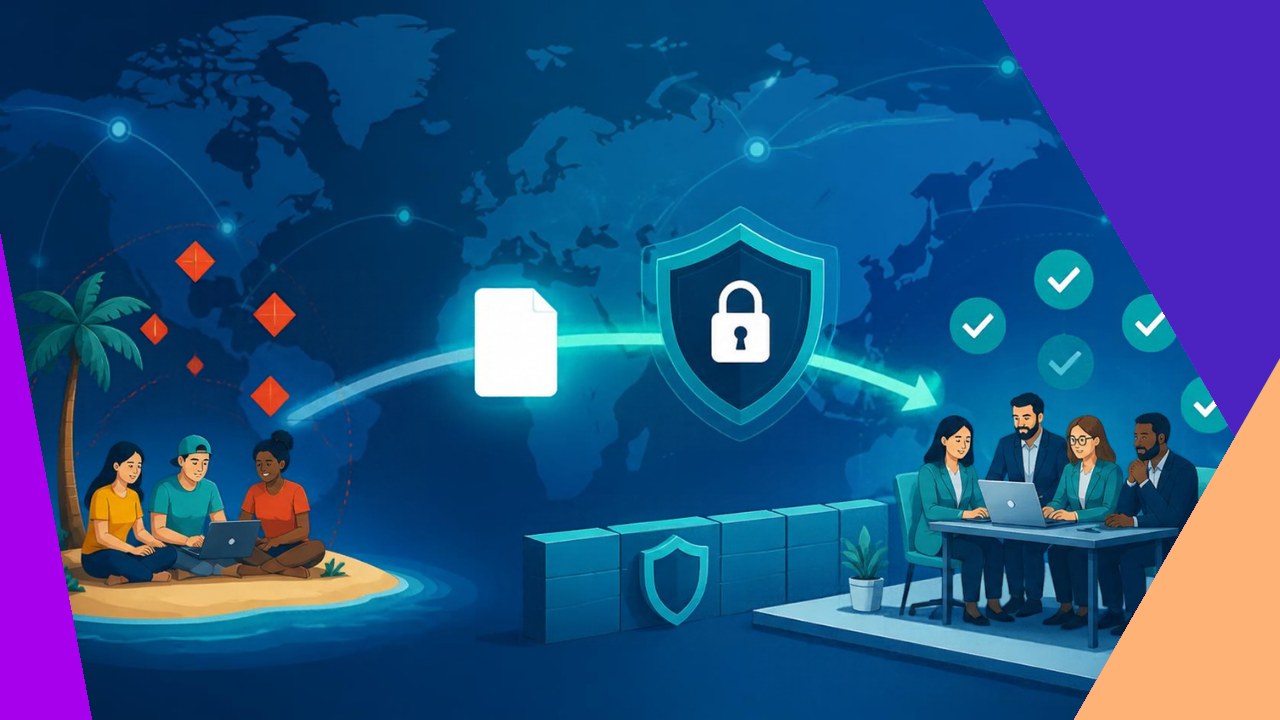
- Offshore outsourcing can lower costs and widen your talent pool, but it also spreads your sensitive data across new people, systems, and legal borders.
- The main risks are broader data access, unfamiliar jurisdictions, compliance gaps, insider threats, and weaker links in the vendor’s own supply chain.
- Most of these risks are manageable with strong contracts, least-privilege access, audits, and a partner who treats security as seriously as you do.
Handing your customer records, financial files, or source code to a team halfway across the world sounds risky, and in some ways it is. The data security risks in offshore outsourcing are real, yet they rarely cancel out the benefits on their own. The smarter question is how to weigh the trade-offs and then close the gaps you can control.
This article looks at both sides honestly. We cover what can go wrong when data leaves your building, why the upside still draws so many companies offshore, and how to tilt the balance in your favor. For the general playbook, our guide to protecting sensitive information with any provider pairs well with the offshore-specific view here.
Why companies accept the risk
Offshore outsourcing spreads fast for good reasons. Labor costs often fall by half or more, which frees budget for growth. You also reach skilled engineers, analysts, and support staff who may be scarce or expensive at home.
Coverage improves too. A partner in another time zone can watch systems while your office sleeps, so incidents get caught sooner. Many offshore providers also hold certifications their clients could not easily build alone. In short, the model offers scale, speed, and specialist skill.
Where the real data risks live
The benefits come with exposure. When data crosses borders, your attack surface grows and your direct control shrinks. These five risk areas deserve the most attention.
1. Broader data access
More people now touch your data, often from shared offices or home networks. Each new account is another door. Without tight access rules, a single compromised login can expose far more than it should.
2. Unfamiliar jurisdictions
Your data now sits under another country’s laws. Local authorities may demand access, and courts you cannot reach may claim it. Rules on where regulated data can travel also vary widely, so the legal picture gets complicated quickly.
3. Compliance gaps
Regulations like GDPR, HIPAA, and PCI DSS still apply to you, even when a third party does the work. Transferring personal data abroad triggers extra duties. The EU, for example, requires safeguards so that “the protection travels with the data,” as the European Commission’s rules on international transfers put it.
4. Insider threats
Distance makes oversight harder. A rogue employee, or simply a careless one, can copy files or mishandle credentials without you noticing right away. Background checks and monitoring standards may differ from what you expect at home.
5. Vendor supply chain weakness
Your provider relies on its own subcontractors and tools. Any one of them can become the weak point. As CISA warns in its guidance on supply chain security, “a supply chain is only as strong as its weakest link,” and offshore chains often have more links to track.
Weighing the trade-offs
No single factor decides the question. Instead, line up the gains against the exposure for your specific data. A table helps make the comparison concrete.
| Benefit | Matching risk |
|---|---|
| Lower cost and faster scaling | More hands on sensitive data |
| Access to specialist talent | Varying local security standards |
| Round-the-clock coverage | Harder day-to-day oversight |
| Provider certifications | Hidden subcontractor exposure |
The cost of getting it wrong is steep. IBM’s breach cost research puts the global average breach at 4.99 million USD, which it calls “a record high.” A single lapse can erase years of outsourcing savings, so the security side of the ledger carries real weight.
How to tilt the balance in your favor
Good news: most offshore risks respond to practical controls. You do not have to accept them as they are. Focus on a few high-impact moves.
Vet the partner before you commit
Ask for proof, not promises. Review certifications such as ISO 27001 or SOC 2, and check how the provider screens staff. Request a recent audit report and see how they handle their own subcontractors.
Write security into the contract
Spell out where data may live, who may see it, and how breaches get reported. Set clear timelines and penalties. Add a right to audit so the terms stay enforceable after signing.
Limit access by default
Give each person only the data their job needs, and nothing more. Use multi-factor authentication, encryption in transit and at rest, and logging you can review. Remove access the moment someone leaves the account.
Monitor and test over time
Security is not a one-off check. Schedule regular audits, run access reviews, and rehearse an incident response plan together. Treat it as a shared duty, because regulators will still hold you responsible.
Weighed as a whole, offshore outsourcing is neither reckless nor risk-free. With a careful partner and disciplined controls, most companies find the benefits outweigh the exposure.
Frequently asked questions
Is offshore outsourcing riskier than nearshore or onshore outsourcing?
It can be, mainly because of distance and differing legal systems. Nearshore partners usually share closer time zones and often fall under compatible data laws, which simplifies compliance. Onshore keeps data under one jurisdiction. Offshore can still match them on security, but it takes more deliberate oversight to get there.
Who is legally liable if an offshore provider leaks our data?
Under most privacy laws, the company that collected the data stays accountable as the data controller. The provider may share liability through contract terms, yet regulators typically pursue you first. That is why indemnity clauses and breach-notification duties belong in every agreement.
Does data encryption remove the need to worry about offshore risk?
No. Encryption protects data at rest and in transit, but staff still decrypt it to do their work. Key management, access rights, and insider conduct all stay in play. Encryption is one essential layer, not a complete answer.
How often should we audit an offshore partner’s security?
At least once a year is a common baseline, with lighter access reviews each quarter. Trigger an extra review after major changes, such as a new subcontractor, a system migration, or any reported incident. Steady checks catch drift before it becomes a breach.






 Independent





