
What workforce skills gap means for growing teams

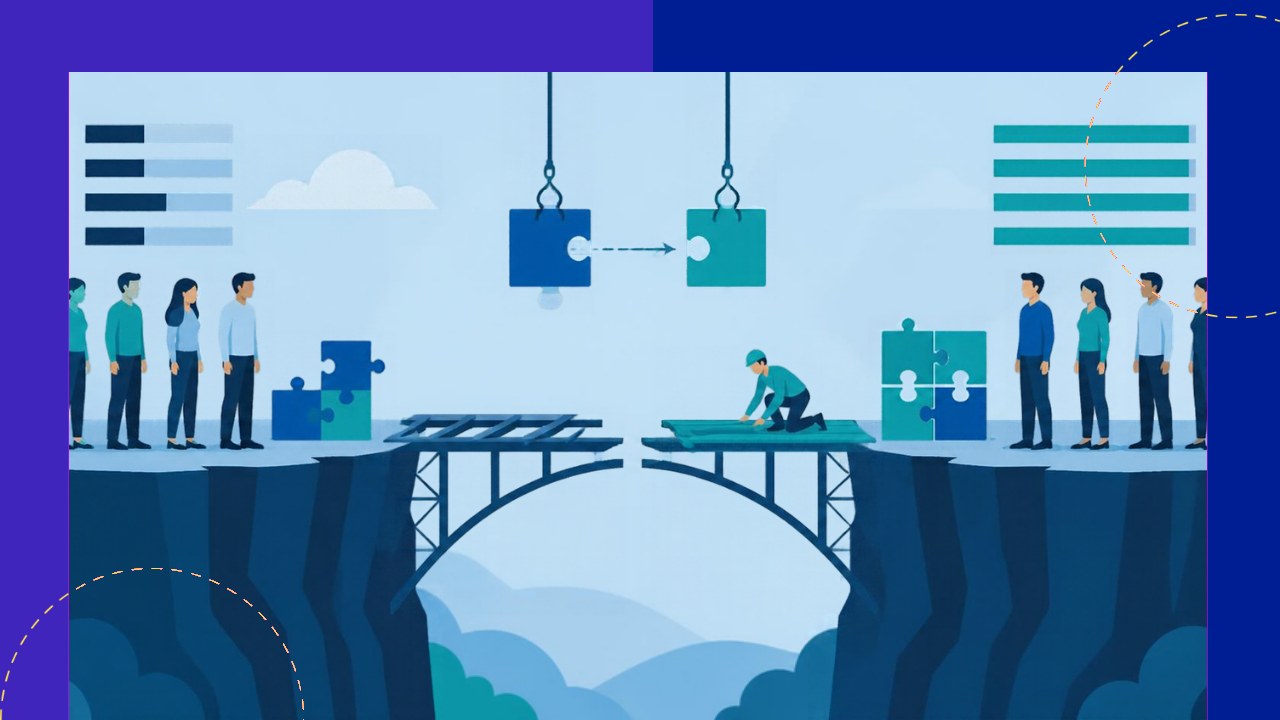
- A workforce skills gap is the distance between the skills your team has and the skills your work now demands.
- Growing teams feel it fastest, because new tools, bigger scope, and tight hiring markets all widen the gap at once.
- You can close it, but only after you measure it honestly and treat it as a planning problem, not a hiring emergency.
Every growing company reaches a point where the work moves faster than the team can keep up. Deadlines slip, a few people become bottlenecks, and simple projects stall. Often the real cause is a workforce skills gap: the difference between the capabilities your business needs today and the capabilities your people actually have. It builds slowly, and it rarely shows up on a dashboard until it starts costing you.
The gap is not a sign of a weak team. It usually means the business outgrew the skills that got it here. Knowing why it forms and what it costs is the first step toward closing it.
What a workforce skills gap actually is
A skills gap is a mismatch. On one side sit the skills your roles require now and next year. On the other sit the skills your current employees hold. When the two drift apart, a gap opens.
It helps to separate two things. A skills gap means your people lack a needed capability. A talent shortage means those people are hard to find at all. Both hurt, and they often arrive together. A widely cited Korn Ferry study projected a global talent shortage of more than 85 million people by 2030, equal to roughly $8.5 trillion in unrealized annual revenue. That scale is why skills planning now sits on the leadership agenda.
Why the gap forms in growing teams
Three forces usually drive it, and growth triggers all three at once.
Technology keeps changing the work
Automation, data tools, cloud platforms, and AI reshape jobs quickly. A role you hired for two years ago may now expect skills that did not exist then. Rising demand for digital skills means even strong hires fall behind without steady learning. The work simply moves past them.
Fast growth stretches every role
When a company scales, jobs get bigger and more specialized. The generalist who ran finance at 20 staff cannot cover the same ground at 200. Suddenly you need depth in areas no one owns. Growth creates gaps faster than hiring can fill them.
The hiring market stays tight
You cannot always hire your way out. The US Chamber of Commerce reports the country is missing 1.7 million Americans from the workforce compared with February 2020, and many employers still cannot find people with the right skills. When talent is scarce, the gap stays open longer.
What the gap costs a growing business
The damage rarely looks like a single big failure. Instead it shows up as steady friction across the business.
Delivery slows first. Work piles up behind the few people who hold a scarce skill, so projects wait on them. Quality slips next, as people stretch into work they were never trained for. Errors and rework follow.
Cost climbs on several fronts. You pay overtime, rush fees, and premium contractor rates to patch the gap. Overloaded specialists then burn out and leave, adding hiring and onboarding costs on top. Annual average job openings still ran around 7.1 million through 2025, according to the Bureau of Labor Statistics, so replacing scarce skills stays slow.
There is a quieter cost too. When a team lacks a capability, it stops pursuing work that needs it. You miss a product feature, a new market, or a client. Those losses never appear on an invoice, so they go unnoticed.
How to diagnose your skills gap
You cannot close a gap you have not measured. A simple audit beats a perfect one you never finish.
1. Map the skills your strategy needs
Start with where the business is going, not where it has been. List the capabilities your next year of plans requires, by team. Be specific: “cloud cost management” says more than “technical skills.”
2. Inventory the skills you already have
Rate your team against that list. Ask managers, and ask employees to self-assess, since people often hold skills their job title hides. Keep the scale simple: none, basic, or strong.
3. Rank the gaps by business impact
Compare the two lists and flag the gaps that block revenue, risk, or delivery first. A missing skill on a critical project outranks a nice-to-have.
How to start closing the gap
Once you can see the priority gaps, you have three levers. Most teams use all three together rather than betting on one.
First, build from within. Targeted upskilling and reskilling turn existing staff into the people you need, and they already know your business. This works best for gaps you see coming, since training takes time.
Second, buy selectively. Hire for the gaps that are deep, permanent, and central to your strategy. Reserve scarce recruiting effort for roles that genuinely need it.
Third, borrow for speed. An outsourcing provider or offshore partner can supply specialist skills quickly while you train your team or finish a search. This suits urgent gaps and capabilities you need now but not forever. The point is to match each gap to the right lever, then review the plan as needs shift.
Frequently asked questions
How is a skills gap different from a performance problem?
A performance problem means someone can do the work but is not doing it well, often due to motivation, process, or management. A skills gap means the ability itself is missing, so no amount of pressure fixes it. The tell: if more effort would not solve it, the real answer is training or hiring.
How often should we reassess our skills gaps?
Treat it as a rolling review, not a one-off project. A light check every quarter catches new gaps as tools and plans change, with a deeper audit once a year. Tie it to your planning cycle so skills sit beside budget and headcount.
Does closing the gap always mean spending more?
Not always. Some gaps close through better work design, such as redistributing tasks, pairing people to share knowledge, or documenting what one specialist knows. These moves cost little and reduce single-person risk. Spending becomes necessary only when the capability is genuinely absent.






 Independent





