
Talent intelligence in hiring: the complete guide

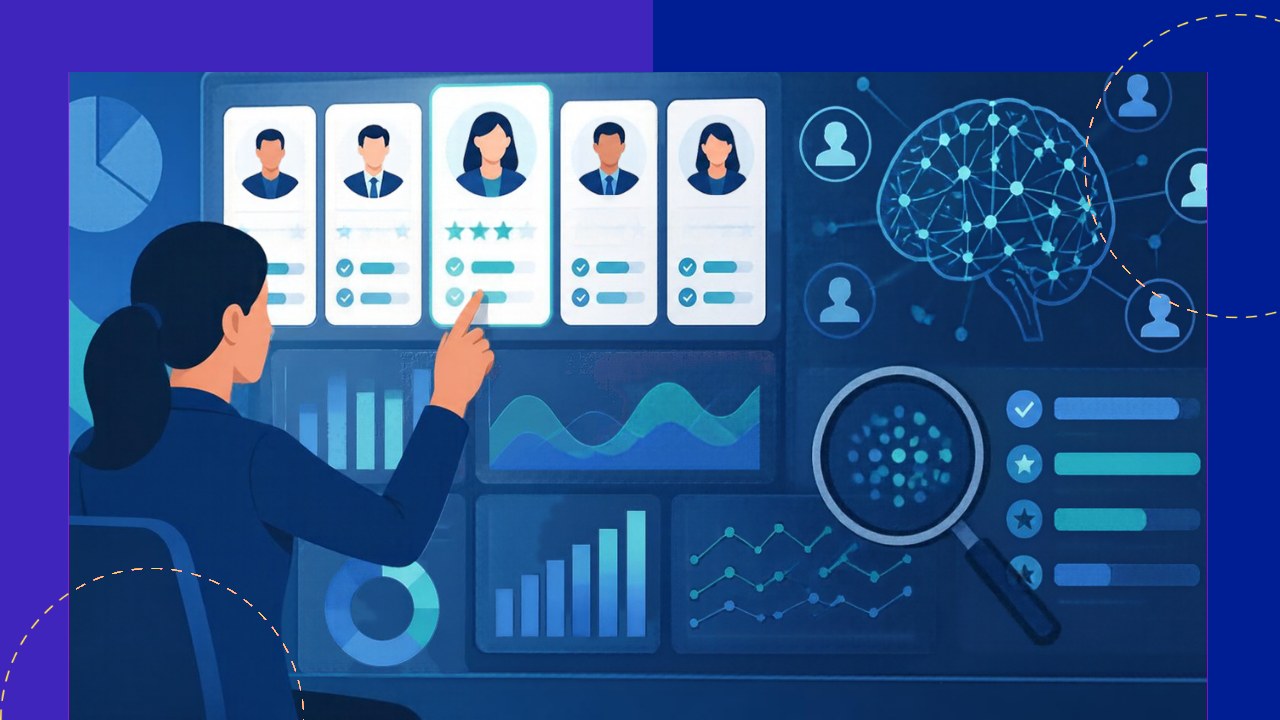
- Talent intelligence turns labor-market, skills, and internal workforce data into better, faster hiring decisions.
- It pulls from external market signals and your own applicant and performance records, then looks for patterns a recruiter cannot spot alone.
- You can start small: pick one hiring problem, gather clean data, and test whether the numbers improve your decisions.
Most hiring still runs on gut feel and a stack of resumes. Talent intelligence in hiring changes that. It is the practice of using data and analytics, including labor-market data, skills data, and your own internal workforce records, to make hiring decisions you can defend. Instead of guessing where candidates are or what a role really needs, you look at evidence first.
The stakes are high because hiring is expensive and slow. The U.S. Bureau of Labor Statistics recorded 7.1 million job openings and 5.2 million hires in a single recent month. Each decision carries cost and risk, and better data lowers both.
What talent intelligence actually means
Talent intelligence is the discipline of collecting, combining, and analyzing data to guide people decisions. In hiring, it answers practical questions. Where does the talent we need live? What does it cost? Which skills matter most? Who is likely to stay?
It differs from basic recruiting metrics. Time-to-fill and cost-per-hire tell you how your process ran. Talent intelligence looks outward and forward. It compares your plans against the real market and your own history, so you can act before a shortage or a bad hire happens.
Where the data comes from
Talent intelligence draws on three broad data sources. Each answers a different question, and the value grows when you combine them.
Labor-market data
This is external data about supply, demand, and pay. It includes job-posting volumes, salary benchmarks, hiring trends, and location signals. Market data tells you whether a role is hard to fill, what competitors pay, and where skills are growing. For example, BLS projects that data scientist roles will grow 34.6% between 2025 and 2035, which warns you to plan early for that talent.
Skills data
Skills data maps what a role truly requires against what candidates and employees have. It moves hiring away from degree filters and job titles, so you match on capability instead. Titles mean different things at different companies, while skills stay concrete and comparable.
Internal workforce data
Your own records are often the richest source. Applicant tracking histories, performance reviews, retention patterns, and promotion data all hold signals. They show which hiring sources produced your best people and which roles burn out fastest. This data is yours alone, a real edge.
How teams use talent intelligence
The use cases are practical, not abstract. Here are the most common.
Workforce and headcount planning come first. By pairing market trends with internal attrition, you can forecast needs and feed hiring targets into your broader forecasting of future talent needs. That keeps recruiting ahead of demand rather than reacting to it.
Sourcing and location strategy is another. Market data shows where skilled candidates cluster and what they cost. A team might open a role in a new city or country because the talent pool runs deeper and the pay is more competitive there.
Quality of hire is a third. By linking hiring sources to later performance, you learn which channels and traits predict success. Over time, you stop spending on sources that do not deliver. Data can also reveal where candidates drop out of your funnel, which helps you fix fairness problems in the process itself.
The tools, as a category
You do not need one giant platform to practice talent intelligence. The tools fall into a few groups.
Market intelligence platforms aggregate external job and salary data. Skills platforms build taxonomies and match people to roles by capability. Analytics layers sit on top of your applicant tracking system and surface patterns in your own data. Many HR suites now bundle several of these features.
The common thread is clean, connected data. A tool is only as good as what you feed it, so data quality comes before any software choice.
Keep expectations grounded. As Harvard Business Review’s Peter Cappelli warns, “outsourcing and algorithms won’t get you the people you need” on their own. Tools support decisions, but they do not make them for you.
How to get started
You can begin without a large investment by working through these steps in order.
1. Pick one hiring problem
Choose a specific pain point, such as slow engineering hires or high first-year turnover. A narrow focus gives you a clear question and a way to measure progress.
2. Gather and clean your data
Pull the internal records tied to that problem. Fix gaps and duplicates first. Clean data beats a fancy tool every time.
3. Add market context
Layer in external benchmarks for pay, supply, and demand. This shows whether the problem is yours or the market’s, and the fix differs depending on the answer.
4. Test and learn
Make one data-informed change, then track the result. If quality of hire or time-to-fill improves, expand the approach. If not, adjust and try again.
Some firms speed this up with a provider that manages the full recruitment function, since partners often bring market data and analytics of their own. Whether you build or buy, the principle holds: let evidence guide the call.
Frequently asked questions
Is talent intelligence only for large enterprises?
No. Small teams often gain the most, because a single bad hire hurts them more. You can start with a free spreadsheet of your own applicant and performance data plus public salary benchmarks. The method scales down as easily as it scales up.
How is it different from people analytics?
People analytics usually studies your existing employees, such as engagement and productivity. Talent intelligence looks outward at the wider labor market and candidate pool too. The two overlap, but talent intelligence is broader and more focused on hiring and future supply.
What data mistakes should I avoid?
Watch for stale benchmarks, tiny sample sizes, and biased historical data that bakes in past hiring errors. Also avoid tracking metrics you will never act on. Collect only what helps a real decision, and review your sources often.
How soon will I see results?
Simple wins, like a smarter salary offer or a better sourcing channel, can appear within a hiring cycle or two. Deeper gains in quality of hire take longer, because you need enough hires to measure performance. Treat it as an ongoing habit, not a one-off project.






 Independent





