
HR service delivery models: a step-by-step checklist

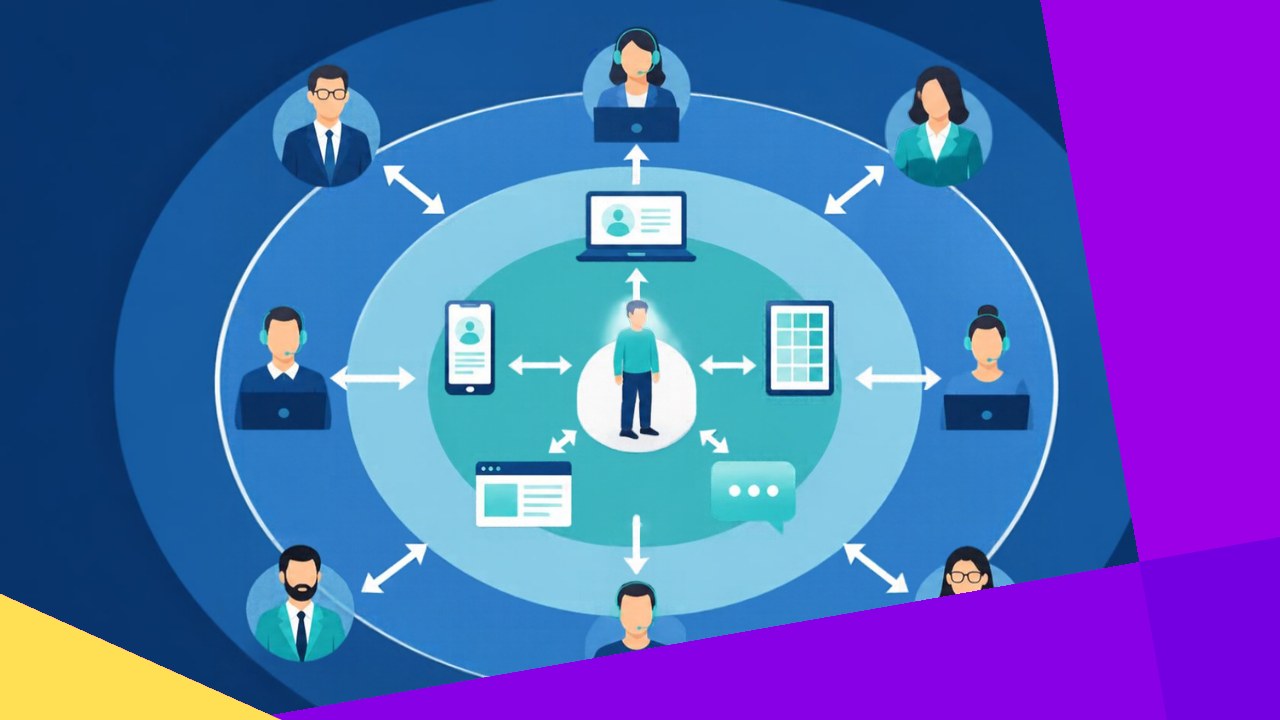
- HR service delivery models set who answers an employee query, who fixes a benefits issue, and who advises managers on strategy.
- The main structures are tiered support, shared services, centers of excellence, and the HR business partner model, often blended together.
- Choosing well starts with mapping demand, splitting transactional work from strategic work, then piloting one model before you scale it.
HR service delivery models describe how an HR team actually gets help to employees: who answers a payroll question, who corrects a benefits error, and who coaches a manager through a restructure. The model you choose shapes response times, running cost, and how much time your HR staff can spend on strategy. Most growing companies outgrow their first makeshift setup, where one generalist fields everything, and need a deliberate structure.
There is no single right answer here. A 40-person startup and a 4,000-person enterprise need very different arrangements. Deloitte warns that traditional functions are too slow and siloed for today’s business demands, and HR is no exception. This guide maps the common models, then gives you a checklist to pick and roll one out.
What an HR service delivery model does
A delivery model is the plan for routing HR work to the right person or tool. It answers three questions. Where does an employee go first? Who handles a request that needs expertise? And who owns the strategic work behind the scenes?
Clear models also reduce wasted effort. Instead of every query landing on one overloaded inbox, work flows by type and complexity. That protects senior HR time, so skilled people are not stuck chasing forms.
The main HR service delivery models
Most organizations mix these structures rather than pick only one. Here is how each works.
Tiered support
Tiered support sorts requests by difficulty, much like an IT help desk. Tier 0 is self-service: a portal, a knowledge base, and a chatbot employees use on their own. Tier 1 is a frontline team that answers common questions. Tier 2 handles specialist cases, such as a complex leave calculation. Tier 3 covers senior experts and tricky escalations. The goal is to resolve most requests at the lowest tier.
Shared services
A shared services center centralizes high-volume, repeatable tasks into one internal unit. Payroll, onboarding paperwork, and records sit here. Because the work is standardized and pooled, it gets cheaper and more consistent as you grow. Tiered support usually lives inside this unit.
Centers of excellence
Centers of excellence (COEs) are small expert teams for one discipline, such as total rewards, talent acquisition, or learning. They design policies and programs rather than process daily transactions. Think of them as the deep specialists the rest of HR leans on.
HR business partner model
In this model, senior HR professionals embedded with the business advise leaders on workforce planning, change, and performance. They focus on strategy, not admin. Together, shared services, COEs, and business partners form the well-known three-part HR operating model.
| Model | Handles | Best for |
|---|---|---|
| Tiered support | Routing queries by complexity | High request volume |
| Shared services | Repeatable transactions | Scale and cost control |
| Centers of excellence | Policy and program design | Specialist depth |
| HR business partner | Strategic advice to leaders | Growth and change |
A step-by-step checklist for choosing a model
Use these steps in order. They move you from guesswork to a structure you can defend.
1. Map your current HR demand
List the requests HR receives over a typical month. Group them by type and count the volume. You cannot design a model without knowing what flows through the team today.
2. Split transactional work from strategic work
Sort the list into two buckets: routine admin and higher-value advice. This split is the core idea behind every modern model. An influential Harvard Business Review case that it is time to split HR rests on exactly this divide between administration and leadership.
3. Pick a primary structure, then blend
Choose the model that fits your biggest pain point. Drowning in queries? Start with tiered support and self-service. Paying too much for scattered admin? Build shared services. Most teams end up combining two or three.
4. Stand up self-service and tiers
Create a knowledge base and a simple portal first. Then define what Tier 1 answers and when a case moves up. Good self-service deflects routine questions before a person ever gets involved.
5. Set service levels and clear ownership
Agree response targets for each request type, such as 24 hours for a benefits query. Name an owner for every tier and specialty. Without owners, requests fall through the cracks.
6. Choose channels and technology
Decide how employees reach HR: a ticketing tool, chat, email, or a single portal. Pick an HRIS or case system that tracks requests end to end. The tech should match your model, not drive it.
7. Pilot, measure, then scale
Launch with one department or one process. Track resolution time, first-contact fixes, and satisfaction. Then fix what breaks and expand. A small pilot surfaces problems while they are still cheap to correct.
When to outsource part of the model
Some tiers do not have to sit in-house. Growing teams often hand Tier 1 support or high-volume payroll to an outsourcing provider, then keep business partners and COEs internal. This lifts capacity fast without a big hiring push. The right split depends on cost, control needs, and how specialized the work is.
Frequently asked questions
How many employees do you need before a formal model makes sense?
There is no fixed headcount, but the shift usually begins near 50 to 100 staff, when one generalist can no longer keep up. A useful signal is response time: once simple queries routinely take days, your informal setup has hit its limit.
What is the difference between shared services and a center of excellence?
Shared services process transactions at volume, so they are measured on speed, accuracy, and cost per case. A center of excellence designs the policies behind those transactions and is judged on program quality. One runs the work; the other shapes it.
Can a small company skip tiered support?
Yes, and many should. Below roughly 50 people, a single shared inbox with a short FAQ often works fine. Add tiers only when query volume makes triage worth the overhead, not before.
How do you measure whether a model is working?
Watch four numbers for the long term: self-service deflection rate, cost per request, HR time spent on strategic work, and employee satisfaction. If deflection rises while cost per request falls, your model is earning its keep.






 Independent





