
Should you outsource HR chatbots and virtual assistants?

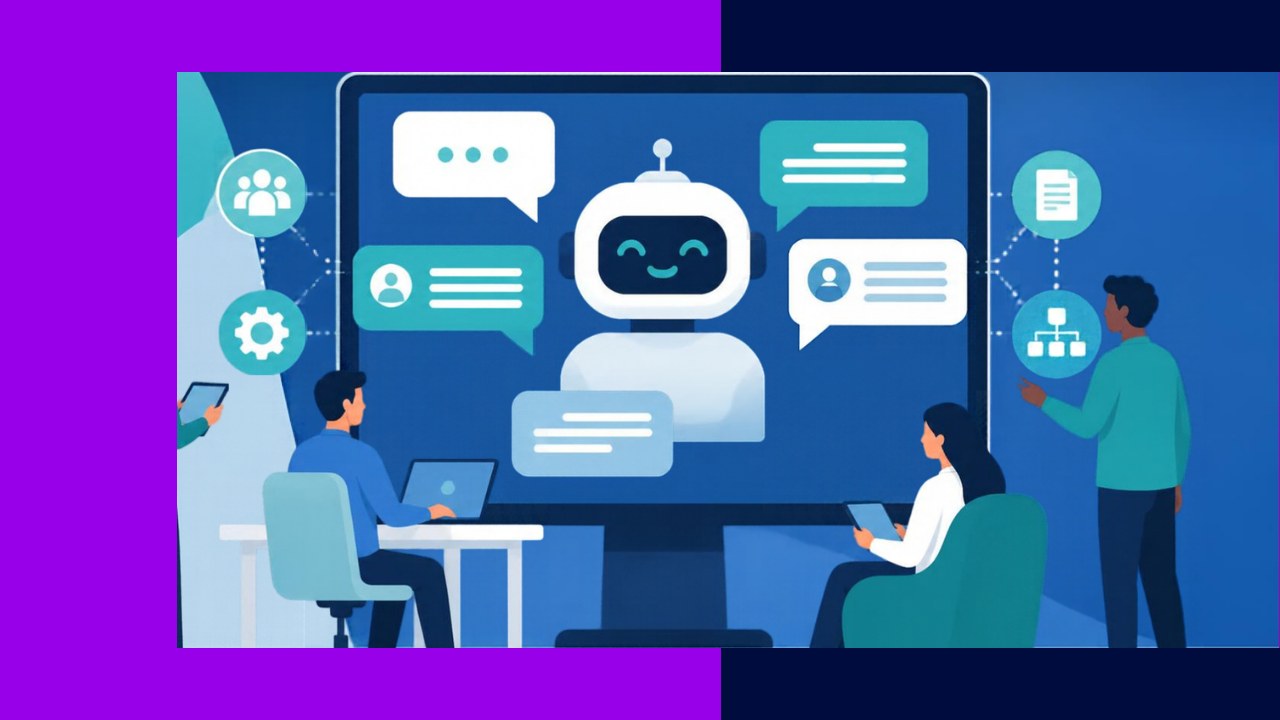
- HR chatbots and virtual assistants answer repetitive employee questions, so your people team can focus on judgment calls.
- You can build the tool in-house, buy an off-the-shelf product, or outsource the whole thing to a partner that runs it for you.
- Outsourcing fits best when your query volume is high, your in-house tech skills are thin, and you want someone else to own uptime and accuracy.
Every HR team gets the same questions over and over. How much leave do I have left? When does my health plan start? Where do I upload my tax form? HR chatbots and virtual assistants handle those repeat queries automatically, which frees your staff for work that needs a human. So the real question is not whether to use one. It is how to get one: build it, buy it, or hand it to an outsourcing partner.
What HR chatbots and virtual assistants actually do
At their core, these are AI-powered tools built for human resources teams that automate routine conversations. An employee types a question in Slack, Teams, or a web portal, and the assistant answers in plain language. No ticket, no waiting, no email chain.
The common jobs they take on include:
- Employee FAQs: policy lookups, PTO balances, payday dates, and benefits details.
- Onboarding: walking new hires through forms, documents, and first-week checklists.
- Self-service: booking leave, updating personal details, or finding a document.
- Triage: answering the easy questions and routing tricky cases to a real person.
According to SHRM, chatbots “can do more than just answer basic HR questions.” Many now help with candidate screening, interview scheduling, and onboarding paperwork too. This is part of a wider move toward using AI tools across recruiting and employee support, not just a single helpdesk bot.
Build, buy, or outsource: the three paths
There is no single right answer. Each route trades cost, speed, and control differently, as the table shows.
| Approach | Best for | Main trade-off |
|---|---|---|
| Build in-house | Teams with strong engineers and unusual, custom needs | Slow to launch and expensive to maintain |
| Buy off-the-shelf | Standard HR workflows and common systems | You still own setup, training, and upkeep |
| Outsource | High volume and limited internal tech skills | Less direct control; you depend on a partner |
Building it yourself
Building gives you full control over the data, tone, and integrations. However, it is the slowest and priciest route. You need engineers, ongoing tuning, and a plan for when the model gets something wrong. Most small and midsize HR teams do not have that bandwidth.
Buying a product
Buying is faster. You license a ready-made assistant and connect it to your HR system. Still, “buy” is not “set and forget.” Someone on your side has to load your policies, test the answers, and keep them current. The software is cheap; the care and feeding is not.
Outsourcing the whole thing
Outsourcing means a partner runs the assistant as a service. They handle the setup, content, monitoring, and escalations. Your team reviews results and sets the rules. For many companies this is the lowest-effort way to get a working tool live, because the hard parts sit with people who do this all day.
When outsourcing HR chatbots makes sense
Outsourcing is not always the best choice, but it shines in a few clear cases. Consider it when the following are true.
Your query volume is high. If HR drowns in the same questions each week, a managed assistant pays for itself fast. The partner also tunes it so answers stay accurate as your policies shift.
Your in-house tech skills are thin. An outsourcing provider brings the AI know-how, integrations, and testing you would otherwise have to hire for.
You want coverage around the clock. An offshore partner can keep the assistant monitored across time zones, so employees in any region get help at any hour.
You would rather not own the upkeep. Models drift and policies change. An outside team can own that maintenance, which is often where in-house projects quietly fail. This mirrors the case for automating routine HR workflows through a partner rather than building everything yourself.
The limits and risks to weigh
These tools are helpful, not magic. Go in with clear eyes about what can go wrong.
First, accuracy. A chatbot can answer with total confidence and still be wrong. If it misstates a leave policy, employees lose trust fast. So you need review loops and a quick path to a human.
Second, data privacy. HR questions touch pay, health, and personal details. Any partner must handle that data securely and meet rules like GDPR, so check their controls before you sign.
Third, the human limit. A bot is great for facts, but poor for sensitive moments: a grievance, a layoff worry, a mental health question. Those still need a person, and a good setup routes them there without friction.
Finally, control. When you outsource, you depend on the partner’s response time and quality. So pick one with clear service levels, and keep a say over the content and tone.
How to decide
Run through these five questions before you choose a path.
1. How much volume do you handle?
High, repetitive volume points toward a managed or outsourced tool. Low volume may not justify the spend.
2. Do you have the tech skills in-house?
If yes, buying or building is realistic. If no, outsourcing closes that gap without new hires.
3. How custom are your needs?
Standard workflows suit off-the-shelf tools. Truly unusual needs may justify a custom build.
4. Who will own upkeep?
Name the person or partner now, because an unmaintained bot gets stale and starts giving bad answers.
5. What is your risk tolerance?
Match your controls to the stakes, since high-stakes HR work needs tight human oversight.
Answer those honestly and the right path usually becomes clear. Many growing teams land on outsourcing because it delivers the tool fast, keeps costs predictable, and puts the technical burden on someone else. Whatever you pick, start small, measure the answers, and keep a human in the loop.
Frequently asked questions
How much does an outsourced HR chatbot cost?
Pricing usually follows a monthly service model tied to employee count or query volume, rather than a big upfront license. That spreads the cost and bundles in maintenance. Ask any partner for the all-in figure, since setup and ongoing tuning are where hidden fees tend to hide.
Will a chatbot replace our HR staff?
No. It replaces repetitive lookups, not people. Teams that deploy one usually redirect staff toward coaching, cases, and strategy instead of cutting headcount. Think of it as removing busywork so specialists spend time where judgment matters.
How long does it take to go live?
An outsourced or off-the-shelf assistant can launch in weeks once your policies are loaded and tested. A custom in-house build often takes months. That speed gap is a big reason smaller teams lean toward buying or outsourcing.
What should we automate first?
Start with your highest-volume, lowest-risk questions, such as leave balances and payday dates. Prove the accuracy there, then expand into onboarding and more complex self-service. A narrow, reliable start beats a broad, shaky one.






 Independent





