
A practical guide to offshoring healthcare billing and coding

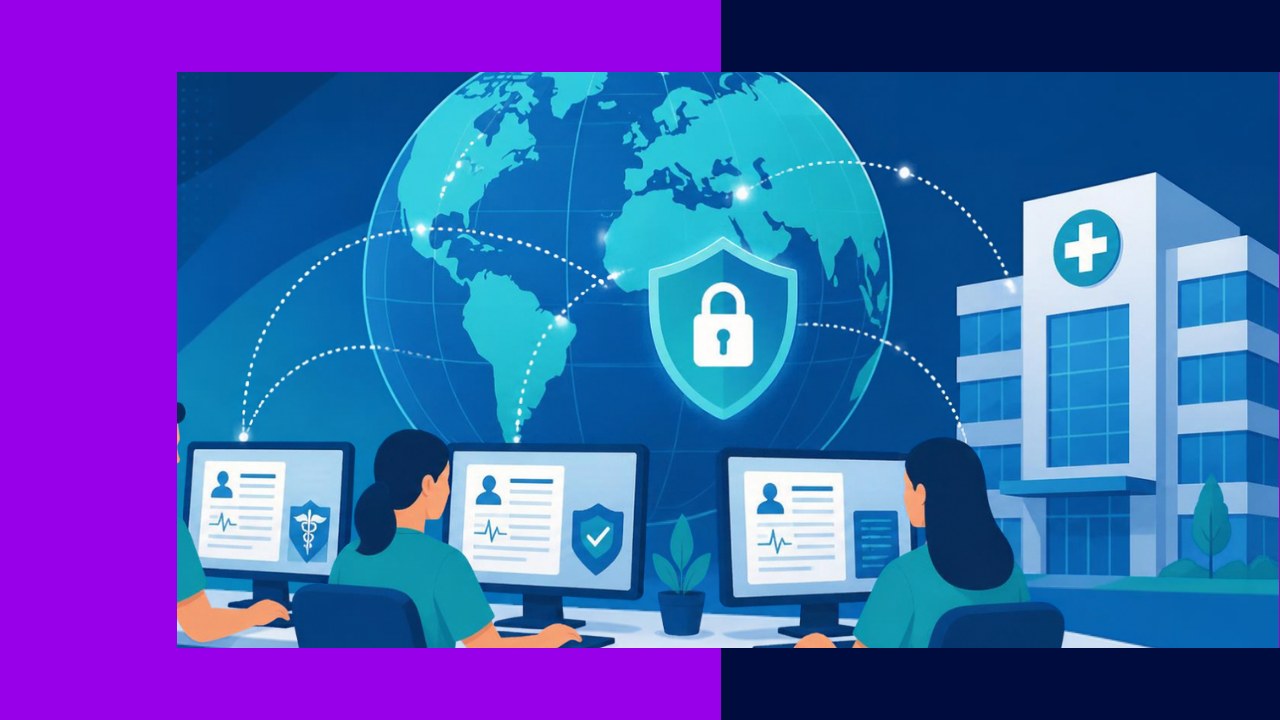
- Offshoring healthcare billing and coding moves both revenue-cycle tasks to a team in another country, often cutting labor costs by half or more.
- A time-zone gap lets claims move overnight, so work does not stop when your clinic closes.
- Success depends on tight HIPAA safeguards, a signed business associate agreement, and steady quality checks on coding accuracy.
Offshoring healthcare billing and coding means you hand both jobs to a trained team based in another country, usually the Philippines or India. Billing turns a visit into a claim and chases payment. Coding assigns the standard diagnosis and procedure codes that payers need. The two tasks sit side by side in the revenue cycle, so many practices move them together to one offshore partner.
This is not the same as hiring a local firm down the road. The offshore model changes your cost base, your working hours, and your compliance duties all at once. Below is what the model looks like in practice, what you can save, and where the real risks sit.
Why practices offshore billing and coding together
Billing and coding feed each other. A wrong code triggers a denial, and a denial lands back in the billing queue. When one team owns both steps, fewer errors slip through the handoff. That is the core reason practices offshore the pair rather than splitting them.
The second reason is talent supply. Offshore hubs train large pools of certified coders who hold the same credentials, such as CPC or CCS, that you would look for at home. So you are not trading quality for price. For a closer look at the in-house versus vendor math, see this breakdown of the true cost of running a billing team internally.
Typical cost savings
Labor drives the savings. In the United States, the median wage for a medical records specialist was “$51,140 in May 2025,” according to the U.S. Bureau of Labor Statistics. An offshore coder with similar training often costs a fraction of that once you add benefits, office space, and payroll taxes.
Most offshore billing partners bill in one of two ways. Some charge a percentage of collections, often in the 3% to 7% range. Others charge a flat monthly fee per full-time staff member. Either way, practices commonly report total billing-department savings of 40% to 60%. You also drop the cost of hiring, training, and covering staff who leave.
Follow-the-sun coverage
The time-zone gap is a feature, not a bug. When your front desk logs off, your offshore team is often just starting its day. So claims get scrubbed, coded, and submitted overnight. You return to cleared work instead of a backlog.
This “follow-the-sun” rhythm shortens the days-in-accounts-receivable number, which measures how long money sits unpaid. Denials also get reworked faster because someone is always on them. For high-volume clinics, that speed can matter more than the raw hourly saving.
HIPAA and data-security compliance
Sending patient data abroad does not remove your legal duties. Under HIPAA, an offshore vendor counts as a business associate. That means you must sign a business associate agreement before any record moves. The agreement binds the partner to the same privacy and security rules you follow.
HIPAA covers two layers of data. As the Office of the National Coordinator puts it, “The HIPAA Privacy Rule covers protected health information (PHI) in any medium, while the HIPAA Security Rule covers electronic protected health information (ePHI).” Your offshore partner must protect both.
Ask for specifics before you sign. Good partners run access controls, encryption, secure remote desktops, and regular audits. Many also hold certifications such as ISO 27001 or SOC 2. Confirm that staff cannot download or print records, and that access ends the day a worker leaves.
Transition and quality control
A clean handover protects your cash flow. Rushing it does the opposite. Most practices move work in stages rather than all at once.
1. Map your current process
Write down how claims flow today, from patient check-in to paid claim. Note your payer mix, your software, and your current denial rate. This gives the offshore team a clear target.
2. Run a pilot
Start with one service line or a slice of your claims. Compare the pilot’s accuracy and turnaround against your baseline. Fix gaps before you scale.
3. Set coding accuracy targets
Coders work from standard code sets. On the diagnosis side, providers have used ICD-10 since “the health care industry transitioned from ICD-9 to ICD-10 codes,” per CMS. Ask the partner to keep coding accuracy at 95% or higher, and audit a sample of charts each month to confirm it.
4. Keep reporting tight
Agree on a weekly dashboard from day one. Track denial rate, days in accounts receivable, and clean-claim rate. If a number drifts, you want to see it early, not at quarter end.
Risks to plan for
The model works, but it is not automatic. Weak vendor management is the usual failure point, not distance.
Watch for four things. First, communication lag: set clear response windows so urgent questions do not wait a full day. Second, staff turnover at the partner, which can dent coding accuracy, so ask about retention. Third, data-security gaps, which the business associate agreement and audits are meant to close. Fourth, payer-rule drift, since United States coding rules change often and your team must keep current.
For a wider view of when the offshore model fits a smaller practice, this guide on whether to move billing and coding off-site is a useful starting point.
Frequently asked questions
Is offshoring billing and coding legal in the United States?
Yes, as long as you follow HIPAA. There is no federal ban on processing claims abroad. The key control is the business associate agreement plus proof that the partner secures the data. Some states add breach-notification rules, so check your own state law before you sign.
How long does a typical transition take?
Most practices reach full handover in eight to twelve weeks. A single-specialty clinic can move faster. A large group with many payers and legacy software takes longer. The pilot stage usually runs three to four weeks on its own.
Will offshoring hurt my patient collections or experience?
It should not, if you scope it right. Keep patient-facing phone calls onshore or bilingual if that suits your patients, and send back-office coding and claim submission offshore. Patients rarely notice where a claim gets coded. They notice a bill that is wrong, which good quality checks prevent.
What size practice makes offshoring worth it?
There is no strict floor, but the savings scale with volume. A solo provider may prefer a percentage-of-collections model with no fixed headcount. A group generating thousands of claims a month often saves more with dedicated offshore staff. Run the pilot numbers before you commit either way.






 Independent





