
Clinical documentation improvement (CDI): the complete guide

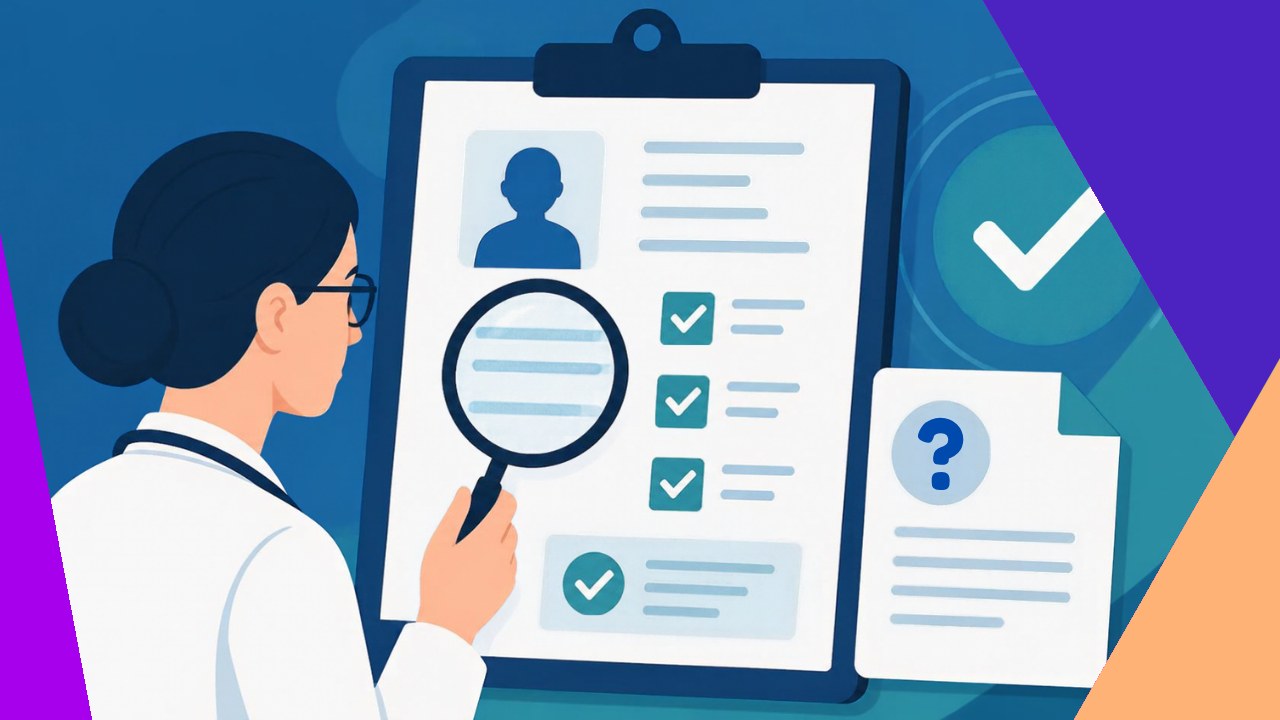
- A clinical documentation improvement (CDI) program checks charts while the patient is still admitted. It fixes gaps before coding and billing begin.
- CDI specialists send compliant queries to clear up vague notes. Clearer notes sharpen the diagnosis, the severity, and the payment group.
- Strong CDI lifts coding accuracy and cuts denials. It pays for itself through cleaner claims and fairer pay.
Clinical documentation improvement (CDI) is a structured program. It makes the patient record complete, precise, and clear. That clarity supports accurate coding, billing, and quality reporting. CDI is not a coding job. It works one step earlier, on the note itself. The goal is simple. The record should match the care the patient got.
Think of the medical record as the single source of truth. Say a doctor writes “sepsis” with no supporting detail. Or “anemia” with no cause. Coders and payers then cannot see the full clinical picture. CDI closes those gaps in real time. As a result, the chart shows how sick the patient really was.
Documentation feeds coding, quality scores, and payment all at once. So a strong CDI program touches revenue, compliance, and patient outcomes together.
What a CDI program does, and what it does not
A CDI program improves documentation at the point of care. It does not assign final codes. It also does not put words in a doctor’s mouth. Instead, CDI specialists spot missing or unclear details. Then they ask the treating clinician to clarify them.
The difference matters. Coding turns a finished chart into standard codes after discharge. CDI works while the patient is still in the bed. So the record is right before a coder ever sees it. A cleaner chart means fewer corrections, fewer denials, and a stronger claim.
The core method: concurrent chart review
Most programs run on concurrent review. That means the record is checked during the stay, not after it. A specialist reviews new admissions within a day or two. Then they follow the chart each day as new results arrive.
1. Initial review
The specialist reads the history, exam, orders, labs, and imaging. They look for a diagnosis that is too vague. They also look for a clinical clue, such as a low sodium level, that no diagnosis explains yet.
2. Query when something is unclear
Sometimes the note and the evidence do not line up. Then the specialist writes a physician query. A compliant query is non-leading. It lays out the clues. It asks the clinician to confirm, add detail, or rule the finding out. It never suggests a diagnosis just to raise payment.
3. Follow-up and reconciliation
The specialist tracks each query to closure. They reread the chart before discharge. Finally, they check the notes against the codes the coder assigns. That way, any mismatch is caught early.
Why accuracy drives coding, DRGs, and payment
For inpatient stays, documentation decides the payment group. Medicare pays hospitals through Medicare severity diagnosis-related groups (MS-DRGs). These groups sort each case by its clinical detail. As CMS explains, cases are grouped using “the principal diagnosis, up to 24 additional diagnoses, up to 25 procedures.” Age and discharge status can matter too.
Here is why CDI matters. A documented complication can move a case into a higher-severity group. That group reflects a sicker patient and more care. Miss the detail, and the record understates the care. Add it without proof, and the claim becomes a compliance risk. CDI aims for the accurate middle. It captures what is true and proves it in the note.
That accuracy flows straight into billing. Coders can only code what is written down. So a precise chart raises coding accuracy and cuts rework. See how coding quality decides how much a provider actually collects. That guide covers the downstream cash effect.
How CDI protects quality metrics
Payment is only half the story. Documentation also feeds quality programs and risk scores. It shapes publicly reported outcomes too. When the record shows a patient’s true severity, the numbers make sense. Expected-versus-observed rates, such as mortality, then reflect reality, not a thin chart.
So a hospital with weak notes can look worse than it performs. Two facilities may give the same care. Yet the one with sharper notes shows better risk-adjusted results. In that sense, CDI defends a provider’s reputation as much as its revenue.
CDI roles and the KPIs that matter
Nurses or health information staff usually run these programs. They know both clinical care and coding rules. Many hold a specialist credential. According to AHIMA, the CDIP credential signals “outstanding clinical and coding competency.” The exam covers record review, CDI metrics, compliance, and education.
Teams track a steady set of key performance indicators (KPIs) to prove value:
| KPI | What it measures |
|---|---|
| Review rate | Share of eligible charts reviewed concurrently |
| Query rate | How often specialists query per reviewed record |
| Physician response rate | How often clinicians answer queries |
| Query agreement rate | How often clinicians confirm the clarified detail |
| Case mix index shift | Change in documented severity across cases |
Some providers run CDI in house. Others use an outsourcing provider to add reviewers, cover nights, or scale up fast. Many now pair reviewers with technology. Tools that draft and flag notes from a patient encounter can surface gaps for a human to check. Still, a qualified reviewer owns every clinical decision.
Frequently asked questions
How is CDI different from a coding audit?
A coding audit checks finished codes against a completed chart. It usually happens after billing. CDI works earlier, during the stay, to improve the note itself. Audits catch errors after the fact. CDI stops many of them before they start.
Do outpatient clinics need CDI, or is it only for hospitals?
Outpatient CDI is growing fast. It matters most where risk-adjustment models apply. Many clinics report chronic conditions for value-based contracts. Those contracts rely on accurate problem lists. So documentation precision shapes per-patient risk scores and shared-savings results, not just inpatient DRGs.
What makes a physician query compliant rather than leading?
A compliant query lays out the clinical evidence. It offers balanced options, including the choice to rule a diagnosis out. It never points to one answer tied to higher payment. The clinician’s own judgment must drive the response. The query then becomes part of the permanent record.
How long before a new CDI program shows results?
Some KPIs move early. Query response rates, for example, often rise within a quarter. Financial and quality-score effects take longer. Claims and risk-adjusted measures update over months. Lasting gains depend on physician engagement. So ongoing education matters more than the launch itself.






 Independent





