
How AI agents are reshaping the BPO delivery model

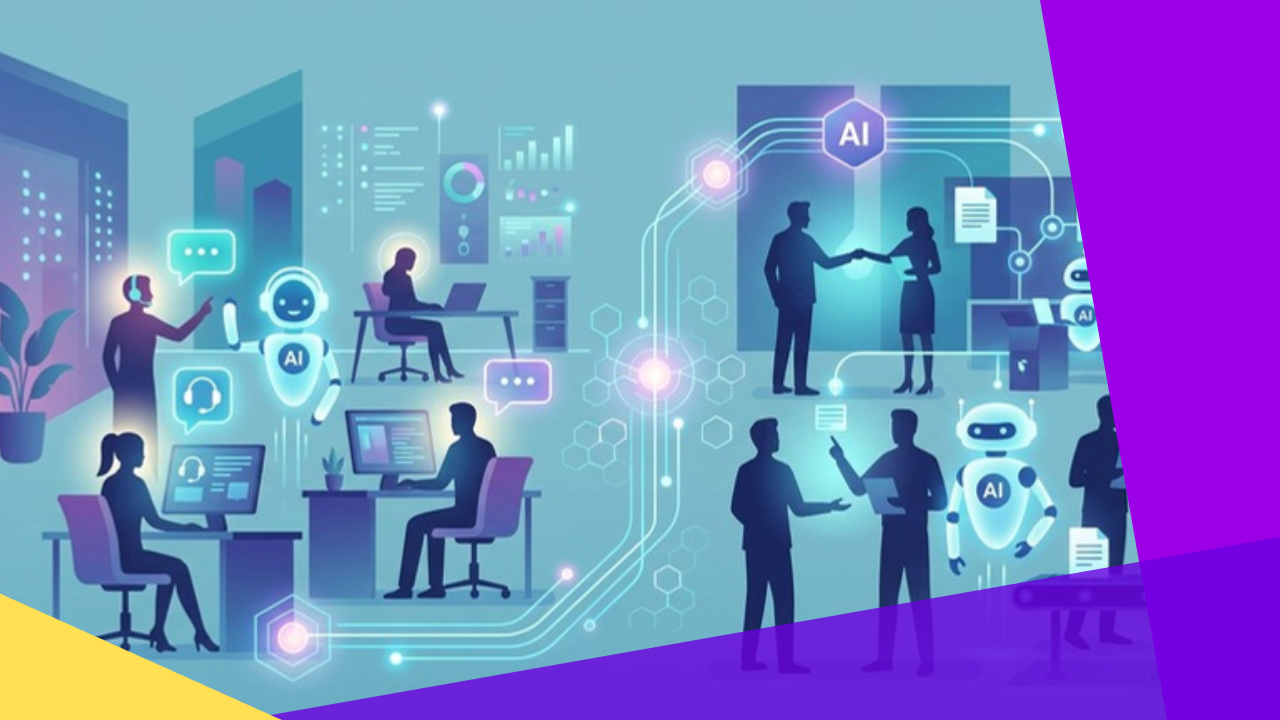
- AI agents are autonomous software that can plan and complete multi-step tasks, unlike chatbots that only reply or robotic process automation that follows a fixed script.
- In BPO, AI agents are pushing the delivery model away from pure headcount and toward measured outcomes, which changes pricing and staffing.
- Buyers should expect faster handling, round-the-clock coverage, and new human roles in oversight, exceptions, and client relationships.
- People stay essential for judgment, empathy, complex cases, and governance.
The conversation around AI agents in BPO has moved quickly from hype to live deployment. Outsourcing providers are testing software that can reason through a task rather than answer a single question.
That shift is starting to reshape how outsourced work gets priced, staffed, and delivered.
For companies buying outsourcing and for the providers selling it, this matters on both sides of the contract. Knowing what an AI agent actually is makes the change much easier to plan for.
This explainer covers the technology in plain terms and what it means for your delivery model.
What are AI agents?
An AI agent is software that pursues a goal, uses tools, and takes actions with a degree of independence.
Unlike a model that simply generates text, an agent can break a request into steps, pull data from several systems, make intermediate decisions, and finish a process with limited human input.
The United States National Institute of Standards and Technology is building rules for this next wave of agents capable of autonomous actions so that they operate securely.
In a BPO setting, that might mean an agent that reads a customer email, checks an order in one system, issues a refund in another, and logs the result in a single pass.
How AI agents differ from chatbots and RPA
The real difference comes down to how much the software can decide on its own.
A chatbot answers questions inside a scripted flow. Robotic process automation, or RPA, repeats fixed rule-based steps and tends to break when a screen or data field changes.
An AI agent sits above both. It interprets intent, chooses which tools to use, and adapts when a task does not go as expected.
How AI agents change the BPO delivery model
The traditional BPO model sells labor by the seat, so revenue tracks headcount and hours. Agents loosen that link.
When software handles a share of transactions, providers can charge for resolved tickets or completed cases rather than staffed chairs. Deloitte cautions that the gains come from rethinking the work itself, noting that “True value comes from redesigning operations, not just layering agents onto old workflows.”
Staffing changes too. Teams shift from large frontline pools toward smaller groups that train, supervise, and correct the agents. This is the logic behind AI-augmented BPO services, where automation and people work the same queue.
| Factor | Traditional BPO | AI-agent-augmented BPO |
|---|---|---|
| Pricing basis | Per seat, per hour | Per resolved case or outcome, plus platform fees |
| Scaling capacity | Hire and train more agents | Add software capacity, then supervise it |
| Handling exceptions | Frontline staff at every step | Agents handle routine volume, people take edge cases |
| Coverage | Shift-based, limited off hours | Continuous, always on |
| Main human role | Direct task execution | Oversight, quality, and relationship work |
What buyers should expect
Buyers moving toward agent-based delivery should plan for a different contract shape and a different set of metrics.
Expect outcome-based pricing options alongside traditional rates, and expect vendors to ask for deeper access to your systems and data so agents can act. Build a security and privacy review into the selection process from the start.
Quality assurance also looks different. Instead of scoring individual calls, you measure how often agents resolve cases correctly and how cleanly they hand off the ones they cannot.
Many firms reach these capabilities through AI outsourcing rather than building everything in-house.
Benefits and where humans stay essential
The upside is concrete when the fit is right.
Agents give faster response, consistent output, continuous coverage, and easier scaling during demand spikes. They free skilled staff from repetitive work so those people can focus on harder problems.
The limits are just as real.
Agents can misread unusual requests, act on poor data, or make confident errors, which is why governance and clear escalation paths matter. People remain essential for empathy, judgment on sensitive cases, exception handling, and accountability to the client.
The strongest delivery models pair the two rather than betting on either alone.
Frequently asked questions
These are the questions buyers and providers ask most when they first weigh agent-based delivery.
Are AI agents the same as chatbots?
No. A chatbot responds within a scripted conversation, while an agent can plan a task, use several tools, and complete a process end to end with limited supervision.
Will AI agents replace BPO jobs?
They replace parts of tasks more than whole roles. Routine, high-volume work shrinks, while demand grows for people who train agents, manage exceptions, and own client relationships.
How does pricing change with AI agents in BPO?
Contracts move away from pure per-seat billing toward outcome or transaction pricing, often with a platform or licensing fee layered on top. Blended models are common during the transition.
Which tasks suit AI agents best?
High-volume, rule-driven, and well-documented processes are the strongest fit. Work that needs nuanced judgment, emotional sensitivity, or heavy negotiation stays with people.
Key takeaways
AI agents are shifting BPO from a headcount business toward an outcomes business, and both buyers and providers benefit from planning for that now.
- Agents differ from chatbots and RPA because they plan, decide, and act across systems with some independence.
- The delivery model moves toward outcome-based pricing, leaner frontline teams, and continuous coverage.
- Buyers should prepare for new metrics, deeper data access, and stronger security and governance reviews.
- Human judgment, empathy, and oversight remain central, so the best results come from people and agents working together.






 Independent





