
How Human-in-the-Loop improves model feedback and accuracy

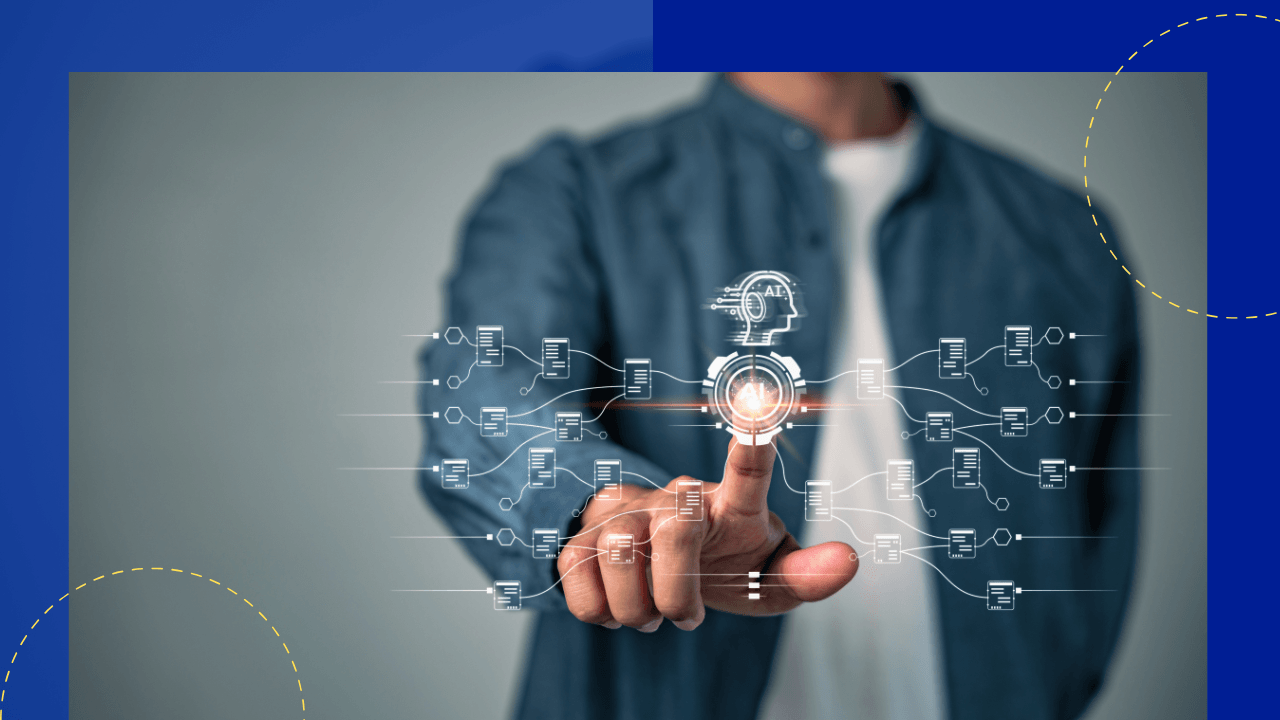
AI models operating in production environments must deliver reliable outputs that satisfy both performance thresholds and policy compliance requirements.
In enterprise settings, model failure extends beyond technical degradation into regulatory exposure, reputational risk, and eroded confidence in automation infrastructure.
Enterprises are starting to rely more on artificial intelligence in key processes. Consequently, automated mechanisms for detecting and correcting model failures often prove insufficient for maintaining the level of reliability that production demands.
Human-in-the-loop (HITL) systems function as a governance framework for structured model evaluation, correction, and behavioral alignment.
Human oversight is not a fallback mechanism but an engineered component of model development, integrated to enforce alignment with operational and organizational requirements.
Structured feedback as a control system
In enterprise AI programs, human feedback operates within structured protocols rather than ad hoc review. These protocols define how model outputs are reviewed, scored against defined criteria, and corrected through governed workflows.
Reviewers evaluate outputs against predefined criteria, such as accuracy, relevance, policy compliance, and domain alignment. The resulting feedback data feeds directly into supervised fine-tuning and structured evaluation cycles.
This process converts the process of feedback to a control system. Instead of relying on observation, the organization can actively shape model behavior through structured feedback loops that reinforce acceptable outputs.
Improving annotation and training signals
The human-in-the-loop approach serves a crucial purpose in annotation workflows. The reviewer is tasked with establishing the parameters for labeling the inputs. This ensures the training dataset will meet the requirements of the domain.
Calibration sessions and guideline updates maintain consistency across annotation teams.
In case of any discrepancies, escalation protocols allow domain experts to refine labeling standards.
These processes strengthen training signals by ensuring that annotations are accurate and aligned with real-world use cases. Models trained on this data exhibit more predictable and stable behavior in production environments.
Integration with RLHF and evaluation frameworks
Reinforcement learning from human feedback (RLHF) extends the role of human involvement in training into the optimization phase. In this context, human evaluators assess the generated outputs and provide preference signals that guide behavior alignment.
These preference signals integrate into evaluation frameworks that measure model performance across varied conditions, including edge cases and policy-sensitive scenarios.
The red teaming approach, where human evaluators test behavior using adversarial and edge-case datasets, provides a complementary risk detection layer.
Monitoring and intervention in production
Human-in-the-loop models continue to operate even after deployment. Monitoring systems detect any outputs that diverge from expected behavior, triggering review processes where human experts evaluate and fix the response generated by the models.
These systems surface emerging issues, including performance degradation, data distribution shifts, and novel edge cases, before they escalate into operational failures.
Feedback collected during production is reintegrated into training and fine-tuning pipelines as a continuous reinforcement mechanism.
Governance across the lifecycle
Human-in-the-loop systems operate within a broader lifecycle that includes data collection, annotation, evaluation, deployment, and monitoring.
Mature implementations include quality assurance loops, reviewer calibration cycles, audit trails, and performance tracking systems at each lifecycle stage. Human oversight maintains its governance function through structured management practices applied consistently across the model lifecycle.
Balancing efficiency and control
While automation improves efficiency, it can introduce risk when deployed without structured human oversight. Human-in-the-loop integration provides the governance framework that allows automation to scale while maintaining defined performance and compliance standards.
This is accomplished by routing high-risk, high-consequence decisions to human reviewers whose judgment enforces quality at critical control points.
Automated systems handle routine processing while human oversight ensures that outputs meet operational, regulatory, and quality requirements.
Human-in-the-Loop: The essential control system for scalable AI
Human-in-the-loop systems are structural components of enterprise AI infrastructure, allowing organizations to control the feedback and accuracy of their models within governed frameworks.
Through systematic annotation, RLHF integration, ongoing monitoring, and lifecycle management, human oversight functions as a control system that shapes and stabilizes model behavior.
In production environments where operational impact and regulatory compliance are non-negotiable, human-in-the-loop governance is foundational infrastructure for sustained reliability and risk control.






 Independent





