
12 tips for employers to conduct a successful virtual interview


What makes a virtual interview successful?
A virtual interview works best when employers prepare the tech, set a clear structure, and keep the candidate experience fair and human.
- Test your tools first, then share simple joining steps with each candidate.
- Follow a set list of questions so every applicant gets the same fair chance.
- Follow up fast, because quick replies keep strong candidates interested.
Data from Noveresume shows that 70% of recruiters now treat virtual recruiting as the norm. For employers, a virtual interview is more than a quick fix for remote work.
Instead, it has become a practical way to reach more candidates and hire faster. As a result, it also cuts hiring costs across the board.
Still, a good virtual interview needs more than a video link. Employers must know how to prepare, what to focus on, and how to keep things fair. Done well, virtual interviews make hiring smoother and more effective.
Below, we break down what these interviews are, why firms rely on them, their benefits, and the best practices to follow.
What is a virtual interview?
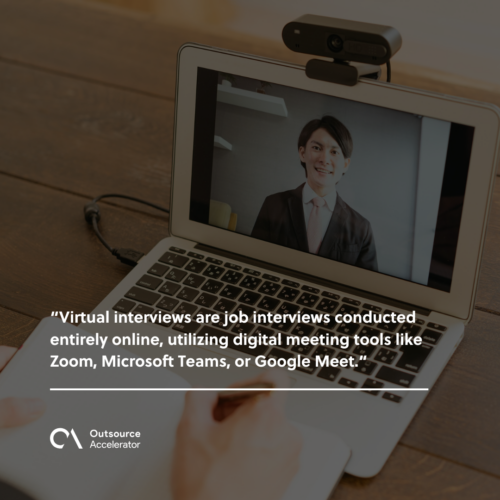
A virtual interview is a job interview held fully online, using digital meeting tools like Zoom, Microsoft Teams, or Google Meet. Instead of meeting in a physical office, employers and candidates simply connect online.
Because of this, it has become the standard in many fields. It lets firms screen applicants faster while saving time and money.
According to a Gartner survey, 86% of organizations moved to virtual technology for at least part of hiring. This shift reflects a wider move toward remote work and global hiring. For many teams, it also pairs well with smarter recruitment methods that reach talent beyond one city.
Why companies are doing virtual interviews
Firms of all sizes now lean on virtual interviews because they match modern hiring. They are no longer stuck in one location when they look for the right person. Instead, they can reach professionals across the globe through global talent acquisition.
A virtual interview also speeds up recruitment. Rather than juggle travel plans or office space, employers can set up an online call. As a result, HR teams meet more candidates in less time.
Cost is another big reason. Companies save up to 67% on recruitment costs when they switch from in-person to virtual, as per Harver. The savings cover travel, lodging, and time away from work.
Finally, candidates now expect flexibility. As remote and hybrid work grow, job seekers value employers who adapt. So running interviews online signals that a firm embraces modern habits.
Benefits of conducting virtual interviews vs in-person interviews
Virtual interviews offer clear gains over traditional in-person meetings. Here are the main ones.
- Wider talent pool : Employers can reach skilled candidates worldwide, not just those nearby. This helps a lot for niche roles where local talent is thin.
- Reduced costs : Both sides save money on travel, lodging, and related costs.
- Time efficiency : Online interviews are easier to schedule. As a result, back-to-back sessions run more smoothly.
- Consistency : Many tools let you record calls. So hiring teams can review and compare candidates more fairly.
- Accessibility : Virtual interviews are more inclusive. For example, candidates with mobility needs or rural homes can join with ease.
- Faster decisions : With fewer delays, hiring managers move through the process more quickly.
12 best practices when holding virtual interviews
A strong virtual interview takes preparation. Employers must focus on both the tech and the candidate experience. Here are 12 tips to follow.
1. Test technology before the interview
First, check the video platform, microphone, and internet link. Technical glitches can throw off a call and leave a poor impression. So encourage candidates to test their setup too.
2. Choose a professional setting
Next, run interviews in a quiet, well-lit room. Background noise can hurt communication and make the meeting feel less serious.
3. Provide clear instructions
Send candidates simple steps ahead of time. Include the meeting link, login needs, and the likely length. A clear process lowers stress and keeps everyone on time. Handy interview scheduling tools can send these details for you.
4. Dress professionally
Even online, employers should keep the same dress code they use in person. As a result, professional attire shows respect and intent.
5. Open with small talk
For example, a short, casual chat helps candidates relax. Virtual calls can feel stiff, so a brief hello builds rapport.
6. Explain the interview structure
Next, outline how the call will run. Candidates should know what to expect, whether it is a skills test, a panel discussion, or behavioral questions.

7. Maintain eye contact through the camera
Look at the camera, not the screen. This small habit mimics real eye contact. As a result, the chat feels more warm and personal.
8. Ask behavioral and situational questions
Focus on real examples and problem-solving. This approach shows a candidate’s skill and adaptability better than yes-or-no questions. Clear pre-screening questions can help you shortlist people before the main call.
9. Take notes carefully
First, take notes without losing focus. Some tools allow private notes inside the call. So the conversation still feels smooth.
10. Be mindful of time zones
When you interview global candidates, pick hours that suit both sides. This shows respect for their time.
11. Record the interview when possible
With the candidate’s consent, record the call so others can review it later. As a result, hiring stays fairer and more balanced.
12. Follow up promptly
After the call, share the next steps clearly. Candidates value honesty about the timeline or any extra needs. A smooth candidate experience also protects your brand.
Hire talent from anywhere with a virtual interview
The biggest gain of a virtual interview is that it removes distance. Companies can hire the best people, whether they live nearby or on another continent. In fact, this matters most in fields where local talent is scarce.
McKinsey found that 87% of employees would work remotely if given the choice. Virtual interviews support this trend by helping firms hire people who prefer remote roles.
For firms that expand abroad, these interviews also ease compliance. Instead of flying people in, HR teams assess skills online. Then they use Employer of Record (EOR) services or global payroll to onboard new hires legally.
In short, a virtual interview can be a long-term way to build strong, diverse, and future-ready teams.
Frequently asked questions about virtual interviews
How long should a virtual interview last?
Most virtual interviews run 30 to 45 minutes. For example, screening calls can be shorter, near 20 minutes. Final rounds may run longer because they cover deeper skills. Still, keep a clear time limit so the call stays focused.
What should employers do if the technology fails mid-interview?
First, stay calm and have a backup plan ready. Share a phone number or a second platform before the call starts. If video drops, switch to audio so the chat can continue. Because of this, a glitch will not end a strong interview.
How can employers reduce bias in a virtual interview?
Use the same questions and a simple scorecard for every candidate. Also, record the call with consent so others can review it. As a result, decisions rest on skills, not first impressions.
Are virtual interviews as effective as in-person ones?
Yes, for most roles they work just as well. In addition, they save time and widen your talent pool. For hands-on jobs, though, a short in-person step may still help.
What questions work best in a virtual interview?
Behavioral and situational questions work best. For example, ask how a candidate solved a real problem at work. These answers show skill and judgment far better than simple yes-or-no prompts.






 Independent





