
Supply Chain Coordinator

Definition
Supply Chain Coordinator
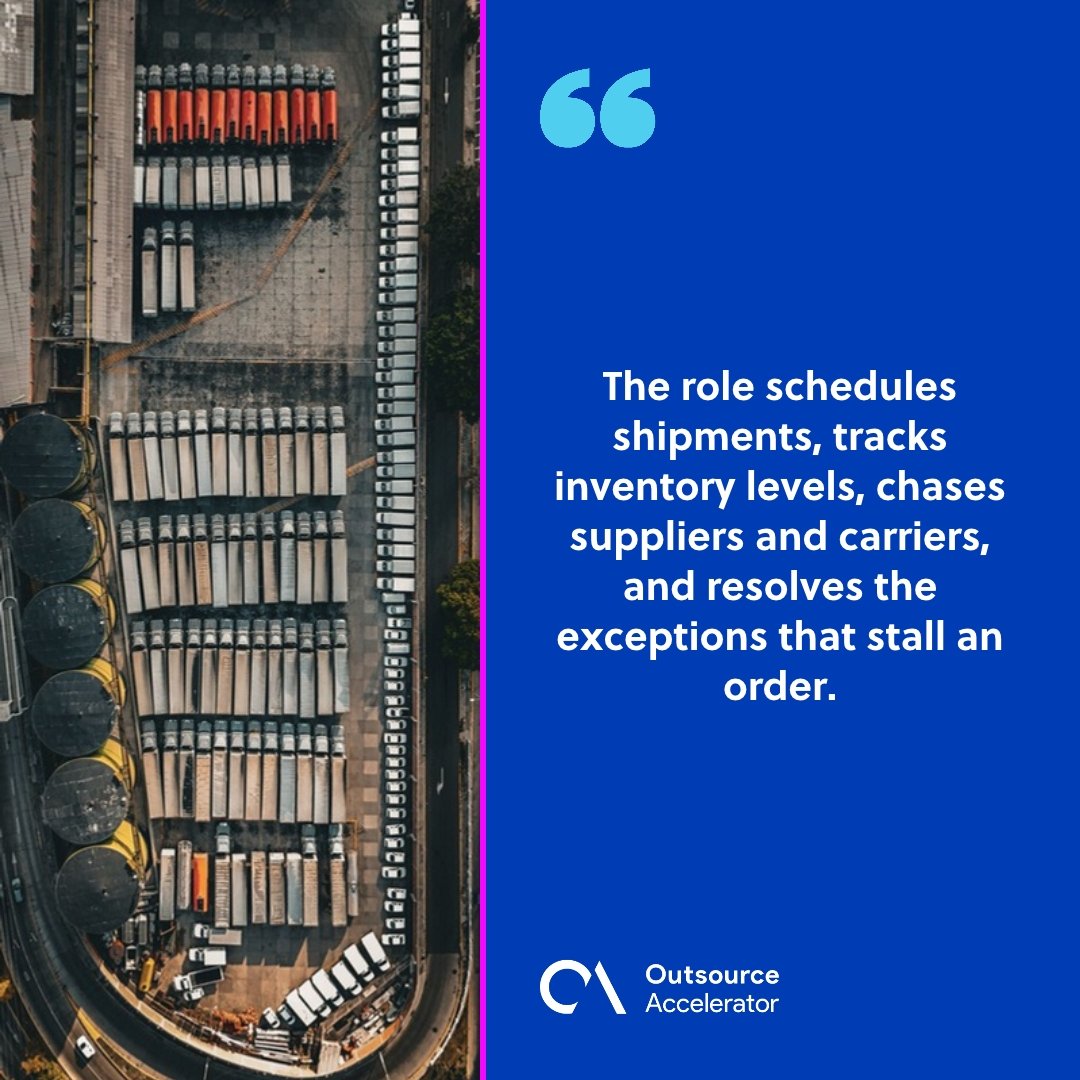
A supply chain coordinator keeps the physical flow of goods moving from day to day. The role schedules shipments, tracks inventory levels, chases suppliers and carriers, and resolves the exceptions that stall an order. It is the exception desk of the supply chain.
On a good day the role is almost invisible. Orders are placed, goods arrive, stock records match, and nobody upstream or downstream has to think about it.
The job exists for the other days. A supplier misses a ship date, a container sits in customs, a stock count disagrees with the system, and someone has to decide what happens next before the problem reaches a customer.
That makes speed of response more valuable than elegance of plan — a good coordinator is measured on how quickly a disruption is contained, not on how rarely one occurs.
It is also why the role is hard to judge from its outputs. The desk that looks busiest is often the one absorbing someone else’s poor forecasting rather than the one performing worst.
Key takeaways
- The role coordinates day-to-day movement of goods and handles disruptions.
- Exception response time matters more than planning sophistication.
- The work sits below planning and above warehouse execution.
- Clear escalation rules are what keep the role from becoming a bottleneck.
How it works
The day runs on a standing check of what should have happened and has not. Confirmed orders are matched against expected ship dates, in-transit shipments against promised arrivals, and stock records against what the warehouse reports.
Every mismatch becomes a decision with a clock on it. The coordinator either resolves it inside an agreed authority or escalates — and the escalation threshold is what separates a functioning desk from a congested one.
| Exception | What it threatens | First move |
|---|---|---|
| Supplier misses a ship date | the downstream production slot | confirm the new date, then reschedule or expedite |
| Carrier delay in transit | a customer delivery promise | reroute, or warn the customer before they ask |
| Stock count mismatch | every forward plan built on that number | freeze the location and recount before reordering |
| Customs or document hold | the entire shipment, indefinitely | fix the paperwork at source, not at the border |
Demand for the discipline is climbing fast. The US Bureau of Labor Statistics projects logistician employment to grow 18 percent between 2025 and 2035, from a 2025 base of 255,100 jobs at median pay of $82,320.
Trade complexity explains much of that growth. The US Census Bureau publishes monthly statistics on international trade in goods and services, the reference series most planners use to track import and export flows.
Longer, more international routes also raise the cost of a single failure, which is why coordination now sits close to supply chain resilience planning rather than being treated as pure administration.
Examples
What the role coordinates depends on what breaks most often. Manufacturing coordinators protect a production schedule, retail coordinators protect shelf availability, and project coordinators protect a single delivery date that everything else depends on.
A food manufacturer coordinates around shelf life. Ingredients arrive on short expiry windows, so a two-day supplier delay is not an inconvenience but a write-off — and the coordinator escalates far earlier than in other sectors.
An apparel retailer coordinates around seasonality. Arriving late is as damaging as not arriving, because discounting a seasonal line erases the margin the order was placed to earn.
A construction contractor coordinates around sequence. Materials have to land in installation order, so the coordinator spends more time resequencing deliveries than chasing missing ones, often working beside a transportation coordinator on routing.
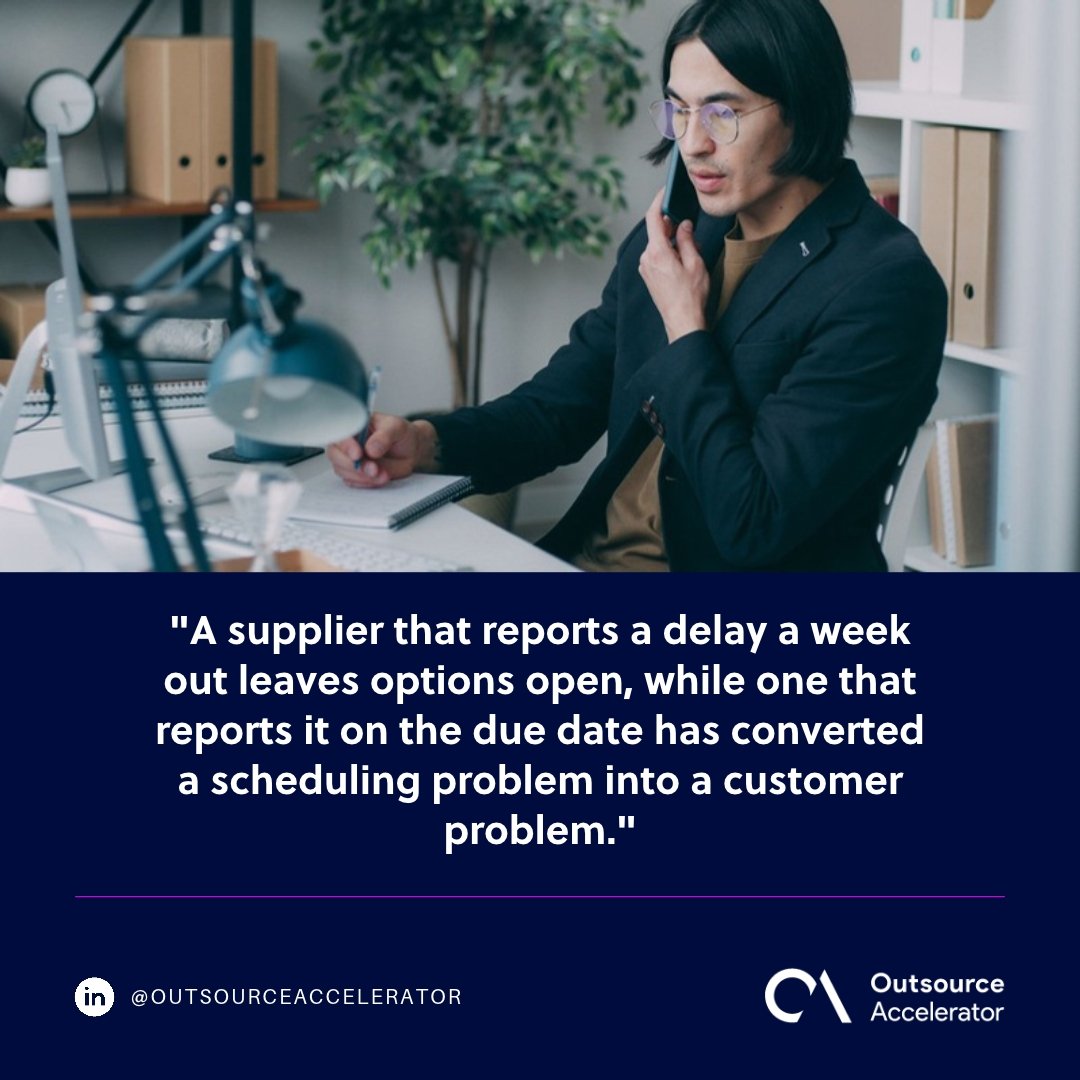
All three depend on being told early. A supplier that reports a delay a week out leaves options open, while one that reports it on the due date has converted a scheduling problem into a customer problem.
Related terms
Supply chain titles are separated by scope and by whether the work is analytical or operational. The distinctions below clarify which neighbouring role owns what, which matters when writing a job description or scoping an outsourced team.
- Logistics Coordinator: the narrower role focused on transport and delivery rather than the whole chain.
- Logistics Analyst: the analytical counterpart who studies network cost and performance instead of running daily flow.
- Inventory Analyst: the specialist who sets stock levels the coordinator then works to maintain.
- Warehouse Coordinator: the site-level role handling physical receipt, storage and despatch.
- Supply Chain Outsourcing: the delivery model under which these coordination roles are often bought.
FAQ
What does a supply chain coordinator do?
They schedule and track the movement of goods, monitor inventory against plan, chase suppliers and carriers, and resolve or escalate the exceptions that would otherwise stall an order.
How is the role different from a logistics coordinator?
A logistics coordinator concentrates on transport and delivery, while a supply chain coordinator spans supplier, inventory and delivery issues. In smaller companies the two titles describe the same desk.
Is it a planning role?
No. Planning sets what should happen over coming weeks and months; coordination makes the current week actually happen and reacts when it does not.
What makes someone good at it?
Fast, clear communication and sound judgement about when to solve and when to escalate. The costly failures are usually delayed escalations rather than wrong decisions.
Can the role be delivered offshore?
Yes, provided escalation paths and decision authority are written down rather than assumed.
Compare providers with established supply chain support teams in the Outsource Accelerator directory.






 Independent






