
What to consider for compliance outsourcing?

What should you consider for compliance outsourcing?
Compliance outsourcing means you hand legal and regulatory work to an outside provider, so you cut costs while keeping your business fully compliant.
- It gives you expert legal support without the high cost of an in-house team.
- It keeps you current as laws and rules keep changing.
- It works best when you vet the provider and start with a small pilot.
Compliance outsourcing is one simple way to lower operating costs while you stay focused on your core work. Legal services are a core need for most companies. So you can either staff a full legal department or bring in outside help.
However, hiring in-house experts is expensive. You also pay for the office space and the technology to support them. Because of this, many firms choose to outsource legal services to a provider who can do the job well. Deployed, a leading Philippines outsourcing supplier shares their insights on this topic.
Continuously-changing compliance standards
One big reason to consider legal outsourcing is the constant change in the law. New rules appear all the time. So you must keep up and make sure your operations stay compliant. This alone can add a heavy load to your team.
Meanwhile, cross-border rules add another layer of work. For a clearer view of these demands, this guide to global compliance in outsourcing is a useful read. As a result, many leaders hand this task to a partner. Outsourcing legal work can be the best way to manage your firm’s legal risks.
Global competence
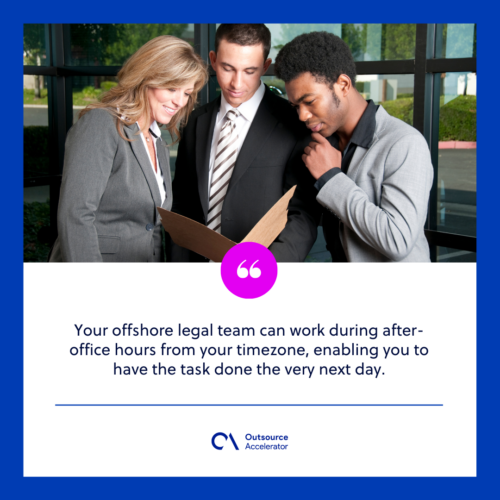
One clear benefit of outsourcing is global reach. For example, your offshore legal team can work after your office hours. So a task you hand over today can be ready the very next day.
Moreover, your provider may not follow the same holidays you do. This means your legal team can still work on days like Independence Day and Christmas. As a result, your work keeps moving even when your local office is closed.
Increasing demand for legal outsourcing services
Client pressure pushes firms to deliver fast, efficient service. So it is no surprise that demand for legal outsourcing keeps rising. Higher rates and calls for better efficiency are common complaints inside law departments.
In addition, smaller teams now handle more work than before. Because of this, they look for outside help to keep pace. A trusted partner can take on routine tasks and free your staff for higher-value work.
Scarcity of appropriate talent or expert
Hiring an in-house expert is costly. Because of that high cost, many companies run short on legal staff. So gaps in coverage can slow down key work.
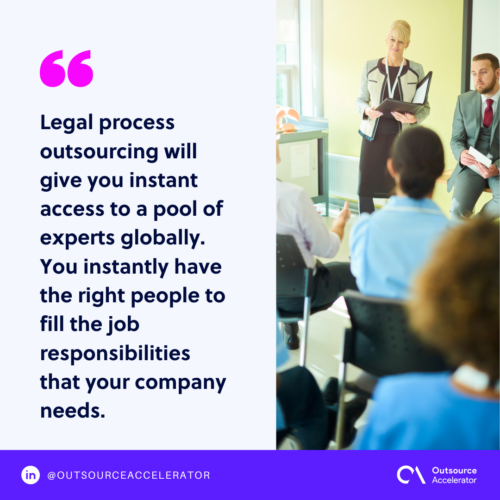
Still, there is an easy fix. This is where legal process outsourcing helps. It gives you instant access to a pool of experts around the world. So you get the right people for the job right away. Most of all, you reach this talent at a lower rate than in-house hiring. You can even add a virtual legal assistant to support daily tasks.
The need for additional business insight through technology
Technology is now a top priority for most companies, along with cleaner, standard processes. Legal work is no different. So firms want tools that speed up review and cut errors.
Today, machine learning, language processing, and artificial intelligence support many legal tasks. For example, you can train software to scan huge sets of documents. That review might take a person months or even years by hand.
In addition, these tools give you useful insight. As a result, you can improve your business in a way that saves both time and money.
Access to technology-based legal processing
These days, law firms rely on many IT functions. This calls for skills that are costly and slow to build on your own. So outsourcing all or part of this IT work can make a real difference to your efficiency.
Meanwhile, the legal field has moved into cloud technology too. This shift has brought big gains over the years. Because of this, cloud tools now bring clear benefits and speed to the legal sector.
Should you invest in offshore legal outsourcing?
Outsourcing brings clear gains, yet you should also plan for the risks. For example, confidential data could leak if controls are weak. Communication gaps can also appear when two firms work across cultures. Hidden fees are another thing to watch.
So it pays to know the common outsourcing risks before you sign. It also helps to weigh the full legal and compliance side of any deal. Still, you can manage these risks. First, decide what suits your firm. Next, choose the right provider to lower those risks.
How to know the best legal outsourcing provider?
Before you sign with a compliance outsourcing provider, do your homework. So research the firm and ask clear questions before you commit. To test how well they communicate, send them a small pilot project first. As a result, you learn how they work before you scale up.
Deployed is a leading outsourcing supplier, specializing in compliance outsourcing services as well as other verticals.
Frequently asked questions about compliance outsourcing
These questions come up most when firms first look at compliance outsourcing.
What is compliance outsourcing?
It is the practice of hiring an outside provider to handle legal and regulatory tasks. So you keep your business compliant without a large in-house team. It often covers document review, reporting, and general legal support.
How much can compliance outsourcing save?
Savings vary by scope and location. Still, offshore teams usually cost far less than in-house hires. You also save on office space, tools, and training.
Is my data safe with a legal outsourcing provider?
Yes, when you choose a vetted partner with strong controls. So ask about their security, access rules, and data handling. A clear contract and regular audits add more protection.
How do I start with compliance outsourcing?
First, define the tasks you want to hand over. Next, shortlist providers and check their track record. Finally, run a small pilot before you commit to a bigger deal.






 Independent






