
Here’s why you need a junior software developer


Why does your business need a junior software developer?
A junior software developer gives your team fresh ideas, affordable talent, and a steady pipeline of future senior engineers.
Senior roles matter, of course. Still, junior roles are just as vital for a few clear reasons. Here is what a junior hire brings to your business:
- Fresh thinking that senior staff may overlook.
- Lower cost for routine coding, testing, and support.
- Loyalty, because you grow and promote your own talent.
For example, a junior developer may try new tools that a senior engineer skips out of habit. So you get new ideas without a big budget. In addition, when you mentor junior staff, you build future seniors from within. As a result, you keep a steady supply of skilled people and a loyal team. This article explains what a junior software developer does and why your business might need one.
What is a junior software developer?
A junior software developer is an entry-level software engineer who is new to the field. This person works under the guidance of more experienced developers or senior engineers.
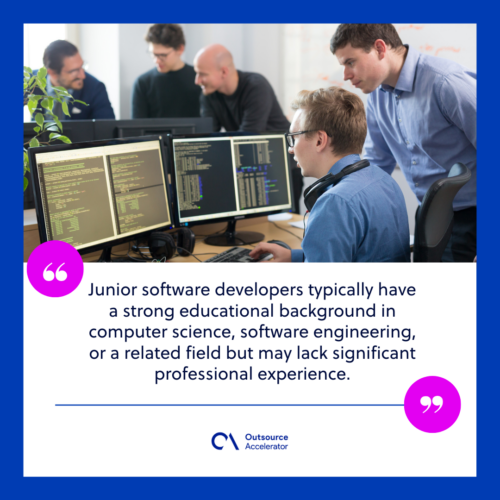
Most junior developers have a strong school background in computer science or a related field. However, they often lack much work experience. So they may not match a senior’s deep skills yet. Even so, they bring fresh ideas and a real hunger to learn and grow.
You can hire junior software developers directly. You can also outsource them from notable companies like Arcanys. For many firms, software development outsourcing is a fast way to add this talent without a long hiring push.
Junior software developer: Roles and responsibilities
A junior software developer plays a real part in a project’s success. The role covers many tasks that keep the work moving. So let us look at what junior developers do in the field of software development.
Writing and maintaining code
A junior developer turns the team’s design and specs into working code. This means writing clean, simple code that others can read and use. In addition, juniors often build the less complex features first. Through this work, they learn coding practices, version control, and teamwork. To see how coding fits the bigger picture, review the stages of the software development life cycle.
Debugging and fixing software defects
Bugs are a normal part of the work. So a junior developer helps find and fix these issues. Debugging is a skill that grows over time. As a result, juniors learn from mistakes and build a strong base in problem solving. They use debug tools, read error logs, and work with senior staff to fix things fast.
Collaborating on software design
Software work is a team effort. So a junior developer should take an active part in the design process. For example, juniors can offer ideas, ask questions, and test assumptions. This open approach sparks new ideas. As a result, the final product fits both the business and its users.
Assisting in the testing and quality assurance
Quality assurance is a key part of software work. So junior developers often help during the testing phase. They write test cases, run manual tests, and support automated testing. In addition, this hands-on time with testing tools is a skill they carry through their careers. Many teams follow clear quality assurance standards to keep results consistent.

Providing technical support
Once a product ships, it often needs ongoing support. So a junior software developer can help end users or internal teams. This work includes a few key tasks:
- Troubleshooting issues
- Answering technical queries
- Helping users make the most of the software
Support work sharpens problem solving. As a result, the junior gains a real feel for how the software is used day to day.
Following project management
A junior developer also learns why project management matters. For example, they meet timelines, track progress, and work with managers and senior developers. So they build good habits early.
Learning and applying new technologies
The tech world changes fast. So every developer must keep up with the latest tools. A junior often gets a fresh chance to try new ideas. For example, they can test new emerging programming languages, frameworks, and tools. As a result, they bring new energy to the team. This drive to learn is one of their most valuable traits.
Skills to look for in a junior software developer
When you hire a junior software developer, look for the right skills. So try to identify candidates who show these strengths:
- Programming fundamentals – Look for someone who gets core concepts and can write clean, efficient code.
- Team collaboration – Seek a candidate who works well with colleagues, senior developers, and other stakeholders.
- Attention to detail – A junior must care about high-quality, error-free software.
- Time management – A junior should sort tasks well, meet deadlines, and juggle duties to keep work on track.
- Effective communication skills – Developers must share technical details in clear, simple terms. So look for someone who explains ideas with ease.
- Testing skills – An ideal hire should grasp basic testing and be able to write and run test cases.

Organizations like Itransition can spot and grow talent that adds real value to their software work. So screening for these skills pays off over time. For teams that want full support, IT outsourcing services can supply vetted junior talent on demand. In addition, a related role like the programmer analyst can widen your technical bench.
Junior software developer: Brings fresh tech ideas
Junior software developers are not just entry-level staff. In fact, they are the future of software development. Their mix of new skills and fresh ideas lifts the whole team. As a result, the business moves faster in a fast-changing tech world.
So mentoring a junior developer is a smart, long-term investment. Because of this, firms that nurture new talent are better placed to innovate and grow in the digital age.
Frequently asked questions about junior software developers
How much experience does a junior software developer usually have?
Most juniors have zero to two years of paid work. Often, they come straight from a degree, a bootcamp, or an internship. So their school projects and personal code matter a lot during hiring.
Is it cheaper to hire a junior developer than a senior one?
Yes, junior salaries sit well below senior pay. However, juniors need mentoring and review time. So the real saving comes when seniors focus on hard problems and juniors handle routine work.
Should a small business outsource junior developers or hire in-house?
It depends on your workload and budget. For short or changing projects, outsourcing adds skilled juniors fast. Meanwhile, steady long-term work may suit an in-house hire you can train over years.
How long does it take a junior developer to become a senior?
Many juniors reach a mid-level role in two to three years. After that, a senior title often follows in four to six years. Still, strong mentoring and real project work can speed this up.
What tasks should you give a new junior developer first?
Start with small, low-risk tasks like bug fixes and simple features. Next, add test cases and code reviews with a senior. As a result, the junior builds confidence without putting key systems at risk.






 Independent






