
10 high-volume hiring strategies to try in 2026


What is high-volume hiring?
High-volume hiring is a strategy for filling many roles quickly, where a company recruits, screens, and onboards a large number of candidates at once.
- It focuses on speed and scale, not on filling one job at a time.
- Good metrics, automation, and clear teamwork keep quality high.
- Done well, it cuts cost per hire and builds a strong talent pipeline.
In recruitment, staying ahead needs fresh ideas. As we move through 2026, hiring keeps changing fast. This is true above all when you recruit many candidates at once. So this article explains what high-volume hiring involves. It also covers its importance, strategies, metrics, benefits, and challenges.
High-volume hiring is a strategy that meets the rapid, large-scale staffing needs of a company. Unlike traditional hiring, which fills one role at a time, this method onboards many candidates at once. For this reason, many firms pair it with recruitment process outsourcing to handle the load.
High-volume hiring metrics
Let us look at three key metrics. Together, they help you measure and improve your high-volume hiring efforts.
Time-to-fill
Time-to-fill measures how long it takes to fill an open role. In high-volume hiring, speed is vital, so a short time-to-fill matters. It keeps your company agile. In addition, it improves the candidate experience. When you streamline the process, you win top talent before rivals do.
Cost-per-hire
You must also watch cost-per-hire to keep your strategy efficient. To find it, add up the total cost to fill a role, such as:
- Advertising
- Recruitment software
- Hiring team salaries
High-volume hiring aims for quantity. Still, you must control costs without hurting quality. So tracking cost-per-hire shows whether your process stays effective and budget-friendly.
Application completion rate
This metric shows the share of candidates who finish the whole application. In high-volume hiring, a high rate signals an easy, user-friendly process. By contrast, a low rate may point to barriers that drive good people away. As a result, tracking it helps you fix problems and move more qualified candidates through the funnel.
10 high-volume hiring strategies to implement
Here are ten strategies that streamline the process. In turn, they help you attract, assess, and onboard many candidates fast.
1. Implement automated pre-screening tools
Automated pre-screening tools are your first line of defense. They scan resumes, check qualifications, and build a shortlist against set criteria. Because this early phase runs on its own, you save time and resources. As a result, only the best-fit candidates move forward.
2. Organize virtual job fairs
Embrace the digital age with virtual job fairs. These events connect you with candidates without the limits of a physical venue. In addition, they attract diverse talent and allow fast, easy networking.
3. Utilize a mobile-friendly application process
Everyone is on the move, so a mobile-friendly application is a must. Make sure your platform works on phones and tablets. This widens your candidate pool. It also shows a real commitment to user-friendly steps.
4. Use social media platforms to promote job openings
Social media is a strong way to reach passive candidates. So use it to promote your openings and build buzz. Platforms like LinkedIn and Facebook offer wide reach. Craft posts that advertise roles and show your culture too.
5. Implement a referral program
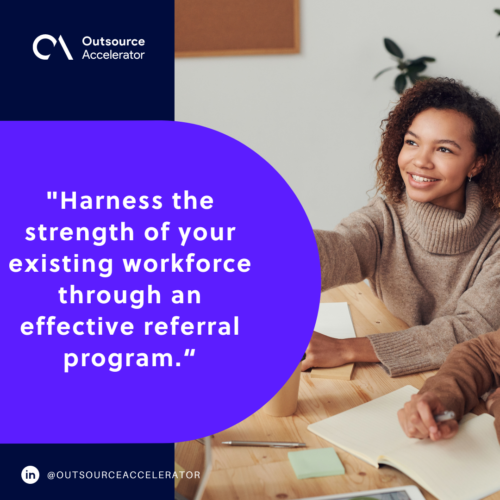
Tap your current team through a referral program. Encourage staff to recommend strong people from their networks. This draws on a trusted source of hires. In addition, it builds a sense of community at work.
6. Conduct initial interviews through video platforms
Save time with video interviews for the first round. They let recruiters assess people without travel. As a result, your team can screen more candidates in less time.
7. Organize bulk hiring events
Hire in large numbers through bulk hiring events. These events build buzz and draw a diverse pool. Whether online or in person, a focused format speeds up assessment. It also supports smarter talent acquisition at scale.
8. Foster collaboration between hiring managers and recruiters
Smooth teamwork between managers and recruiters is critical. So create a shared approach from the start. Both sides should agree on the criteria and expectations. In turn, this cuts delays in the decision-making process.
9. Develop training programs
Invest in training built for high-volume hires. These programs help new staff settle into the culture and processes. By giving the right tools upfront, you set hires up to succeed from day one.
10. Collect feedback from both candidates and hiring teams
Continuous improvement keeps your process sharp. So gather feedback from candidates and hiring teams alike. This loop lifts the candidate experience. In addition, it lets you fine-tune strategies with real-world insight.
Challenges of high-volume hiring
High-volume hiring brings clear gains. Still, companies must handle a few challenges with care.
Maintaining the quality of hires
One top challenge is maintaining the quality of hires. Too many candidates can hide key skills and culture fit. As a result, rushing to hit targets may lead to weaker hires.
Can strain the candidate experience
A flood of applicants can strain the candidate experience. For example, slow replies or clunky steps cause frustration. In turn, that creates a poor view of the company.
Can pose challenges in maintaining diversity and inclusion
High-volume hiring aims for a large pool. Still, it can make diversity harder to protect. Streamlined steps may add hidden bias. Meanwhile, the pressure to fill roles fast can push diversity aside.
Benefits of high-volume hiring
Here are some key points that show why high-volume hiring matters.
Meeting organizational needs
High-volume hiring does more than fill seats. It also aligns your workforce with demand fast. For example, a sudden project surge or a seasonal spike needs quick staffing. So mass hiring puts the right people in place at the right time.
Efficiency and speed
This method is built for speed and efficiency. It hires many people while keeping the process quick. At the same time, it works to hold quality steady as the company grows.
Cost-effective
Many assume high-volume hiring is costly. In truth, it is often cost-effective. By simplifying and automating steps, firms cut their overall spend. This method also balances cost with hiring high-quality candidates. As a result, it helps the company’s bottom line.
Adaptability
In business, being adaptable is key. High-volume hiring is a proactive strategy. So it gives firms the flexibility to adjust staffing fast. In turn, they can respond to market shifts and gain an edge.
Diversity and inclusion
A big advantage is better diversity and inclusion. By drawing a large, varied pool, firms build a workplace of broad perspectives. As a result, this fosters innovation and a culture of inclusion.

Talent pipeline
Volume recruitment builds more than today’s hires. It also grows a strong talent pipeline. By engaging a large pool over time, firms set a base for future needs. Strong employee engagement keeps that pipeline warm.
Technology integration
In the digital age, technology plays a central role. From applicant tracking systems to video interviews, tech boosts speed and accuracy. As a result, firms stay ahead and make data-driven calls.
Employee retention
High-volume hiring also supports retention. When new hires enjoy a smooth onboarding, they feel supported. In turn, that drives long-term satisfaction and loyalty.
Scalability and rapid growth
Mass hiring lets firms grow their workforce fast. So they can meet rising demand with ease. As a result, the business can adapt and scale quickly.
Achieving success through high-volume hiring
Success here goes beyond numbers. It means a streamlined, inclusive, and efficient process. That process must align with your goals and values. So remember that high-volume hiring is not only about quantity. It is also about quality, efficiency, and adaptability.
With the right strategies and metrics, firms can handle the challenges. In turn, they enjoy a dynamic, responsive workforce. Another smart option is offshore staffing through a provider. Many firms also use recruitment outsourcing to scale faster.
Another smart option is offshoring to Digital Consulting, a premier talent and remote staffing solution that connects global companies with highly skilled Filipino professionals.
Frequently asked questions about high-volume hiring
Here are the questions recruiters ask most often about high-volume hiring.
What counts as high-volume hiring?
There is no single threshold. In general, it means filling many roles in a short window. For example, a company may need dozens or hundreds of hires for a new site or a busy season.
Which metrics matter most in high-volume hiring?
Three metrics stand out. These are time-to-fill, cost-per-hire, and application completion rate. Together, they show how fast, how cheap, and how smooth your process really is.
How can I keep quality high while hiring at scale?
Use automated pre-screening to filter early. In addition, set clear criteria with your hiring managers. Finally, collect feedback so you can fix weak spots fast.
Should I outsource high-volume hiring?
Many firms do. A recruitment partner brings tools, reach, and extra headcount. As a result, you can scale quickly without straining your in-house team.






 Independent






