
Top 12 call center tools for exceptional customer experience


What are the best call center tools for great customer service?
The best call center tools help agents route, track, and handle calls with ease, so customers get fast and personal support.
- Core tools include call center software, IVR, and automatic call distribution.
- Coaching tools like call monitoring, barging, and whisper coaching support agent training.
- VoIP and predictive dialers help teams work faster and cut costs.
A fully working call center is not that easy to set up. Of course, you want to give the best service to your customers. At the same time, you want the right call center tools for your agents. So your team should use high-end call center tools to keep top-tier service. Today, most tech innovations focus on customer experience. As a result, businesses must build a customer-centric approach to their call center work. In this article, we will look at 12 must-have call center tools for your daily work.
Call center tools: Inbound vs. outbound call center
First, you must know how each call center type works. This helps you pick the right call center tools for your team. In general, call centers fall into two groups: inbound and outbound. Some focus on one type, while most handle both.
An inbound call center is where agents take incoming calls from customers. For example, people call in to ask questions, report a problem, or get help. So inbound services often cover order and payment processing, tech support, and renewal inquiries.
On the other hand, an outbound call center has agents make outgoing calls. Sales agents usually cold-call leads to sell products and services. Other teams also make outbound calls for surveys and market research. As a result, outbound services often include telesales, telemarketing, lead generation, and appointment setting.

Using call center tools to improve customer-centricity
Customer-centricity matters to every business. Still, many call centers fail to deliver great service. Often, they focus on sales more than on their actual customers. However, whether you run inbound, outbound, or hybrid work, sales should start with the customer first.
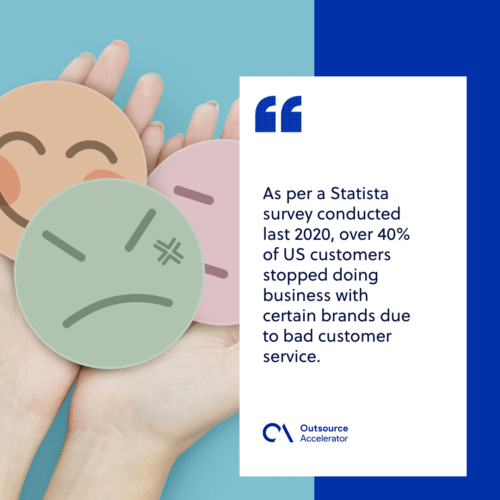
As per Statista, over 40% of US customers stopped buying from a brand due to bad service. So poor service leads to unhappy customers. As a result, it hurts your satisfaction, retention, and bottom line. Becoming customer-centric can feel hard, since customers now expect more. The key is to use the right call center tools to serve them well.
12 crucial call center tools to achieve customer-centricity
Choosing the right call center tools can feel daunting, since there are so many options. To help you, here are 12 call center tools that support a customer-centric team.
1. Call center software with third-party integrations
Customer-centricity is about knowing your customers and meeting their needs. Zendesk, Magento, and Salesforce are examples of software with two-way integrations. So they can connect with your other business tools. This kind of call center software gives agents access to past customer interactions, such as tickets, inquiries, and call logs. As a result, agents can adjust their service in real time.
2. Interactive voice response (IVR)
An interactive voice response (IVR) lets you record greetings for every call. Then it routes calls to the right agent, such as tech or multi-lingual support. As a result, callers reach the best-fit agent faster. In addition, agents build deeper skills for each type of concern.

3. Automatic caller information pop-up
You also need an automatic caller information pop-up. This tool shows a caller’s details on the agent’s screen at the start of a call. For example, it can show the name, company, email, phone, and social profiles. As a result, agents give more personal and accurate service.
4. Call monitoring
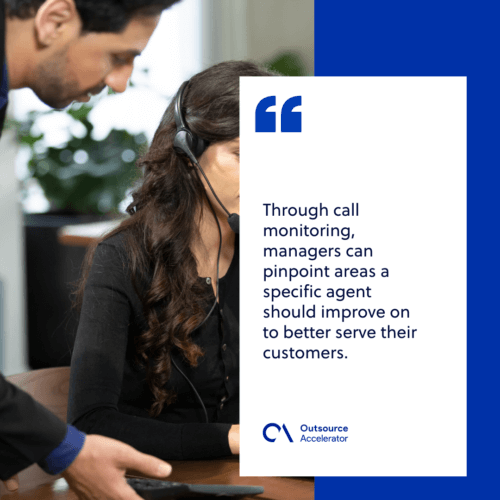
Call monitoring is a great tool for managers. It lets them track and listen to live calls without the agent or customer knowing. So teams often use it for training and quality checks. As a result, managers can spot where an agent should improve.
5. Call barging
Like call monitoring, call barging lets managers listen to live calls in private. In addition, it lets a manager talk to both the agent and the customer. So it helps when a caller asks for a supervisor.
6. Whisper coaching
Whisper coaching is also vital for agent training. As the name implies, it lets a manager coach an agent mid-call without the caller knowing. For example, managers can guide agents through hard calls or upset customers.
7. Call recording
Call recording is another top tool for managers. Live monitoring is useful, but not all managers have time for it. So a call recording tool fills the gap. As a result, managers can review calls at their own pace and give feedback. This helps a lot when agents work remotely.
8. Call conferencing
Customers hate long holds. So you can use a call conferencing tool instead. It lets agents loop in another department or an expert without a long wait. In addition, it works well for training. For example, trainees can listen to senior agents on live calls and learn firsthand.

9. Real-time reporting
Real-time reporting tools give you fast insight into agent performance. For example, you can track daily call volumes and closed tickets. In addition, the data shows current and coming trends. As a result, you can fine-tune your customer-centric approach.
10. Automatic call distributor (ACD)
An automatic call distributor (ACD) takes calls and sends them to free agents on its own. So it works best for large call volumes. As a result, customers reach the next free agent fast, which lifts satisfaction.
11. Predictive dialer
A predictive dialer suits call centers with many outgoing calls. It saves agents from dialing numbers or searching the database by hand. So it frees up time for real conversations. As a result, agents stay more productive and focused on good service.

12. Voice over Internet Protocol (VoIP)
Voice over Internet Protocol (VoIP) lets agents call over the internet instead of a phone line. It turns voice into digital signals, so agents can call from their computers. As a result, teams can offer support online rather than through analog lines.
The value of call center software solutions
Call center tools play a key role in daily work. They also help lift service quality. For example, ACD, IVR, CRM, and call recording are core parts of any strong setup. So the best software helps teams manage inbound and outbound calls with ease. As a result, customers stay happier and agents work more effectively.
Frequently asked questions about call center tools
What are call center tools?
Call center tools are the software and systems agents use to handle calls. For example, they include IVR, ACD, call recording, and VoIP.
Which call center tool is most important?
It depends on your goals. Still, most teams start with call center software and an ACD. Together, they route calls and give agents key customer data.
Do small call centers need these tools?
Yes. Even small teams gain from IVR, call recording, and VoIP. As a result, they can offer strong service without a big budget.
How do call center tools improve customer service?
They route callers to the right agent and share customer history fast. So agents solve issues quickly. In addition, coaching tools help agents keep improving.
Get access to the latest call center tools through outsourcing!
Setting up an in-house call center takes more than tools and equipment. It can be hard to hire and train agents with limited resources. Because costs keep rising worldwide, an alternative can help. So consider outsourcing your call center to Clark Staff, one of the leading staffing solutions providers in the Philippines. As a result, you will not worry about finding the best call center tools for your team. You may also browse our BPO Directory to find the right provider for your needs.
Key takeaways
- Call center tools help agents route, track, and handle calls with ease.
- Core tools include call center software, IVR, and automatic call distribution.
- Coaching tools like monitoring, barging, and whisper coaching build better agents.
- VoIP and predictive dialers cut costs and boost productivity.
- Outsourcing gives you fast access to the latest call center tools.






 Independent





