
The ultimate guide to BPO lead generation and sales growth


- BPO lead generation drives scalable growth by combining targeted outreach, personalized engagement, and data-backed strategies.
- Effective strategies include targeted outbound campaigns, content-led inbound generation, social selling, and data-driven lead qualification.
- Common mistakes like chasing volume, using generic messaging, and neglecting follow-ups can weaken pipelines and slow sales.
- Future trends focus on automation, predictive analytics, and trust-building, with scalable, insight-led approaches shaping long-term success.
Outsourcing has become a strategic growth lever for companies seeking efficiency, scalability, and access to specialized expertise across business functions such as customer support, IT, finance, and sales.
As competition intensifies, more organizations rely on external partners to streamline operations and accelerate revenue generation.
A recent Grand View Research report highlights this momentum, stating that the global business process outsourcing market size is expected to reach $695.77 billion by 2033. This shows a growth at a CAGR of 9.9% from 2026 to 2033.
Despite this growth, many scaling businesses struggle to strengthen lead pipelines using internal resources alone. Limited bandwidth, skills gaps, and rising costs often slow progress.
For this reason, more and more companies are increasingly collaborating with reputable third-party providers that specialize in demand generation.
In this article, we’ll explore how bpo lead generation works, what effective strategies third-party solutions providers can use, and the things to avoid when running campaigns. We’ll also touch on what the future holds for this area of business operations.
How BPO lead generation works
BPO lead generation helps businesses build a steady stream of potential clients while allowing internal teams to focus on core operations. The process is structured, data-driven, and designed to efficiently deliver high-quality prospects.
Having a good grasp of each step clarifies how outsourcing can accelerate sales growth:
1. Identifying the target audience
The process begins with understanding the client’s ideal customers. BPO providers research market segments, analyze buyer behavior, and create detailed buyer personas.
This insight guides the strategy and defines which prospects will bring the most value.
2. Prospect list building
After defining the target audience, the provider compiles a list of potential leads. They gather information from databases, social platforms, and industry directories, carefully filtering contacts based on relevance, industry, and decision-making authority.
3. Outreach and engagement
The next step involves initiating contact. BPO teams conduct personalized outreach through calls, emails, and social media messages.
Messaging focuses on addressing prospects’ challenges and presenting solutions that align with their needs.
4. Lead nurturing
Prospects showing interest enter a nurturing phase. Providers maintain regular communication, share tailored content, and answer questions to move leads closer to conversion.
Lead nurturing, when done right, builds trust and positions the client as a reliable partner.
5. Handoff and reporting
Qualified leads are handed over to the client’s sales team. Throughout the process, the provider tracks performance metrics, including engagement rates, lead quality, and conversion potential. Detailed reports help refine campaigns and optimize results over time.
BPO lead generation works as a seamless extension of a company’s sales operations.
Outsourcing each step, from research and list building to outreach and reporting, helps businesses accelerate growth and reach more prospects. They can also reallocate internal resources to close deals.
BPO lead generation strategies that actually work
Growing a reliable pipeline takes more than high-volume outreach. BPO companies see stronger results when they apply strategies grounded in relevance, timing, and data-driven execution.
| Lead generation strategy | How it works | Outcome |
| Targeted outbound campaigns | Segments prospects and delivers personalized outreach across email, calls, and social channels | Higher response rates and sales-ready leads |
| Content-led inbound generation | Attracts prospects through educational content and gated resources | Warmer leads that move faster through the funnel |
| LinkedIn and social selling | Engages decision-makers through value-driven interactions on social platforms | Stronger relationships and improved trust |
| Data-driven lead qualification | Scores and prioritizes leads using engagement and CRM insights | Better conversions and an efficient sales focus |
When BPO lead generation strategies combine personalization, valuable content, social engagement, and data intelligence, providers create a scalable system that consistently fuels sales growth.
Let’s explain it further below:
Targeted outbound campaigns
Targeted outbound remains one of the most effective approaches for BPO lead generation. Providers segment prospects based on industry, company size, geography, and pain points.
Outreach teams then craft personalized messages that address those needs directly. This strategy works because decision-makers respond better to relevant conversations than generic sales pitches.
When done well, targeted outbound drives higher response rates and produce leads that align closely with sales goals.
Content-led inbound generation
Inbound strategies attract prospects who already show interest in outsourcing solutions. BPO firms publish educational blogs, whitepapers, case studies, and webinars that address common challenges faced by potential clients.
Content positions the provider as a trusted authority while capturing leads through gated assets and contact forms. High-quality inbound leads typically move faster through the sales funnel because they already understand the value proposition.
LinkedIn and social selling
Social platforms, particularly LinkedIn, play a major role in modern BPO lead generation. Sales teams use social selling to engage decision-makers through thoughtful comments, direct messages, and value-driven posts.
This approach builds familiarity before a sales conversation begins. Strong social selling efforts result in warmer introductions and stronger long-term relationships.
Data-driven lead qualification
Not every inquiry that lands in your inbox is worth the same amount of effort. BPO providers use scoring models, engagement tracking, and CRM data to prioritize prospects with higher intent.
Effective qualification saves time, improves conversion rates, and allows sales teams to focus on opportunities most likely to close.
BPO lead generation: 5 mistakes outsourcing providers should avoid
Strong demand does not automatically translate into consistent deal flow. Many outsourcing providers invest heavily in outreach but still struggle to convert interest into revenue.
In most cases, the issue lies not in effort but in avoidable missteps that weaken lead-generation performance over time:
1. Chasing volume over lead quality
One of the most common mistakes in BPO lead generation involves prioritizing the number of leads over their relevance. High-volume campaigns often rely on broad targeting and generic messaging.
This approach overwhelms sales teams with unqualified prospects and drains time that should be spent on serious opportunities. Poor-quality leads also lower morale and distort performance metrics, making it harder to refine future campaigns.
2. Relying on generic messaging
Outsourcing providers that reuse the same pitch across industries struggle to stand out. Decision-makers expect outreach that reflects an understanding of their specific challenges, compliance requirements, and operational goals.
Generic messaging weakens credibility and reduces response rates. Prospects disengage quickly when messages feel automated or disconnected from their business reality.
3. Ignoring follow-ups and lead nurturing
Initial interest rarely converts into a signed contract without ongoing engagement. Many providers stop communication too early or fail to maintain consistent follow-ups.
This gap causes warm leads to lose momentum and shift attention to competitors that stay present. Missed follow-ups often represent lost revenue rather than a lack of demand.
4. Poor alignment between sales and marketing
Disconnected teams create inconsistent messaging and broken handoffs. Marketing may attract leads that sales teams cannot effectively convert due to mismatched expectations or incomplete data.
Misalignment leads to frustration, longer sales cycles, and lower close rates. Clear collaboration improves lead quality and accelerates conversions.
5. Failing to track and optimize performance
Lead generation efforts lose impact when teams operate without clear metrics. Providers who skip performance analysis struggle to identify what works and what needs adjustment.
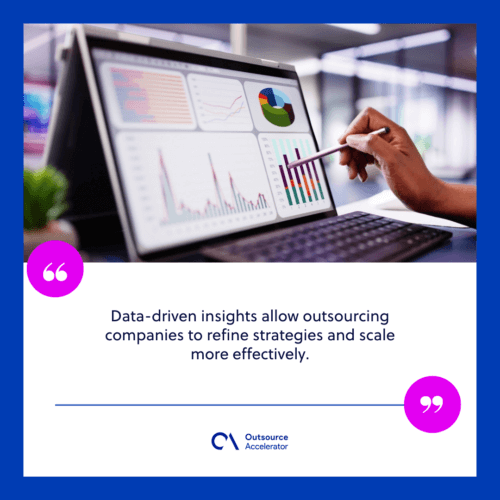
Lack of visibility results in wasted spend, stagnant growth, and missed optimization opportunities. Data-driven insights allow outsourcing companies to refine strategies and scale more effectively.
Avoiding these mistakes strengthens BPO lead generation efforts and helps providers build a predictable, sustainable pipeline that supports long-term sales growth.
What the future holds for the BPO lead generation sector
The future of BPO lead generation centers on precision, automation, and deeper personalization. Providers increasingly rely on data intelligence, AI-driven insights, and predictive analytics to identify high-intent prospects earlier in the buying cycle.
Sales and marketing functions continue to align more closely, resulting in smoother handoffs and higher conversion rates. Buyers now expect tailored outreach that reflects their industry, maturity level, and operational goals.
Trust and credibility have become even more crucial as decision-makers favor partners that demonstrate expertise through content and consultative engagement.
As competition grows, BPO companies that invest in scalable, insight-led lead generation models position themselves for long-term growth and market relevance.
Outsource Accelerator Sales Hub: Built for scale. Powered by intelligence.
Outsource Accelerator Sales Hub helps BPO providers overcome trust barriers and reach high-intent buyers at the right moment.
This platform combines data intelligence, proof-driven positioning, and advanced qualification to improve sales efficiency. Outsourcing companies gain a clearer path to predictable revenue growth.
Get started and turn lead generation into a competitive advantage!
Frequently asked questions (FAQs)
Here, we’ll answer the top three frequently asked questions outsourcing companies ask when refining or expanding their lead generation approach:
How long does it take to see results from BPO lead generation campaigns?
Most campaigns show early engagement within 30–60 days. Strong results depend on targeting accuracy, message relevance, and follow-up discipline rather than speed alone.
How much should BPO companies budget for lead generation services?
Costs vary based on scope, channels, and target markets. Smaller pilots require modest investment, while multi-channel programs scale higher as data, tools, and outreach volume expand.
How important is data privacy in BPO lead generation?
Data privacy is highly important in lead generation efforts. Compliance with regulations such as GDPR protects brand credibility, builds buyer trust, and reduces legal exposure during data collection, outreach, and lead management.
Key takeaways
BPO lead generation works best when providers combine targeted outreach, relevant messaging, and data-driven decision-making. Avoiding common mistakes and adapting to evolving buyer expectations helps build a stronger, more predictable pipeline.
As the sector advances, scalable and insight-led strategies will continue to drive sustainable sales growth.






 Independent





