
Why an AI-powered CRM platform should be your first choice in 2026


A customer relationship management (CRM) system helps businesses organize contacts, monitor interactions, and manage deals in one place.
This software centralizes customer data so sales and marketing teams can track leads, follow up consistently, and streamline communication across channels.
Many teams rely on CRM tools to reduce manual work, eliminate scattered spreadsheets, and gain a clearer view of the sales pipeline. Artificial intelligence has pushed this even further, as companies now use automation, predictive insights, and smart recommendations to improve daily operations.
AI reshapes how teams qualify leads, personalize messages, and forecast revenue, making processes faster and more accurate. These advancements have turned CRM platforms into strategic essentials rather than optional tools.
This article explains why choosing an AI-powered CRM platform in 2026 positions businesses for stronger performance, better customer experiences, and more efficient decision-making in a rapidly evolving digital environment.
3 common types of CRM platforms
CRM platforms come in different forms because businesses manage customers in unique ways. Each type serves a specific purpose, giving teams the tools they need to improve communication, refine strategies, or speed up everyday tasks.
Knowing and understanding these differences helps leaders choose the system that fits their goals:
1. Collaborative CRM
A collaborative CRM supports teamwork by making customer information easy to access across departments and external partners. Sales, marketing, and service teams can view the same profiles, past interactions, and communication history, which helps them deliver a consistent customer experience.
Suppliers, distributors, or other partners can also access shared data when needed. Companies track conversations more smoothly and avoid sending mixed messages because everyone sees the same updates.
2. Analytical CRM
An analytical CRM focuses on studying customer data to help businesses understand patterns and predictions. It collects information from contact lists, email campaigns, social platforms, and other channels, then organizes the data into insights teams can use.
Leaders rely on this type to improve retention, identify promising audiences, and make smarter targeting decisions. A strong analytical CRM turns raw data into actionable reports that inform product, messaging, and customer strategy.
3. Operational CRM
An operational CRM supports daily activities tied to lead generation, nurturing, and deal closing. It automates repetitive tasks such as tracking prospects, scoring leads, managing follow-ups, and forecasting sales.
This type helps teams work faster by removing manual steps that slow down the sales cycle. Leaders use operational CRMs to streamline workflows and keep pipelines active, making it easier to convert opportunities into revenue.
Traditional vs. AI-powered CRM platform
Many teams still rely on older CRM systems, yet the rise of artificial intelligence has reshaped how companies manage customer relationships.
Traditional platforms store information and automate simple tasks, while advanced tools now analyze trends, predict outcomes, and guide decision-making. These differences influence productivity, customer engagement, and long-term growth.
Here is a clear comparison:
| Feature | Traditional CRM Platform | AI-Powered CRM Platform |
| Data Management | Stores customer details and tracks interactions | Organizes data and learns patterns to provide strategic insights |
| Automation | Handles basic tasks like reminders and follow-ups | Automates complex workflows, predicts actions, and suggests next steps |
| Personalization | Relies on manual segmentation and static templates | Tailors messages using behavioral data and real-time customer activity |
| Forecasting | Produces estimates based on historical data | Generates dynamic predictions using machine learning |
| Decision Support | Offers reports that require interpretation | Delivers recommendations that guide teams toward better choices |
| Efficiency | Reduces manual work but still limits speed | Accelerates operations through intelligent tools and faster analysis |
Businesses gain deeper insight and stronger results when they adopt an AI-powered CRM platform because it elevates everyday processes into a more proactive system.
6 winning features of an AI-powered CRM platform
In a world where customers expect instant, personalized experiences, businesses often feel buried under mountains of data. Trying to respond quickly while keeping interactions meaningful can overwhelm even the most organized teams.
An AI-powered CRM platform acts like a smart co-pilot, turning complex data into clear insights and guiding teams toward smarter decisions. It helps businesses connect with customers more effectively, anticipate their needs, and streamline operations without losing the personal touch.
The following six features make an AI-driven CRM platform a game-changer:
1. Intelligent lead scoring
AI-powered CRMs analyze customer interactions, engagement patterns, and historical data to assign scores to potential leads. This feature helps sales teams prioritize prospects most likely to convert, saving time and maximizing efficiency.
Predictive analytics constantly refines these scores, improving accuracy over time. Teams can focus on high-value opportunities rather than chasing every contact, enhancing revenue growth.
2. Personalized customer insights
Advanced analytics within AI CRMs gather data across multiple touchpoints, generating deep customer profiles. These insights reveal preferences, buying behaviors, and potential pain points.
Marketing and sales teams can craft messages and offers that resonate personally with each client. This humanized approach fosters stronger relationships and drives loyalty, as customers feel understood and valued.
3. Automated workflow management
Manual tasks such as follow-ups, reminders, and data entry consume significant time. AI-powered CRMs automate repetitive processes, allowing employees to focus on strategic tasks.
Automated workflows maintain consistency in customer communication and accelerate project timelines. Teams operate more efficiently, while the system reduces the chance of human error in routine operations.
4. Predictive sales forecasting
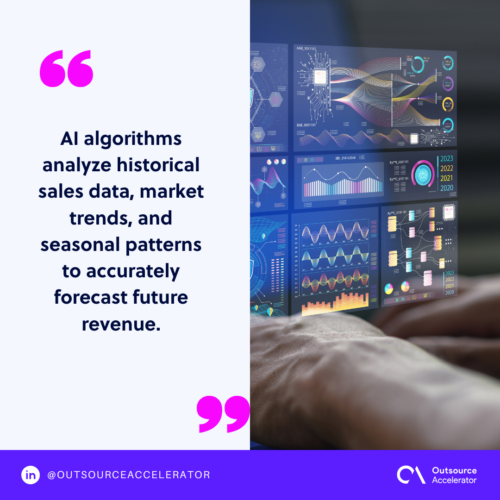
AI algorithms analyze historical sales data, market trends, and seasonal patterns to accurately forecast future revenue. Sales managers gain a clear view of pipeline health and potential challenges.
This predictive capability aids decision-making by identifying opportunities for growth and highlighting areas requiring intervention. Businesses gain confidence in their planning and resource allocation strategies.
5. Smart customer support
AI-driven CRMs integrate intelligent chatbots and virtual assistants that can handle common queries instantly. These tools free support teams to tackle complex issues, improving response time and customer satisfaction.
The system can also suggest tailored solutions based on previous interactions, giving clients a seamless, personalized support experience.
6. Comprehensive data analytics
AI-powered platforms aggregate and visualize data in intuitive dashboards. Teams can monitor KPIs, track campaign performance, and uncover hidden trends without complex manual analysis.
Insights derived from real-time analytics empower stakeholders to make informed decisions and adapt strategies quickly. Access to actionable data transforms decision-making into a proactive, rather than reactive, process.
An AI-powered CRM does more than store contacts, as it actively drives smarter, faster, and more personalized customer interactions. Businesses that invest in these artificial intelligence features gain a competitive edge while creating a more connected, customer-centric experience.
Amplify your sales activities with monday.com’s AI-powered CRM platform
monday.com’s AI-powered CRM equips teams to see every client interaction clearly, manage communications seamlessly, and automate routine tasks.
Its customizable interface adapts to unique workflows, while live dashboards and visual reporting provide actionable insights that drive smarter decisions.
Teams spend less time on manual work and more time building meaningful relationships, boosting client satisfaction and profitability.
Transform your sales operations today and experience how monday.com makes managing the entire sales cycle intuitive, efficient, and impactful.






 Independent





