
Work in Progress Inventory

Definition
Work in Progress Inventory
Work in progress inventory is the value of goods that have entered production but are not finished. It sits on the balance sheet between raw materials and finished goods, and it carries the materials, labour and overhead already absorbed into each unit.
Accountants call it WIP. The shop floor calls it the stuff between machines. Both mean the same thing — value that has left the stockroom and has not yet become something you can sell.
The number matters twice over. It changes reported profit through cost of goods sold, and it tells an operations manager how long the queue in front of each workstation really is.
Key takeaways
- WIP holds partly finished goods, sitting between raw materials and finished goods on the balance sheet.
- Its value is built from direct materials, direct labour and an allocated share of production overhead.
- A rising WIP balance usually signals a queue rather than growth — lean teams treat it as a warning.
- Period-end measurement is the hard part, because the count has to be taken mid-process.
How it works
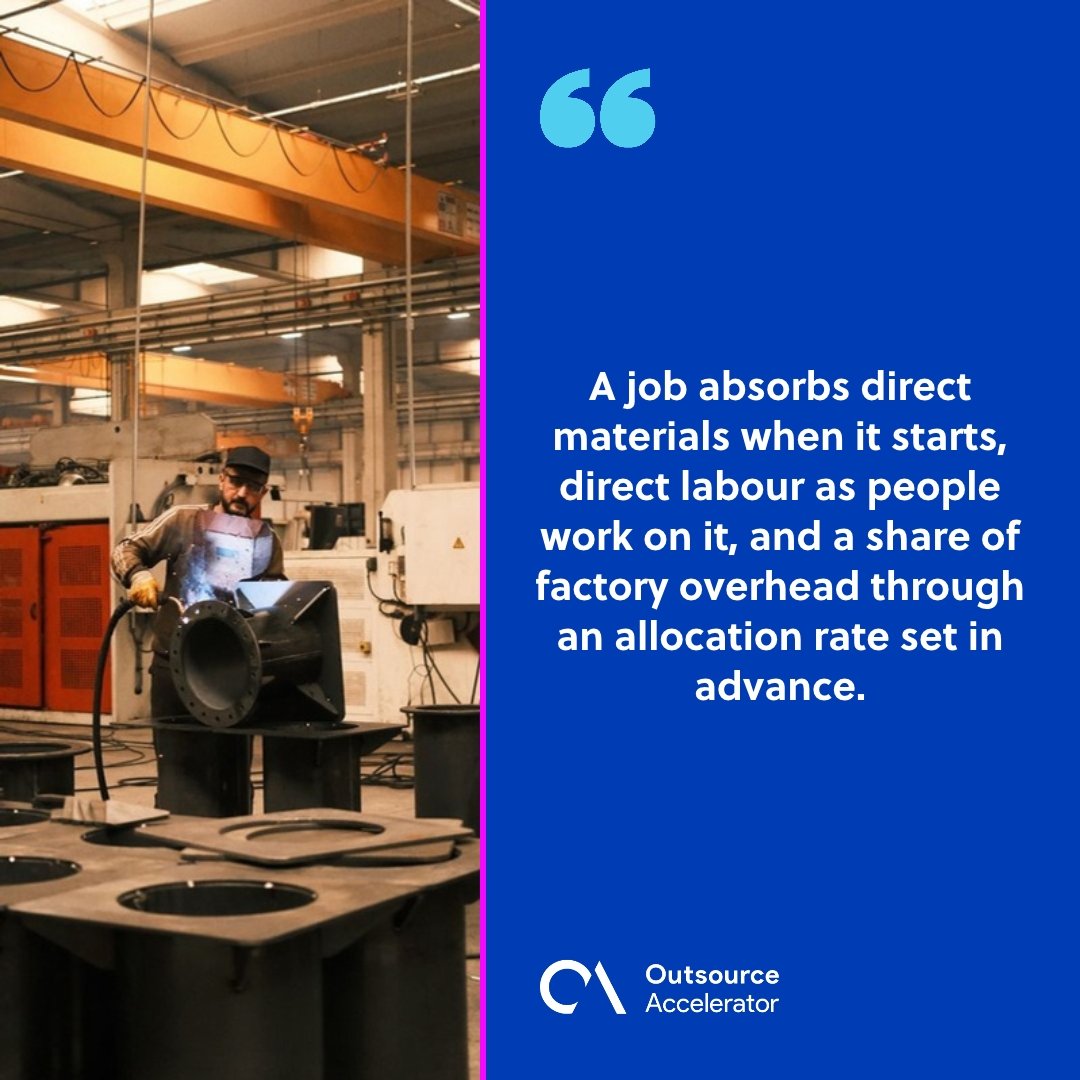
Work in progress inventory is built up cost by cost. A job absorbs direct materials when it starts, direct labour as people work on it, and a share of factory overhead through an allocation rate set in advance.
International Accounting Standard 2 (IAS 2) governs the measurement. Its cost of inventories includes all costs of purchase and costs of conversion, which the International Accounting Standards Board defines as direct labour and production overhead.
| Stage | What the balance holds | Census survey label |
|---|---|---|
| Raw materials | unprocessed inputs the plant holds title to | Materials and supplies |
| Work in progress | jobs opened on the floor but not yet complete | Work in process |
| Finished goods | completed units waiting to ship | Finished goods |
Official statistics split stock the same way. The United States Census Bureau defines work in process as the accumulated costs of all commodities undergoing fabrication within a plant, and publishes it monthly.
Lean practice reads the same figure differently. The Lean Enterprise Institute defines work-in-process as items of work between processing steps, which makes a growing balance a queue rather than an achievement.
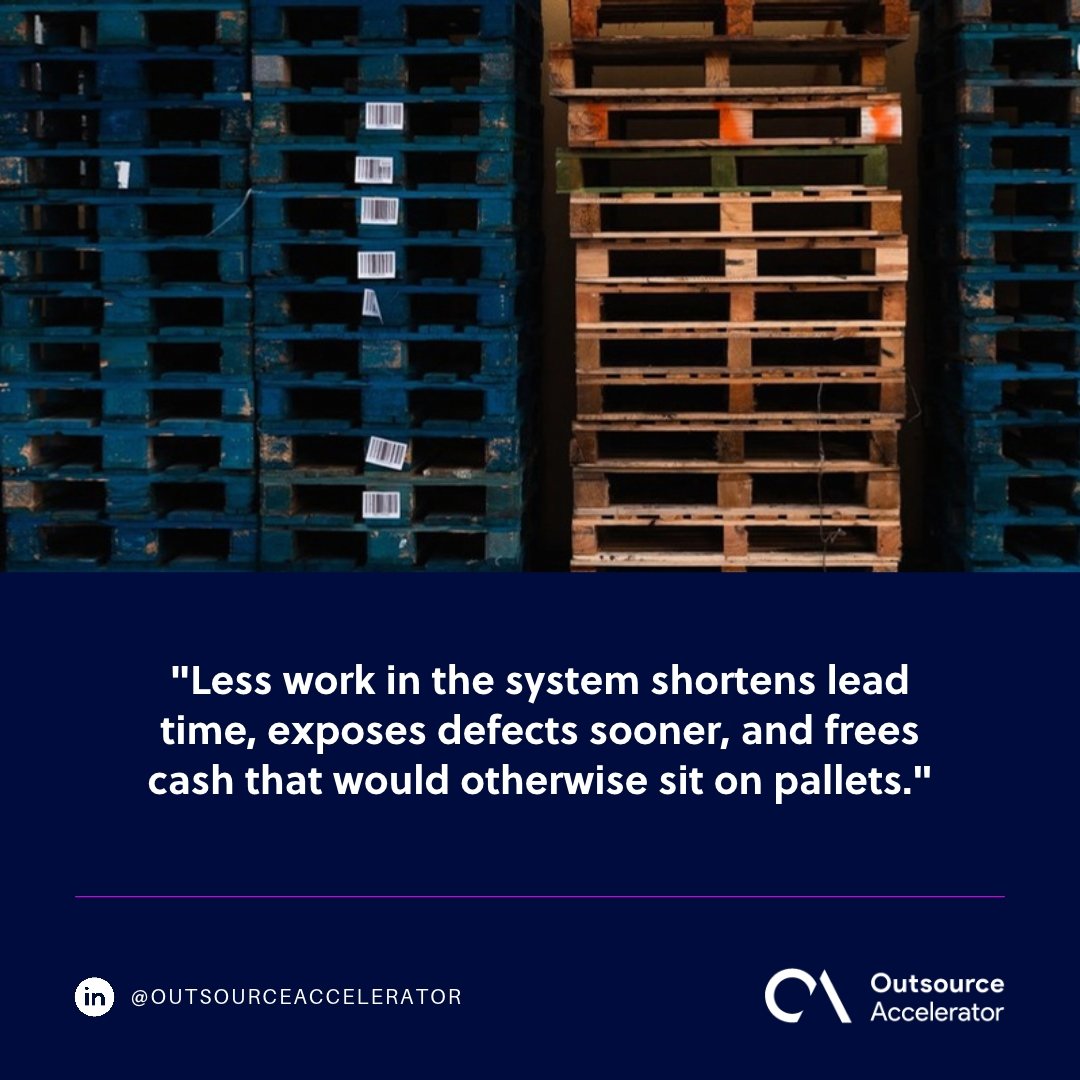
That reading is why Lean Six Sigma teams cap WIP on purpose. Less work in the system shortens lead time, exposes defects sooner, and frees cash that would otherwise sit on pallets.
Somebody has to own the count. In most plants that is an inventory analyst, reconciling system balances against a physical sweep and chasing the jobs that never closed.
Period end is where the trouble starts. Somebody has to judge how complete each open job is — and that single estimate drives both the closing balance and the cost of goods sold.
Tax law cares about the answer. Section 471 of the Internal Revenue Code requires inventories to be taken on a basis conforming as nearly as may be to the best accounting practice in that trade.
The balance closes out in two directions. Completed jobs transfer to finished goods at their accumulated cost, and scrapped jobs are written off against the period, which is why scrap rates turn up in margin reviews.
Which practice applies depends on the job. Standard costing, job costing and process costing each produce a WIP figure, and cost accounting chooses between them by how uniform the output is.
Examples
Work in progress inventory looks different in every industry, because the length of the production cycle decides how large the balance grows. Long cycles trap a lot of cash, and very short cycles barely register at all.
Aerospace is the extreme case. A commercial airliner spends months on the line, so manufacturers such as Boeing and Airbus carry very large work-in-progress balances against a handful of deliveries each month.
Contract electronics sits at the other end — a Penang or Shenzhen assembler turns boards around in days, so its WIP balance stays small while raw materials and finished goods dominate the stock figure.
Construction and shipbuilding measure progress rather than units. Revenue is recognised as work is certified complete, which turns the WIP estimate into the number that decides this period’s reported profit.
Services keep a version of it too. An offshore accounting team that has worked 60 hours on a month-end close but cannot invoice until sign-off is holding unbilled WIP in all but name.
The treatment is not cosmetic. Two plants with identical output can report different profits purely because one judges its open jobs further along than the other.
Related terms
Work in progress inventory connects the costing rules that value it to the operating measures that explain why it moves. These four terms cover the costing side and the cash side without repeating the mechanics above.
- Activity-Based Costing: the method for assigning overhead to jobs by the activities they actually consume.
- Cost of Goods Sold Analysis: the review of what finished units cost once WIP has been released to sale.
- Manufacturing Outsourcing: the practice of contracting production out, which moves the WIP balance onto a supplier’s books.
- Cash Conversion Cycle: the wider measure of how long cash stays tied up across inventory, receivables and payables.
FAQ
Is work in progress the same as work in process?
Yes. UK and international reporting tends to say work in progress, while US manufacturing statistics and lean literature say work in process.
Where does work in progress inventory sit on the balance sheet?
It sits under current assets, inside the inventory line, between raw materials and finished goods. Most annual reports split the three stages out in a note rather than on the face of the statement.
How is work in progress inventory valued?
Direct materials plus direct labour plus an allocated share of production overhead, measured at the stage each job has reached. The allocation rate is set before the period and trued up afterwards.
Does a high WIP balance mean the factory is busy?
Not necessarily. A rising balance often means work is queuing between steps instead of flowing, which stretches lead time and ties up cash.
What happens to work in progress inventory when production is outsourced?
The balance usually moves to the contract manufacturer, which carries the materials and labour until finished units are delivered. Buyers often use a consignment arrangement so title transfers later.
Do service businesses carry work in progress?
Yes, as unbilled time and costs on jobs that have started but cannot yet be invoiced.
Explore the rest of the operations and finance definitions at Outsource Accelerator.






 Independent






