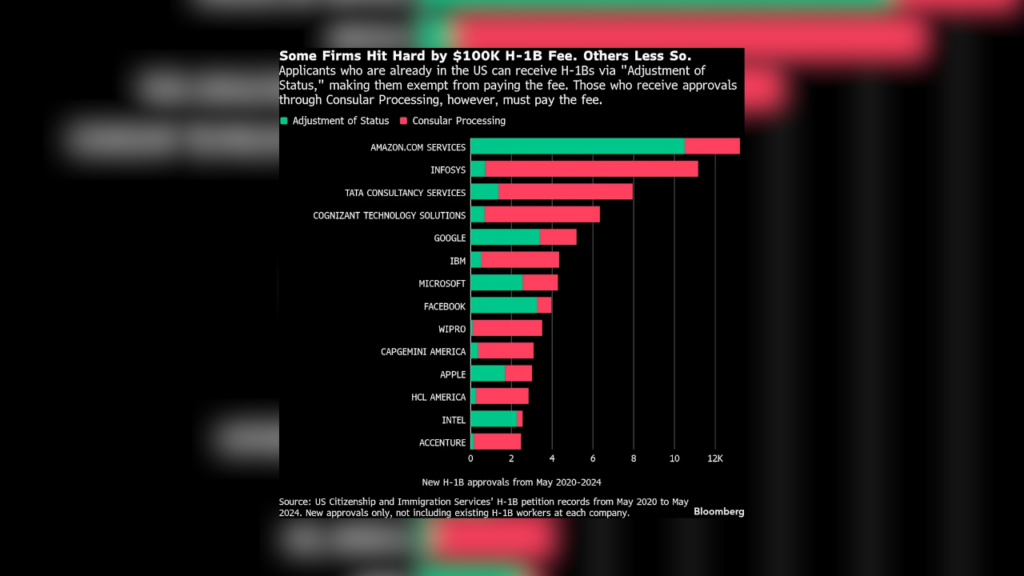
Tata Consultancy Services (TCS) is a Mumbai-headquartered IT services, consulting and business solutions company, established in 1968 by Tata Sons and listed on India's National Stock Exchange and Bombay Stock Exchange. It reports a workforce operating across 56 countries and 194 service delivery centres, and at the end of June 2026 its headcount stood at 593,798. That scale puts TCS in the same bracket as Accenture, Infosys, Cognizant and HCLTech for very large, multi-country technology programmes.
TCS generated consolidated revenues of over US$30 billion for the fiscal year ended March 31, 2026.
Its core business remains application development, maintenance and modernisation for large enterprises, with consulting, cloud, cybersecurity, infrastructure and business process services built around it. The positioning is that of an integrated technology partner rather than a specialist BPO provider: business process work sits inside a much larger IT services franchise.
2026 has been a year of deliberate repositioning towards artificial intelligence and engineering. In August 2026 TCS agreed to acquire MHP, the IT consulting arm of Porsche, at an enterprise value of EUR 320 million, alongside a $1.4 billion services deal with the carmaker. In September 2026 its HyperVault unit committed up to $7.4 billion to an AI data centre campus in Hyderabad, and TCS agreed to take over Best Buy's India global capability centre. Together these moves extend TCS from labour-based services into infrastructure ownership and captive-centre takeovers.
Older records describe a smaller firm. Outsource Accelerator's directory profile cites 509,058 employees as of June 2021, so the workforce has grown by tens of thousands since then.
Services & Capabilities
TCS sells across the full IT services stack, and its portfolio can be grouped into five broad areas.
- Consulting: enterprise strategy, technology consulting and transformation advisory, which serve as the entry point to larger implementation work.
- Applications: application development, maintenance and support, and modernisation of legacy portfolios, the historical core of the business.
- Cloud, data and AI: cloud migration and operations, data engineering and analytics, and AI-led transformation work.
- Cybersecurity and infrastructure: security services and infrastructure management.
- Business process services: the TCS BPS division provides business process management services, giving it a BPO line inside the wider IT group.
Engineering: Engineering and industrial services are a growing emphasis. In September 2026 TCS opened a UK engineering hub and said it expects to create 5,000 new jobs there, and the same month it launched an AI-native creative engineering studio in the UK. The planned acquisition of MHP adds automotive and manufacturing consulting depth in Germany.
AI revenue: TCS now reports AI as a distinct revenue stream. Annualised AI revenue crossed US$2.3 billion in Q4 FY26 and reached US$2.6 billion in Q1 FY27, up 13.6% quarter on quarter. That is still a minority of a business generating more than US$30 billion a year, but it is the fastest-moving part of the portfolio and the focus of management commentary.
Analyst recognition: In September 2026 TCS was named a Leader in Worldwide Oracle Implementation Services, and Everest Group named it a Leader in Sustainable Value Chain Services. Recognition across enterprise-platform implementation and sustainability work reflects the breadth of the portfolio rather than a single specialism.
The breadth is both an advantage and a constraint. It lets TCS bundle consulting, implementation and long-term run services, but it competes in each line against specialists, including the cloud providers' own services arms and focused BPO firms such as Genpact.
Client Base & Market Position
TCS's client base is weighted towards very large enterprises, and its own disclosures show how deep the largest relationships run. At the end of FY26 it counted 66 clients worth more than $100 million a year, up 2, 139 clients worth more than $50 million, up 9, and 1,397 clients worth more than $1 million, up 65.
Order book: Total contract value reached $40.7 billion for FY26, including 5 mega deals over the year, and $9.5 billion in Q1 FY27. Chief Executive K Krithivasan described the Q1 FY27 bookings as including a marquee AI-led transformation deal with SKF.
Named engagements in 2026: Recent news shows the geographic and sector spread of new work.
- In September 2026 TCS was chosen to drive Metro's IT transformation across Europe and Asia.
- In September 2026 STC Bahrain picked TCS to modernise its IT.
- In September 2026 TCS partnered with the Dubai Gold and Commodities Exchange, DGCX, to upgrade its market systems.
- In September 2026 Aareal Bank and TCS entered a strategic partnership to accelerate digital transformation.
- In September 2026 TCS won an INR1.23 billion Odisha state workflow automation bid.
- In August 2026 Porsche tapped TCS to establish an AI Mobility Centre of Excellence, alongside the $1.4 billion services deal attached to the MHP acquisition.
Captive-centre takeovers: In September 2026 TCS agreed to take over the India global capability centre of Best Buy, the US consumer electronics retailer. The deal shows a model in which TCS absorbs a client's in-house offshore operation and runs it as a managed service, competing directly with the client's own build-and-operate option.
The mix of European retail and banking, Gulf telecoms and exchanges, German automotive and Indian state government work illustrates a franchise that wins across regions and sectors rather than depending on one market. The long tail of more than 1,397 clients above $1 million gives it a broad base, while the 66 clients above $100 million are where the large AI-led transformation programmes are sold.
Delivery Infrastructure & Operations
TCS operates across 56 countries and 194 service delivery centres. India is the delivery core, and the platform record lists delivery locations across Asia-Pacific, Europe, the Americas and Africa: Argentina, Australia, Brazil, Canada, China, Colombia, France, Germany, Hungary, India, Indonesia, Ireland, Italy, Japan, Malaysia, Mexico, the Netherlands, New Zealand, the Philippines, Poland, Singapore, South Africa, Spain, Thailand, the United Kingdom and the United States.
The footprint gives TCS near-shore options in Latin America for North American clients and in Hungary and Poland for European clients, in addition to its very large Indian base.
Workforce: Headcount was 584,519 at the end of FY26 and 593,798 at the end of Q1 FY27, a net addition of more than 9,000 people in one quarter. Trailing twelve-month attrition in IT services was 13.6% in Q1 FY27.
Onshore capacity: TCS is adding local delivery capacity in its largest markets. In September 2026 it opened a UK engineering hub and said it expects to create 5,000 new jobs. In the United States the platform tracks 150 open roles, with October 2026 postings for MuleSoft engineers in Milford, Ohio, vulnerability management and IBM BPM middleware engineers in Alpharetta, Georgia, data centre operations engineers in Lebanon, New Jersey, and mechanical engineers in Irvine, California.
Infrastructure: In September 2026 TCS's HyperVault unit announced a 1 GW AI data centre campus in Hyderabad, Telangana, with a commitment of up to $7.4 billion, or Rs 70,000 crore. The move takes TCS beyond people-based delivery into owning physical AI compute capacity, a different capital profile from its traditional services model.
The overall picture is an India-centred delivery engine with a growing onshore and near-shore layer, increasingly supplemented by owned infrastructure.
Ownership, Financials & Scale
Ownership: TCS is a public company, trading under the ticker TCS. It listed on the National Stock Exchange and the Bombay Stock Exchange in 2004 through an IPO of US$1 billion, which it describes as the largest by a private sector company at the time. Its parent company is Tata Sons, the holding company of the Tata Group, which owned 71.74% of TCS as of 2024. That controlling stake gives TCS a stable long-term shareholder, while leaving strategic direction concentrated with the Tata Group.
Financials: TCS generated consolidated revenues of over US$30 billion for the fiscal year ended March 31, 2026.
FY26 operating margin was 25%, up 70 basis points year on year and the highest in four years, and net margin was 19.8%. The company proposed a final dividend of ₹31 per share for FY26.
Q1 FY27: For the quarter to June 2026, TCS reported revenue of ₹72,275 crore, up 13.9% year on year and up 0.4% quarter on quarter in constant currency. Operating margin was 24.0%, net margin 19.2%, and net income ₹13,849 crore, up 8.5% year on year. It declared a dividend of ₹12 per share.
Reported rupee growth of 13.9% year on year and constant-currency growth of 0.4% quarter on quarter measure different periods, but the sequential figure shows limited underlying momentum in the quarter, and the operating margin sat a point below the FY26 level while TCS spent on AI capability and acquisitions. In August 2026 TCS paid 60-70% variable pay to mid and senior employees for Q1 amid margin pressure, tying staff rewards to the margin outcome.
Scale: Earlier records put the workforce at 608,000, against the 593,798 the company reported in June 2026 and the 509,058 cited in the directory profile for June 2021.
People, Leadership & Culture
Leadership: K Krithivasan is Chief Executive Officer and Managing Director of TCS. His public framing of the business centres on AI-led transformation, as in his description of the Q1 FY27 order book as including a marquee AI-led transformation deal with SKF.
The senior team reports alongside him in the company's results. Aarthi Subramanian is Executive Director, President and Chief Operating Officer; Samir Seksaria is Chief Financial Officer; and Sudeep Kunnumal is Chief HR Officer. Seksaria has described a Build–Partner–Acquire approach to investment, which the MHP acquisition and the HyperVault data centre programme put into practice.
Below the executive team, the platform record lists Mario Waingortin as CEO of the Israel Banking Service Bureau and Neville Roach as Chairman of the Advisory Board for Australia and New Zealand, examples of the country-level leadership that runs its overseas businesses.
Talent movement: Over the past 24 months the platform recorded 15 senior hires into TCS and 81 senior departures. Arrivals came from Wipro, Coforge, Infosys BPM, DXC Technology and Capgemini, while departures went most often to HCLTech, NTT DATA, Genpact, Virtusa and Tech Mahindra. The imbalance shows TCS losing more senior people than it hires, and losing them to direct competitors in IT services and BPO.
Pay and culture: Compensation has come under pressure. In August 2026 TCS paid 60-70% variable pay to mid and senior employees for Q1 amid margin pressure, after completing annual salary increments for all associates globally. Q1 FY27 attrition in IT services was 13.6%.
The combination of net senior outflow and constrained variable pay is a point to watch for a firm whose model depends on retaining delivery leaders on long-running client programmes.
Technology & Innovation
TCS combines its services business with a set of proprietary software products, which sets it apart from purely people-based providers.
Products and platforms: Its notable products include TCS BaNCS, a banking and financial services platform, along with TCS Cognix, TCS Quartz, TCS HOBS, TCS MasterCraft and TCS OmniStore. In August 2026 TCS BaNCS was presented at the ABA Annual Convention 2026 in Salt Lake City, part of its push into US banking. Products let TCS pair licensed software with long-term implementation and run services, a mix that the Indian IT majors without strong product lines cannot easily match.
AI infrastructure: The HyperVault programme is the most significant technology move of 2026. In September 2026 HyperVault announced a 1 GW AI data centre campus in Hyderabad, with up to $7.4 billion, or Rs 70,000 crore, committed. Owning compute capacity gives TCS a role in AI infrastructure rather than only in AI services, but it is a capital-intensive business unlike its core model.
AI and engineering labs: In September 2026 TCS launched India's first lights-out factory lab to advance AI-first manufacturing, opened an AI-native creative engineering studio in the UK, and partnered with IEM Kolkata to establish an AI-focused Centre of Excellence. In August 2026 Porsche tapped TCS to establish an AI Mobility Centre of Excellence.
AI revenue: Annualised AI revenue reached US$2.6 billion in Q1 FY27, up 13.6% quarter on quarter, from more than US$2.3 billion in Q4 FY26.
Brand partnerships: In September 2026 Jaguar TCS Racing extended its partnership with TCS as Official AI Partner for the Formula E GEN4 era, a marketing platform for its AI and engineering positioning.
The technology agenda is broad: products in banking, engineering labs in manufacturing and automotive, and owned AI infrastructure. The test is whether these investments lift growth in a core services business that grew only 0.4% quarter on quarter in constant currency in Q1 FY27.
Strategic Assessment
Strengths
- Scale and margin: Revenues of over US$30 billion for FY26, a 25% operating margin and a workforce of 593,798 give it capacity for very large programmes.
- Deep client relationships: 66 clients worth more than $100 million a year and 1,397 worth more than $1 million provide a broad, sticky base.
- Order book: FY26 TCV of $40.7 billion, with 5 mega deals, supports future revenue.
- Product portfolio: TCS BaNCS and its other platforms let it combine software with services, especially in banking.
- Stable ownership: Tata Sons' controlling stake gives it a long-term shareholder.
Risks and Vulnerabilities
- Slow underlying growth: Q1 FY27 revenue grew only 0.4% quarter on quarter in constant currency.
- Margin pressure: Operating margin fell to 24.0% in Q1 FY27 from 25% in FY26, and variable pay for mid and senior staff was paid at 60-70%.
- Senior talent outflow: 81 senior departures against 15 arrivals over 24 months, mainly to HCLTech, NTT DATA, Genpact and Virtusa.
- Capital intensity: The HyperVault commitment of up to $7.4 billion moves TCS into an asset-heavy business unlike its services core.
- Integration load: Absorbing MHP and the Best Buy India capability centre adds execution risk alongside organic delivery.
Opportunities
- AI-led transformation: Annualised AI revenue of US$2.6 billion, up 13.6% in a quarter, gives it a growing line to sell into its largest clients.
- Engineering and automotive: MHP, the Porsche AI Mobility Centre of Excellence and the UK engineering hub open a larger engineering services market.
- Captive-centre takeovers: The Best Buy deal offers a template for absorbing other clients' global capability centres in India.