ContactPoint 360 is a privately held, Canadian-founded customer experience outsourcer that now presents a Texas headquarters, runs delivery across eleven listed markets and roughly 5,000 staff, and leads with an AI-operated model it calls HumAIn. Its public record is strong on named client references, workplace certification and a full regulated-vertical compliance set, and thin on financials, leadership depth and independent verification of its AI outcome claims. A buyer should confirm the contracting entity and headquarters, reconcile the site count by location, request named references beyond the published testimonials, and establish which AI modules run in production before treating the firm as an AI-operated CX partner.
Services & Capabilities
The core catalogue is omnichannel CX. The firm groups its offer under customer experience, listing "Multichannel and Omnichannel Support", "Customer Care", "Sales Outsourcing", "Technical Support", "Multilingual Support", "Hybrid Shoring", "Collections Management", "Customer Retention & Loyalty", "Helpdesk Solutions", "Backoffice Support", "Contact Center Solutions" and "Agentic AI". Presenting voice, chat, email, social and back-office work as one catalogue lets the firm sell a single omnichannel contract rather than separate seat-based services.
HumAIn is the productised AI layer. The firm markets an AI-and-human platform it calls HumAIn, with named modules for recruiting and sourcing, an "AI Learning Environment", workforce management, "Real Time Agent Assist (RTAA)", conversational AI, "Knowledge & Search Management", "AR Collect" for receivables, coaching, analytics and agent training. Packaging AI as named modules with their own outcomes is more concrete than a capability statement, and it is the part of the offer a buyer should probe for production evidence.
The AI modules carry published performance claims. The firm states that the learning environment can "fast-track agent proficiency by %", that knowledge and search management can "Cut hold times by %", that its receivables platform can help clients "Outperform Competitors by 45%", and that its coaching tool drives "a % improvement in agent performance". These are firm-published figures without an accompanying methodology, so they describe the vendor's own measurement rather than independently verified results.
The wider offer reaches past CX. Beyond the CX lines, the firm sells inbound and outbound work, multilingual support, back-office processing and finance and accounting support, and it claims "% Savings on Operational Cost" alongside a "/5 Average CSAT Score". Extending from CX into back-office and receivables work raises the contract value per client but also puts the firm against specialist finance and accounting outsourcers.
Specialist divisions widen the mix. ContactPoint 360 runs TPV360, a cloud-based third-party verification platform for regulated sales, and CP360 Global Tech Talent, a recruitment process outsourcing division it launched after "four years of operating its own in-house software development division". These are capability-led divisions rather than CX seats, and they show the firm using its software bench to sell beyond contact-centre work.
A consulting and software arm sits behind the CX lines. The Athens launch described "a highly specialized CX consulting division" covering "Digital Transformation, Robotics & Process Automation", alongside an in-house software development team of full-stack developers and QA engineers. Consulting-led entry points let the firm sell transformation work before it sells seats, and they are the part of the catalogue that carries the highest margin.
Client Base & Market Position
Named clients appear in published testimonials. The firm's home page carries attributed quotes from Auto Approve, Flair Airlines, Tennis Channel, Achosa Home Warranty, On Course Home Solutions and Premium Retail North America. Publishing named references with a named executive attached is stronger evidence than an anonymous client count, and it gives a buyer approachable references in insurance, travel, media, home warranty and retail.
The relationships are described as long-running. Achosa Home Warranty's co-founder writes "Since, ContactPoint 360 has hit the sweet spot.", and Flair Airlines' director of CX writes "From Cebu to Canada, their team consistently delivers care and quality." Multi-year references in airline and warranty work point to retention in operationally demanding, high-volume verticals where switching costs are high.
The firm claims enterprise reach without naming the enterprise. Its home page states "Trusted by Fortune 500 Companies", but no Fortune 500 client is identified on the readable pages, and the named references are mid-market and growth-stage brands rather than the largest accounts. The claim is directional: it signals enterprise-grade delivery without the accountability of a named logo.
The vertical mix is broad. The firm lists sixteen industries, including healthcare, energy, utility, travel, hospitality, technology, government, insurance, legal, finance, retail, ecommerce, telecom, real estate, gaming and media, and its own announcement names "healthcare, finance, insurance, telecommunications, retail, ecommerce, travel, gaming, and additional high-complexity sectors". Breadth hedges against a single vertical but means the firm competes with sector specialists in each one.
Healthcare is the deepest vertical. The firm runs a healthcare practice spanning medical billing, revenue cycle management, claims, patient engagement, telehealth, dental and pharma support, and its published case work describes patient-support and revenue-cycle programmes. A regulated vertical with compliance-heavy buyers rewards the firm's certification set, and it is the clearest place where the CX catalogue becomes a vertical practice rather than a set of seats.
Independent measurement is modest. The record ranks the firm #339 in its global index with a domain authority of 27, and its review places the company among the larger CX-focused BPOs while noting that it lists no pre-set pricing and quotes per engagement. A mid-table index rank against a 5,000-person workforce points to a firm whose demand comes from direct sales and referrals rather than inbound marketing.
The record's own market tags are narrower than the firm's. The record tags the firm's sectors as AI and automation services, HR and recruitment, technical support, virtual assistant and inbound voice, and its industries-served field reads "Technology & SaaS", against the firm's own list of sixteen industries. The mismatch matters for buyers searching by vertical, because a healthcare or utility buyer will not find the firm under those tags.
Record and Tier Note
- The industry field is too narrow. The record's industries-served field reads "Technology & SaaS" against the firm's own list of sixteen industries.
Delivery Infrastructure & Operations
Delivery spans four continents. The firm lists delivery in the United States, Canada, Mexico, Colombia, El Salvador, South Africa, Jamaica, the Philippines, India, Egypt and Greece, and the record's countries-of-fulfilment field names ten of those markets. A footprint that combines North American onshore sites, Latin American nearshore capacity and Asian and African offshore centres gives the firm several cost and language options on a single programme.
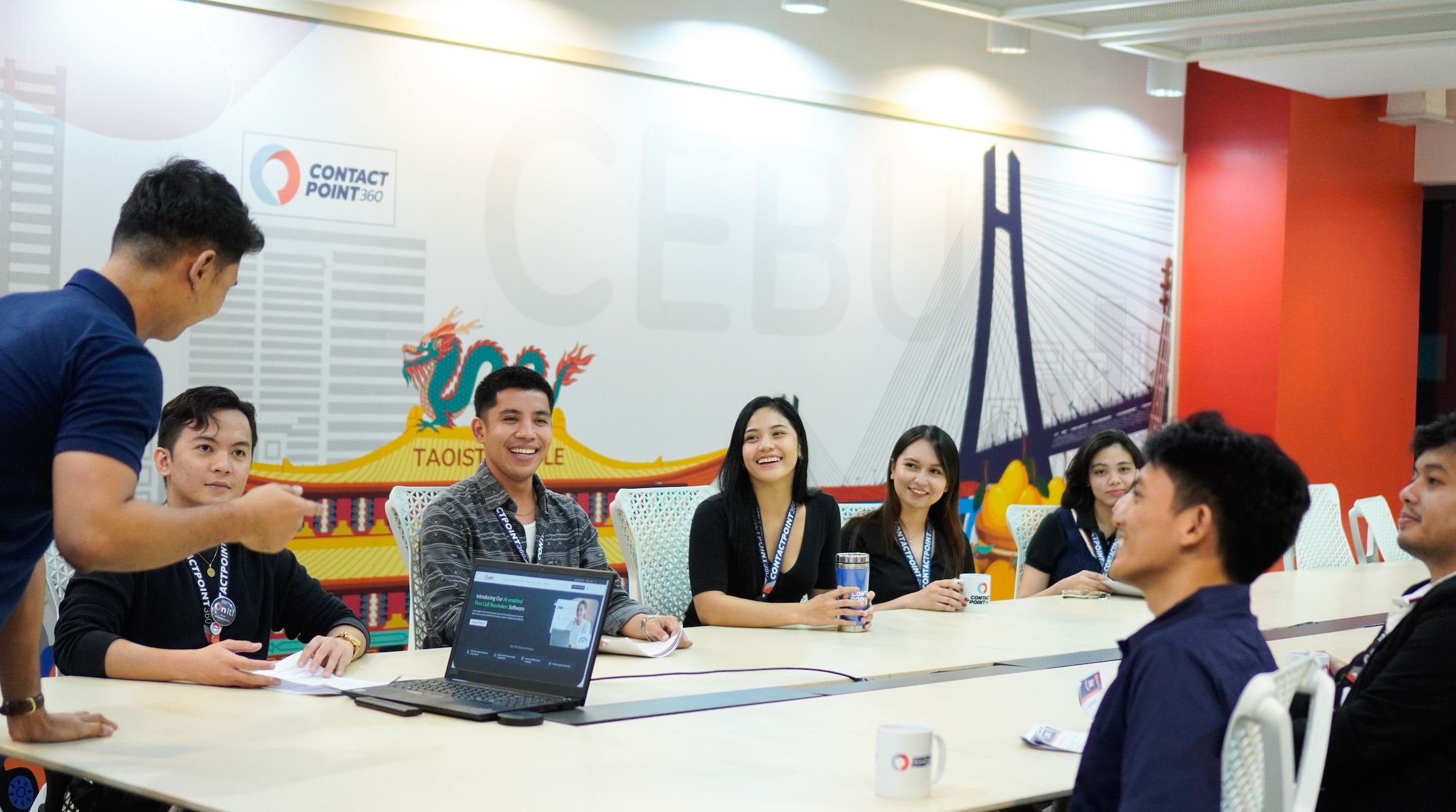
The named sites are specific. The locations page lists Toronto and Montreal in Canada, Texas in the United States, Bogota in Colombia, Monterrey in Mexico, Athens in Greece, Cebu in the Philippines, Montego Bay in Jamaica, Cairo in Egypt, Bengaluru and Kochi in India, and El Salvador. Named cities rather than country-level claims let a buyer map language coverage and time-zone overlap to a specific campus.
Site count is reported inconsistently. The firm's about page states "09+ Contact Centers Worldwide", its home page states "12 Global Strategic Centers", its locations page says "With a presence in over 7+ locations", and the record's own account says "We operate across 12+ CX delivery hubs in North America, South Africa, Greece, EMEA, Asia, and beyond". The spread between seven and twelve indicates the firm counts centres, hubs and locations differently, and a buyer should confirm which sites can serve a given programme.
Recent openings show the direction of travel. ContactPoint 360 opened a Bangalore site in June 2025, describing it as "an addition to our 12+ strategic locations", and it had already opened a 500-seat Athens campus with a CX technology lab. India and Greece both extend offshore capacity into lower-cost, multilingual markets, and the Bangalore centre was built with AI innovation pods for client co-creation.
Compliance covers the regulated verticals it targets. The recognition page lists PCI DSS, HIPAA, ISO, AICPA SOC and SOC reports, and GDPR among its credentials. For a firm handling payment data and healthcare information across those markets, that certification set is the entry requirement for regulated buyers rather than a differentiator.
Workforce stability is marketed with location-level metrics. The Philippines page cites, an and, and the Colombia page cites a % CSAT score and % attrition. Publishing attrition and handle-time by country lets a buyer compare sites, though the figures are firm-reported.
Multilingual coverage is the firm's stated edge. The firm reports "31+ Languages Spoken" and sells multilingual support as a distinct service, and its Athens site was justified by the city's educated, multilingual workforce. Language coverage is the capability that lets one provider serve several European and North American markets from a shared operating model.
Record and Tier Note
- The ownership field is wrong. The record reads Public; the firm's own announcement describes "a privately held AI-operated customer experience company", and its 2020 and 2021 releases describe a Canadian-founded contact-centre company.
- Headquarters is split between two countries. The record places the firm at "807 S Jackson Rd, Pharr, TX", its May 2026 announcement says "Headquartered in Texas, United States", and its privacy policy gives 1880 O'Connor Dr, Toronto.
- The delivery-country field overstates the footprint. The record's "Delivery countries" field reads 14 while its countries-of-fulfilment list names ten markets.
- The record's own count of centres conflicts with itself. Its review says the firm operates "12+ CX delivery hubs" while the firm's about page states "09+ Contact Centers Worldwide" and its locations page says "over 7+ locations".
Ownership, Financials & Scale
Ownership is private. The firm's May 2026 market announcement describes it plainly: "ContactPoint 360 is a privately held AI-operated customer experience company founded in 2007." That statement sits against the record's ownership field, which reads Public, a discrepancy recorded in the note below. Private ownership removes the disclosure a listed peer carries and, for a buyer, means the firm's finances are known only through what it chooses to publish.
Revenue is published only as a listing band. The record's listing carries an annual revenue band of one hundred million to two hundred and fifty million dollars as a listing figure rather than a company-published number, and the firm's own pages publish no revenue figure. On the available evidence the correct treatment is to take the band as an estimate and to size the business by headcount and site count instead.
Headcount is the strongest scale signal. The firm states "5,000+ Employees" and the record's review says "With almost 5,000 employees", against a record band of 2,001 to 5,000. The record's review also says "the company has grown by almost 10% in employee headcount in the past six months", which, if accurate, points to a business adding staff quickly.
Growth has come from opening sites rather than from acquisition. The record shows no purchase of another outsourcer; instead the firm added a 500-seat Athens campus in 2020 and a Bangalore centre in 2025, and it launched TPV360 and the Global Tech Talent division from its in-house software team. Organic expansion keeps the operating culture intact but is slower than buying capacity, and it leaves the firm dependent on its own hiring.
The published operating metrics are firm-reported. The firm claims "% SLA compliance across all service lines", a "% AHT (Average Handle Time) reduction", a "% Reduction in operational costs within first months" and a "/5 Average CSAT Score". These are outcome figures the firm measures itself, and a buyer should require contract-level baselines rather than accept the headline numbers.
Scale is best read per site. With more than a dozen strategic centres and roughly 5,000 staff, the average centre holds a few hundred seats, so a buyer contracting for a specific language or vertical should size the relevant campus rather than the group.
The record's workforce composition is support-heavy. Its rounded profile of associated members is roughly 45% support, 10% IT and 10% sales, with the Philippines, Colombia and India as its leading markets. A support-dominated workforce confirms that, for all the AI messaging, the firm's revenue still rests on people delivering customer interactions.
Record and Tier Note
The tier call is Tier A, following the record's ownership field, which reads Public. The firm's own disclosure points the other way: its May 2026 market announcement calls it "a privately held customer experience and outsourcing company", and the record's own employee band is 2,001 to 5,000, which on staff alone would place it in Tier B. The tier is therefore carried on the listing rather than on headcount, and this note records the defects for lead-dev.
- Revenue is a band, not a published figure. The record's revenue field carries one hundred million to two hundred and fifty million dollars as a listing estimate rather than a filed or company-published number.
People, Leadership & Culture
The chief executive is named on the firm's own pages. Asad Mirza is "President, and CEO of ContactPoint 360, Inc." in the firm's 2020 Athens announcement, and the firm's May 2026 announcement quotes "says Asad Mirza, CEO at ContactPoint 360". A chief executive who appears in releases six years apart gives continuity a buyer can rely on, and it is the firm's own disclosure rather than a third-party record.
The senior bench is functional and client-facing. The firm's 2021 release quotes "said Elizabeth Sedlacek, VP Client Relations & Partnerships", and its Athens announcement names "Nicolas Georgilas, Director of Client Success & Partnerships for the ContactPoint 360 Athens location". A bench weighted towards client relations and site leadership fits a delivery business where account ownership sits with site directors.
The wider leadership is not published as a roster. Beyond the chief executive and the named site and client-relations leaders, the firm publishes no leadership page, and its Bangalore launch refers only to "the COO and CFO in attendance" without naming them. That is thinner disclosure than many mid-market peers provide, and it leaves a buyer to identify named counterparts during procurement.
Culture is certified at firm level. The recognition page states the firm has been awarded Great Place to Work "Awarded 5 years in a row", and the firm's own 2021 release records certification as a Great Place to Work "second time in a row" with "a diverse group of employees across eight CX centers in North America, Asia, LATAM, and Europe". Repeated third-party workplace certification is a reasonable proxy for the retention that determines service quality in a labour-intensive business.
Women's representation is a stated metric. The firm states "% of associates are Women, % of Senior management, including our CFO." and its home page reports "% Women in the Workforce". A majority-female workforce with a stated senior share is more specific than a diversity slogan, though the two figures differ and a buyer should reconcile them.
Training is run as a structured programme. The firm's AI Learning Environment is designed to "Transform New Hires into Top Performers with AI Simulations that fast-track agent proficiency by %". Structured onboarding matters in CX work, where time-to-proficiency drives both cost and quality, and it is the mechanism behind the firm's claim of faster agent readiness.
Employer recognition is repeated across years. The recognition page lists a Better Business Bureau "A+ Rating", a and an award for Best Work-Life Balance in, alongside the Great Place to Work certifications. A steady stream of workplace awards supports the firm's people-first pitch, though awards of this kind are largely self-submitted and should be read alongside retention data.
Record and Tier Note
- The leadership field carries other firms' executives. The assignment flags the record's leadership field as polluted with other companies' executives; the review prose visible on the page names the firm's chief executive correctly, so the pollution sits in the structured field rather than the review. This profile therefore sources leadership only from the firm's own pages.
Technology & Innovation
HumAIn is the firm's own AI platform. ContactPoint 360 markets an AI-and-human model under the HumAIn brand, with modules for workforce management, "Real-Time Agent Assist", conversational AI, knowledge and search management, receivables collection, coaching, analytics and agent training. Owning the platform rather than reselling a third-party tool keeps automation gains inside its managed-service contracts, though it also means the firm carries the product roadmap itself.
The AI story is packaged as agentic capability. The firm markets "Agentic AI" as a top-level offer and describes AI agents that handle "entire resolution workflows, from issue intake to solution delivery without a single human touchpoint", escalating to people when they reach their threshold. Framing AI as autonomous resolution rather than agent assistance raises the automation claim, and it is the part of the offer that most needs production evidence.
Quality monitoring is platform-based. Its case work names BeyondQA, an automated quality and performance platform used to reduce repeat contacts and improve workflows, and a 4DX performance methodology for operational accountability. Naming its own quality tooling indicates the firm has built internal software rather than relying only on client-supplied systems.
The software bench has produced separate products. TPV360, a cloud-based third-party verification platform with Android and iOS apps for regulated sales, was built by the firm's in-house team, and the Global Tech Talent division grew out of the same software group after "four years of operating its own in-house software development division". A services firm that ships standalone products has a second revenue route and a way to differentiate compliance-heavy work.
Recognition has followed the AI positioning. The firm's recognition page lists an "AI Excellence Award" and an "Artificial Intelligence Achievement of the Year" among its accolades. Awards are weak evidence on their own, but together with the named platform modules they show the AI message is a sustained strategy rather than a one-off campaign.
The firm publishes no named technology partner. Beyond its own platform, the readable pages name no cloud provider, model vendor or platform partner. For a buyer embedding AI into customer-facing workflows, the absence of a named stack is the main gap in the innovation story and should be closed in diligence.
The verification platform is feature-rich for regulated sales. TPV360 includes "identity checks, multifactor authentication via phone, email and SMS, geo-tracking, credit evaluations, remote recording capability" for telesales, retail and door-to-door channels. Building a compliance product around third-party verification shows the firm targeting regulated sales where recorded consent is a legal requirement, a niche with fewer competitors than general CX.
Strategic Assessment
Strengths
- A named AI platform with published modules. HumAIn gives the firm a productised automation layer with named modules and outcome claims, which supports higher-value contracts than seat-based CX alone.
- A multi-continent delivery footprint. Eleven listed markets, from Texas and Canada onshore to Cebu, Bengaluru and Cairo offshore, give cost and language optionality on one contract.
- Named, long-running client references. Attributed testimonials from Flair Airlines, Auto Approve, Tennis Channel, Achosa Home Warranty and On Course Home Solutions give buyers approachable references.
- A regulated-vertical certification set. PCI DSS, HIPAA, ISO, SOC and SOC reports and GDPR cover payment and healthcare work.
- Repeated workplace certification. Great Place to Work "Awarded 5 years in a row" supports retention in a labour-intensive business.
Risks and Vulnerabilities
- The record's ownership field reads Public while the firm describes itself as privately held, so a reader relying on the field misreads the firm's governance.
- Site count conflicts across sources, from "over 7+ locations" to "12 Global Strategic Centers", which complicates capacity planning.
- Revenue is a listing band, not a published figure, so the firm's financial scale cannot be verified from its own disclosure.
- The AI outcome claims are self-reported, from faster proficiency to lower hold times, with no published methodology.
- Leadership disclosure is thin, with no published roster beyond the chief executive and named site leaders.
Opportunities
- Convert AI modules into outcome pricing, selling measured reductions in handle time and cost per contact rather than seats.
- Deepen the healthcare practice, where the certification set and case work already qualify the firm for regulated work.
- Sell the software divisions, using TPV360 and Global Tech Talent to reach buyers beyond CX.
- Publish a named client list to turn testimonials into procurement-ready references.
- Reconcile the ownership, headquarters and site-count disclosures so buyers can size the firm without resolving record conflicts.