
3 Types of payroll systems: What’s the difference?


- Types of payroll systems: similarities and differences
What are the main types of payroll systems?
The three main types of payroll systems are bookkeepers or CPAs, payroll services, and online payroll, and each one handles pay, taxes, and records in a different way.
- Bookkeepers and CPAs give you personal, hands-on support.
- Payroll services manage deposits, deductions, and tax filing for you.
- Online payroll offers secure, round-the-clock access to your data.
In a conventional setup, payroll processing is done in-house. This works well in two cases. First, big companies streamline payroll across all departments. Second, small companies with fewer than ten staff keep it in-house. In these small firms, work hours and wages rarely change.
In that case, in-house payroll software is practical. The staff member in charge keeps the accounts. They also stay current with payroll tax laws. Moreover, they safeguard the company’s financial data. However, your needs may grow over time. So as your bookkeeping gets more complex, what are your options? For a wider view, weigh the pros and cons of payroll outsourcing.
What does a payroll service mean?
A payroll service is a provider that runs payroll for your business. In short, it pays staff, files taxes, and keeps records. So the meaning of a payroll service is simple. It takes payroll off your plate so you can focus on growth. Today, many firms treat payroll as a service and let experts handle it.
Most providers cover the full pay cycle. For example, they track hours, run pay, and send payslips. In addition, they file tax forms and prepare year-end reports. So your staff get paid right and on time. As a result, you avoid costly errors and late filings.
3 types of payroll systems
Here are three types of payroll systems you can consider outsourcing. Each one shares the same goal: to pay staff on time and stay tax-compliant. However, they differ in cost, control, and scale. So weigh each option against your needs.
1. Bookkeepers and CPAs
You can hire individual bookkeepers or CPAs to handle payroll and tax records. When you take on a contractor, look for proven skill and flexibility. You also need someone you can trust with tax deposits. So they help you pay your area’s federal tax on time. Still, payment is made in your company’s name. This option gives you a close, personal working bond. However, one person may struggle as your team grows. So it fits smaller firms best.

2. Payroll services
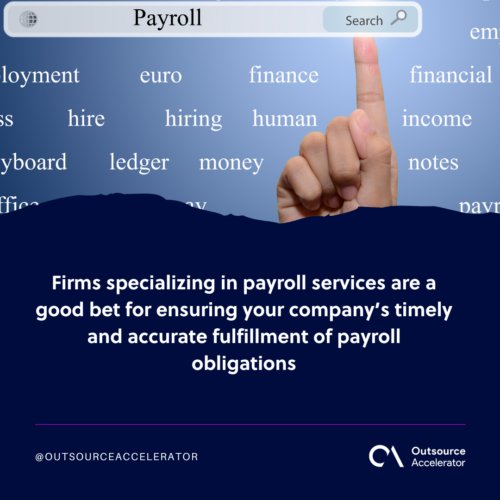
Firms that specialize in payroll, like ConnectOS, are a strong choice. They help your company meet payroll duties on time. In addition, they offer key admin tasks. For example, they set up direct bank deposits and automatic deductions. As a result, your staff get paid without manual work each cycle.
Some payroll services also know the US Department of Treasury’s Electronic Federal Tax Payment System (EFTPS). So they may file taxes for you online. As a result, they streamline both payroll and tax work. Moreover, a managed system handles complex tax rules. This eases the burden on employers. With electronic filing built in, companies stay accurate and on time. Many firms take this further by outsourcing payroll to BPO companies.
3. Online payroll
This model is a big help for SMEs. It adds tax filing and admin services. In addition, online payroll gives 24/7 access through a secure browser. So there is no extra cost for software or equipment. With the right tools, businesses run payroll with ease. As a result, teams can pull and study payroll data fast. It is also simple to update records for sick leaves, vacation days, and deductions. For a full overview, see this guide to payroll management. Most tools also send alerts for tax deadlines. In addition, they store records safely in the cloud. So you can check pay data from anywhere, at any time.
Choosing the right payroll system
Your best option depends on size, budget, and growth plans. So weigh cost, control, and compliance for each model. For many firms, outsourcing wins on time and accuracy. In fact, the benefits of outsourcing payroll include fewer errors and lower risk. As a result, your team can focus on core work. First, list your must-have features. Next, compare pricing and support. Finally, check reviews before you commit. So you pick a system that grows with you.
Frequently asked questions about payroll systems
What is a payroll service?
It is a provider that runs payroll for your company. So it pays staff, files taxes, and keeps records.
What are the three types of payroll systems?
They are bookkeepers or CPAs, payroll services, and online payroll. In addition, each one fits a different business size.
Is online payroll safe for small businesses?
Yes. Online payroll uses secure browsers to protect your data. Moreover, it gives you access at any time.
Should I outsource payroll or keep it in-house?
It depends on your size and needs. However, outsourcing often saves time and cuts errors as you grow.
How much does a payroll service cost?
Costs vary by provider and team size. However, most charge a base fee plus a small amount per employee.
Key takeaways
- A payroll service pays staff, files taxes, and keeps records for you.
- The three main systems are bookkeepers or CPAs, payroll services, and online payroll.
- In-house payroll suits very small firms with steady hours and wages.
- Outsourcing payroll often improves accuracy and saves time as you scale.






 Independent





