Services & Capabilities
Alta's own services page says it works in four distinct arenas: customer experience, sales, e-commerce and fulfillment, with an innovation practice alongside them. The platform record describes the business in different terms, listing AI & Automation Services; Back Office - Data Entry; Content Moderation & Trust Safety; E-commerce Support; Voice - Inbound as its service lines.
- Customer experience: Inbound care across voice and digital channels. The company says its individualized approach results in increased customer satisfaction, retention and lifetime loyalty. This is the core contact centre line and the one most directly exposed to the self-service automation Alta is now deploying.
- Sales: Outsourced B2B and B2C sales support, which the company says includes sales for healthcare and insurance. Outsource Accelerator's directory profile describes sales teams working for big brands in the CPG, healthcare insurance and entertainment sectors. Selling on a client's behalf ties Alta's value to revenue rather than to handle time, and one sales programme has more than doubled sales performance since 2020.
- E-commerce: Order-to-cash support for online sellers. The company says it has guided B2B and B2C brands through e-transition into full digital transformation, covering ordering, payment and post-purchase service.
- Fulfillment: A physical fulfillment center near the Wisconsin headquarters. Alta says it delivers satisfaction over 11 million times a year, and that every year it ships more than 10 million units of movies, books, gift cards and more. In 2020 it expanded into FDA-compliant fulfillment, and as a food grade and FDA compliant facility it can store and ship food, over-the-counter drugs and Class I medical devices. It also offers product sampling, kitting, gifting and subscription-based fulfillment.
What is distinctive: Fulfillment is the line that separates Alta from most contact centre providers. Running a warehouse alongside care and sales teams lets it handle a transaction from the sales call through shipment, returns and the follow-up service contact, which suits CPG, entertainment and nonprofit clients running subscription, gift card, sampling or premium programmes. The trade-off is fixed capital: a fulfillment centre is tied to Wisconsin, whereas agent capacity can move between campuses or into home-based teams.
Scope check: Content moderation and back-office data entry appear in the platform record but not among the four arenas on the company's services page. Buyers looking for trust and safety or data processing work would need to confirm the scope and scale of those lines directly with the company.
Client Base & Market Position
Named clients: No named client organisations were found on the company's website, newsroom or fulfillment pages during research; its published material describes clients by sector rather than by name.
Verticals: The site's industry pages cover automotive, CPG, entertainment, healthcare and insurance, nonprofit, retail and e-commerce, and tech. The core of that mix has been stable for more than a decade: the announcement of its Neenah expansion that targeted new jobs by the end of 2013 described a growth focus on the Consumer Package Goods, Health Care/Health Insurance and Entertainment industries. Outsource Accelerator's directory profile adds that the company has a significant client base in the non-profit sector, and the fulfillment page names entertainment, CPG and nonprofits among the verticals it ships for. The platform record lists Automotive; E-commerce & Retail; Media & Entertainment.
Why the mix matters: Nonprofit, entertainment and CPG work all combine customer contact with physical items: donor premiums, media and gift cards, product samples and subscription boxes. That makes the vertical mix a direct expression of the fulfillment capability rather than a list of unrelated sectors, and it gives Alta a defensible niche against contact centre providers that would have to partner with a third-party logistics firm to offer the same programme. Health insurance sales is the other durable line, and it ties Alta to the enrolment calendars of its insurance clients.
Recognition: Alta was ranked at number 200 on the 2025 OA500 list, which the company noted analysed 3,018 outsourcing companies from 84 countries. Chairman and CEO Jim Beré said the ranking reflected a commitment to delivering defined results with passion, focus, and urgency.
Positioning and competitors: John Beré frames the pitch as a firm big enough to support complex needs and small enough to stay agile, flexible, and deeply client-focused, with a global footprint that gives clients access to multiple languages and cost structures. That places Alta between two groups of competitors: large CX providers such as Concentrix, TTEC and Alorica, which offer more countries and capacity, and nearshore specialists in Colombia and Mexico competing for Spanish-language work at lower cost. Its case against both rests on account intimacy, long-tenured teams and in-house fulfillment.
Evidence gap: Without named references or published client counts, buyers have to judge Alta mainly on its sector history, its awards and programme-level metrics such as retention, rather than on a public client roster.
Delivery Infrastructure & Operations
Sites: The locations page lists three US campuses, at the Neenah headquarters, in Brea in California and in Fort Myers in Florida. Outside the US it lists a Belize City campus, a Metro Manila campus in the Ortigas Centre of Pasig City, two offices in Bogotá and one in Medellín, an office in Lima and an office in Mexico City. When Baird announced Alta's acquisition of BRM, its note listed additional locations only in Brea, Fort Myers, Pasig City and Belize City alongside Neenah, so the Colombian, Peruvian and Mexican offices are the newest layer of the network. Outsource Accelerator's directory profile already includes Mexico City in its list of sites.
Home-based model: The company says that with its IT investments 100% of its agents can work directly from home, and its locations page lists an Alta at home office that has the capability of having 100% of agents work from home. This gives Alta capacity outside its campuses and resilience against site disruption. The cost is that supervision, security and engagement have to work at a distance, which is where its Gallup programme and training platform come in.
Onshore build-out: Alta's US network was built through large hiring waves. The Neenah expansion was expected to add 1,031 new jobs by the end of 2013, with 570 positions already filled at the time of the announcement. Alta invested over $2.5 million to equip the expanding Neenah facilities and was eligible for $1.0 million in Wisconsin tax credits tied to job retention. A later expansion in Florida planned to hire 300 additional employees in Fort Myers. Those onshore teams remain the base that the offshore and nearshore sites now complement, and they matter for clients in insurance and healthcare sales that want US-based agents.
Belize: In October 2025 Belize's Labour Department held a workplace education session with Alta Resources and Transparent BPO, an indication that its Belize City campus is among the outsourcing employers the regulator engages directly.
Controls and sustainability: The platform record lists SOC 1 among Alta's certifications, and the fulfillment centre is a food grade and FDA compliant facility. Alta achieved an overall EcoVadis score of 76 out of 100, placing it in the 90th percentile among more than 150,000 companies assessed. That was 14 points higher than the score of 62 that earned its first EcoVadis Bronze Medal a year earlier. Its 2025 ESG report says it recycled more than 22,000 pounds of electronic waste in the United States and reduced combined Scope 1 and 2 emissions by 5.59 percent. For large consumer brands that score suppliers on sustainability during procurement, the quick move from bronze to silver is a practical selling point.
Gap: Published certifications beyond SOC 1 and the FDA-compliant facility, such as information security or payment card standards, were not found during research, which buyers handling payments or health data would need to confirm.
Ownership, Financials & Scale
Ownership: Alta Resources is privately held. A Baird transaction note described it as formed in 1995 and privately held, and the platform record lists it as Private. James F. Beré, Jr. is Chairman and CEO of Alta Resources, and Outsource Accelerator's directory profile notes that he serves on the board of Legacy Private Trust. No outside institutional investor was identified in the sources reviewed, and with a long-serving chairman and chief executive the company's strategy is set by its own leadership rather than by a sponsor's holding period.
Acquisition of BRM: Alta acquired BRM, a customer experience and digital marketing provider founded in 2005 and headquartered in Bogotá, serving the South American market. Baird, which served as exclusive financial adviser to Alta on the transaction, said the deal enabled Alta to expand its capabilities throughout all of South America. The Latin American business now has its own chief executive, Juan Pablo Serrano, CEO of Alta Latin America. Buying an established local operator gave Alta Spanish-language capacity, local management and South American clients at once. The trade-off is integration: BRM brought a digital marketing line and a management team of its own, which Alta has to align with a Wisconsin-run care and fulfillment business.
Financials: No filed or company-published revenue figure was found during research.
Scale over time: The headcount record shows a business that has grown several times over. At the Neenah expansion announcement 570 positions had been filled towards a target of 1,031 new jobs. Outsource Accelerator's directory profile later gave a company size of 1,000 to 5,000 employees, earlier platform records put the workforce at 2,200, and in June 2025 the company itself cited 8,000 employees. The figures come from different dates and sources, so they mark a direction of growth rather than a precise rate, but the most recent company figure is well above the older records.
Capital model: Growth has come from a mix of onshore hiring waves supported by state incentives, offshore and nearshore campuses, home-based capacity and one disclosed acquisition. That pattern, combined with private ownership, means Alta funds expansion from its own resources and borrowing rather than through public equity. For clients, the practical implication is limited financial visibility: there are no published accounts against which to assess the company's financial strength, so due diligence has to rely on direct disclosure during procurement.
People, Leadership & Culture
Leadership: James F. Beré, Jr. is Chairman and Chief Executive Officer, and he has been the public face of the company through its US expansion and its recent OA500 ranking. The about page lists the senior team as Juan Pablo Serrano, CEO of Alta Latin America; Heather Owen Nigl, Chief Financial Officer; Matt Nelson, Chief Information Officer; and John Beré, Vice President of Growth & Strategy. Below them sit vice presidents for global talent (Amy Bouthilet), growth in Latin America (Andres Jaramillo), Philippines operations (Oliver Eusebio), care operations (Vincent Valeri), customer experience solutions (Patrick Nicholson) and sales operations (Kris Forsling, who has driven growth, revenue and leadership development since joining in 2015).
The structure mirrors the footprint: separate leaders for Latin America and the Philippines, and a growth and strategy role that has become the company's public voice on AI and positioning. John Beré led the commentary on both the SoundHound partnership and the OA500 ranking.
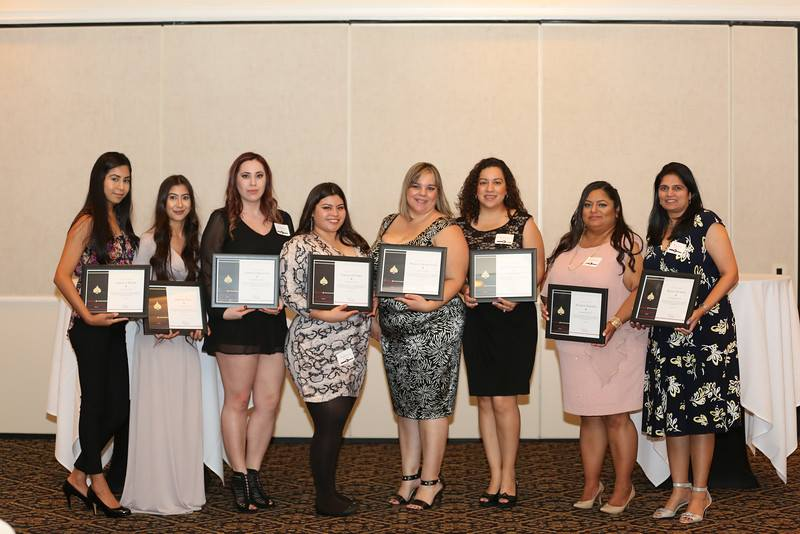
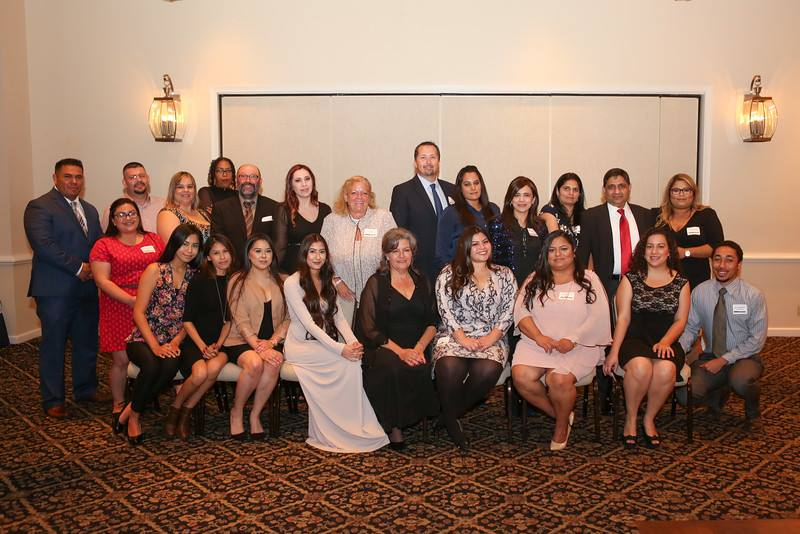
Engagement as strategy: Alta has been partnering with Gallup for the past eight years, using Q12 surveys, regular pulse check-ins and structured action planning. It was named a Gallup Exceptional Workplace Award winner for Employee Engagement, which the company says places it in the top 1% of Gallup clients worldwide. Krystin Retzlaff, Sales Program Director, was then recognised among Gallup's Top 10 Managers Worldwide as a finalist for the 2026 Gallup Manager of the Year award; Gallup recognises just 10 managers globally.
Programme metrics: Retzlaff has led one of Alta's most stable programmes for more than 17 years. Her team has achieved a 98% retention rate and an average employee tenure of seven years, and its engagement score increased from 3.60 in 2019 to 4.56 in 2025. Since 2020 the programme has more than doubled sales performance. These are the most concrete operating metrics Alta publishes, and they support its argument that engaged, long-tenured teams deliver better results than high-turnover seat capacity. They describe one programme, though, not the whole workforce.
Earlier recognition: Outsource Accelerator's directory profile notes that Alta was named to the Forbes 2021 List for Best Mid-Sized Employers.
Training and responsibility: Alta AcadeMe is the company's proprietary web-based learning management system for training and personal development, which supports consistent onboarding across campuses and home-based agents. Jabu Dube, Compliance Director at Alta Resources, spoke for the company on its EcoVadis Silver Medal. Its 2025 ESG report says Alta directed 51 percent of its IT spend to minority-owned businesses. No talent movement data for senior staff was found on the platform record.
Technology & Innovation
Alta's technology approach is partner-first. In announcing its SoundHound partnership the company set out a rule: when there is a proven solution, Alta partners, and when there is a market gap, Alta bridges the gap by building its own solutions.
SoundHound partnership: In November 2025 Alta announced a strategic partnership with SoundHound AI (Nasdaq: SOUN), deploying conversational AI from Interactions, now a subsidiary of SoundHound. John Beré said the automation already resolves more than 90% of inquiries through self-service while keeping humans in the loop where empathy and judgment matter most. The first client deployments of Interactions technology within Alta's operations were underway the same month, aimed at self-service rates, average handle time (AHT), first-contact resolution (FCR) and customer satisfaction (CSAT).
The partnership is the clearest sign of how Alta intends to compete on automation. Rather than build a voice AI stack, it pairs a listed AI vendor's product with its own deployment and agent teams, which keeps development cost low and speeds time to market. The dependency runs the other way too: Alta's automation roadmap is tied to a third party's product decisions and pricing, and competitors can license the same technology.
autoMate: Alongside partner tools, Alta markets its own AI technology, autoMate, which it describes as a customizable platform of solutions that integrates with client systems. Its innovation page gives no metrics or client results for autoMate, so its scale relative to the SoundHound work could not be judged from public sources.
Investment in AI services: The company says that for years it has invested in AI-powered services that complement its people-first model, and the platform record lists AI & Automation Services among its service lines. The positioning is blended service, not replacement: AI handles routine contacts, and engaged agents handle complex or emotional ones.
Remote and training technology: Two internal platforms support the delivery model. IT investment lets 100% of agents work directly from home, and Alta AcadeMe, its proprietary learning management system, delivers training across sites and home-based staff.
Assessment: Alta's technology position is that of an integrator and operator rather than a software developer. That is a reasonable fit for a mid-sized provider, but it means its differentiation on automation will come from how well it deploys and runs partner tools across its clients' care and sales programmes, not from proprietary intellectual property.
Strategic Assessment
Strengths
- Care plus fulfillment: A fulfillment centre that ships more than 10 million units a year, with FDA-compliant capability, alongside care and sales teams lets Alta run full order-to-service programmes that most contact centre providers cannot offer in-house.
- Three-shore footprint: US campuses, Belize, the Philippines and offices in Colombia, Peru and Mexico give clients onshore, offshore and Spanish-language nearshore options from one provider.
- Engagement record: A Gallup Exceptional Workplace Award and a sales programme with a 98% retention rate give it hard evidence for its people-first claim.
- Sustainability credentials: An EcoVadis score in the 90th percentile supports supplier qualification with large consumer brands.
Risks and Vulnerabilities
- Automation eroding voice volume: The SoundHound deployment targets the inbound contacts that make up much of its care work, so success with AI reduces billable agent hours unless pricing changes.
- Partner dependency: Its main AI capability is licensed from a listed vendor that competitors can also use.
- Thin public evidence: No named clients or published revenue were found, which leaves buyers to rely on awards and programme metrics.
- Integration and scale: Running BRM, a separate Latin American management team and a fast-growing workforce adds coordination load for a privately held firm without published accounts.
- Fixed fulfillment asset: The Wisconsin fulfillment centre ties capital to one location and to physical-goods clients.
Opportunities
- Blended AI and human service: Early Interactions deployments give it a chance to sell outcome-based programmes built on self-service rates, handle time and first-contact resolution.
- Latin American growth: BRM and offices in Bogotá, Medellín, Lima and Mexico City give it a base for bilingual US work and for South American clients.
- Regulated fulfillment: FDA-compliant capability for food, over-the-counter drugs and Class I medical devices opens health and wellness brands to its combined care and shipping model.
- Nonprofit and subscription programmes: Its long history with nonprofit, entertainment and CPG clients fits donor, membership and subscription models that combine service and physical delivery.