MicroSourcing is an offshore staffing and managed outsourcing provider founded in the Philippines in 2006 and headquartered in Taguig, Metro Manila. It builds dedicated teams that work as extensions of client organisations, with the client directing the work and MicroSourcing providing recruitment, facilities, infrastructure, compliance and HR administration. The company describes itself as a build-to-scale partner, and that model, rather than a traditional outsourced contact centre, is the core of its pitch.
The company now reports more than 10,000 professionals and more than 1,000 clients, and it operates 13 service delivery locations across the Philippines and Colombia. Older records describe a smaller firm: Outsource Accelerator's directory profile cites 9,000+ staff and over 700+ active clients, and earlier platform records put the workforce at 9,000. The growth reflects both new Philippine sites, most recently in Clark, and the opening of its first nearshore operation in Bogotá.
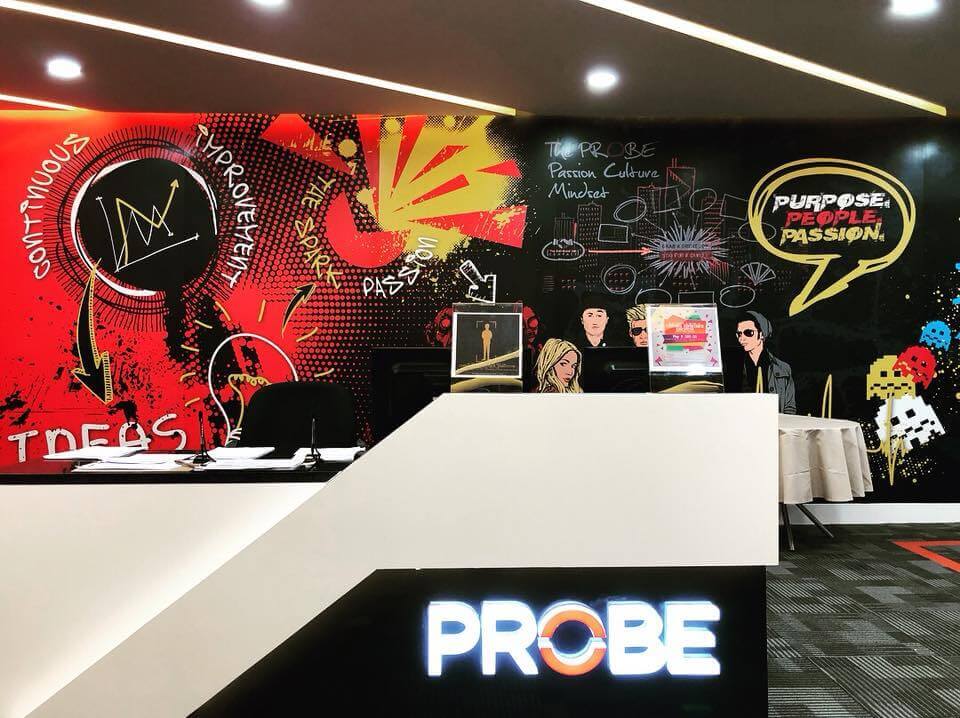
MicroSourcing is a subsidiary of Probe Group, the Australian customer experience group, and is backed by KKR, which acquired a majority stake in Probe CX in 2021. That ownership places MicroSourcing inside a larger, private equity-backed CX platform with Australian roots, which explains its strong Australian client base and its role as the group's offshore staffing arm.
The firm's positioning sits between a staffing agency and a full-service BPO. Its clients choose and manage their own staff while MicroSourcing runs the operating environment, which appeals to small and mid-sized companies that want offshore cost and control at the same time. The company says 60% of its clients started small and later scaled their teams, the central evidence for its land-and-expand model.
Services & Capabilities
MicroSourcing sells offshore and nearshore teams on a spectrum of engagement models, from individual role placements to dedicated teams and managed operations. Its website frames these as build-to-scale solutions tailored to a client's organisational maturity, speed and staffing requirements.
Service lines: The platform records its service lines as back-office data entry, HR and recruitment, healthcare services, insurance services, and supply chain and logistics. Current job postings add customer service, inbound sales, accounts receivable, banking operations, motor insurance support and complaints triage, which shows the breadth of functions placed with client teams.
Global capability centres: The company also offers to help clients establish a global capability centre (GCC) in Colombia or the Philippines. This extends MicroSourcing from seat-based staffing into larger dedicated operations owned or controlled by the client, the segment in which offshore providers compete with consultancies and specialist GCC builders.
Compliance: MicroSourcing states ISO 27001 information security certification and ISO 9001 quality management certification, and describes itself as HIPAA and PCI-DSS compliant. The platform's certification record lists HIPAA, ISO 27001, ISO 9001 and PCI-DSS. Those credentials support its work in healthcare, insurance and payments, where clients need documented controls over data and processes before moving work offshore.
Engagement model: The defining feature is client control. A testimonial from Connective's group legal counsel singles out the amount of control the client had over staff selection, and EagleView Technologies' senior director of operations cites the direct control and freedom to implement processes. That control is what distinguishes MicroSourcing from managed BPO providers that own the process end to end. The trade-off is that clients carry more of the management burden, and the provider earns less from process redesign or outcome-based pricing.
Scale-up path: The model is built for incremental growth. With 60% of clients beginning small and scaling, a typical relationship starts with a handful of seats and expands as the client gains confidence. That makes client retention and expansion the main growth engine, and makes the quality of recruitment central to its proposition.
Client Base & Market Position
Named clients: MicroSourcing's website names clients in testimonials. EagleView Technologies, the US aerial imagery and property data company, is represented by its senior director of operations. Total Tools, the Australian tool retailer, is represented by its general manager of marketing, who says partnering with MicroSourcing makes his life easier. Connective, the Australian mortgage aggregation group, is represented by its group legal counsel. The mix of US and Australian names matches the company's two main source markets.
Client numbers: The company reports more than 1,000 clients and over 1,000 client success stories. Outsource Accelerator's directory profile describes an earlier stage with over 700+ active clients, and an older passage of the same profile cites 250 active clients and 4,500 employees. Read together, the figures show a business that has grown its client count several times over while keeping a model built on many relatively small accounts.
Client profile: The 60% of clients that started small and scaled is the clearest description of its customer base: small and mid-sized businesses, often founder-led or in growth phases, that want offshore capacity without handing over process ownership. That base spreads concentration risk across many accounts, but it also exposes the firm to small-business budget cycles and to competition from other Philippine staffing providers selling the same model.
Market position: MicroSourcing competes with Philippine offshore staffing firms on one side and with full-service BPOs such as Foundever, iQor and StarTek on the other, the last three being the firms from which it has recently hired senior staff. Its differentiation rests on its long operating record since 2006, its compliance credentials, its group backing, and since 2025 a nearshore option in Colombia that its Philippine-only competitors cannot offer to North American clients.
Recognition: Its directory profile notes that MicroSourcing has earned the Great Place to Work certification for three consecutive fiscal years, a credential that matters in a model where clients are effectively hiring through MicroSourcing's employer brand.
Delivery Infrastructure & Operations
Footprint: MicroSourcing operates 13 service delivery locations across the Philippines and Colombia. Its locations page lists Philippine sites in the Bay Area of Pasay, Cagayan de Oro, Cebu, Eastwood, Ortigas, Bonifacio Global City and Clark, and its Colombian operation in Bogotá. Its corporate presence spans six global locations, which the page lists as Singapore, Hong Kong, Australia, the United States, the Philippines and Colombia. The platform records delivery locations in Australia, Canada, Colombia, the Philippines and the United States.
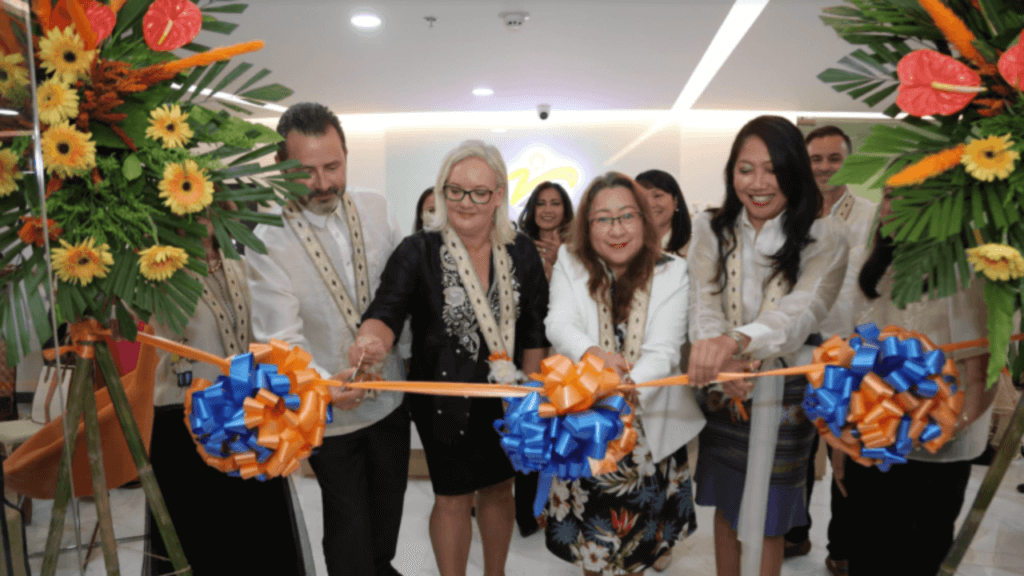
Philippine expansion: Growth in the Philippines has moved beyond Metro Manila. A groundbreaking ceremony in February 2026 signalled a MicroSourcing expansion in Clark alongside the relocation of Beepo, and in July 2026 MicroSourcing and Beepo opened a new service delivery centre in Clark. Clark and Cagayan de Oro give it lower-cost provincial sites and access to labour pools outside the capital, where competition for BPO staff is most intense.
Colombia: In 2025 MicroSourcing expanded into Colombia, its first nearshore delivery hub. It launched a Bogotá service centre in November 2025, and in August 2026 inaugurated a Bogotá delivery center with 230+ production seats. Its Colombia operation had more than 120 professionals supporting clients in North America at that point. The company cites Colombia's UTC-5 time zone and a network of more than 200 universities as advantages.
The Colombian move matters strategically. It gives North American clients same-hours delivery that the Philippines cannot match, and it offers clients a second geography for continuity. The scale is still small relative to the Philippine base, so the Bogotá centre is best read as an option the company is building rather than a second delivery engine.
Hiring: The platform tracks 137 open roles. Recent postings, all from October 2026, are in the Philippines: customer service agents and inbound sales representatives in Parañaque, a motor insurance support specialist and an account manager in Pasay, a senior banking officer and a measuring technician in Quezon City, a real-time analyst in Taguig, a Zendesk solution architect in Manila and an onsite day-shift customer service representative in Cagayan de Oro. The spread across banking, insurance, technical and support roles reflects the range of client functions placed with MicroSourcing teams.
Working model: Its work-from-home framework is certified to ISO 27001 and ISO 9001, so the company can offer hybrid arrangements under the same controls as its offices.
Ownership, Financials & Scale
Ownership: MicroSourcing is a subsidiary of Probe Group. The company describes itself as a proudly owned subsidiary of Probe Group, and Outsource Accelerator's directory profile states that it is 100% owned by Probe Group. The platform records Probe CX as its parent company and KKR, via Probe Group, as its private equity owner. MicroSourcing's own website describes it as backed by global investment firm KKR.
KKR and Probe CX: In October 2021 Probe CX announced that KKR would acquire a majority stake in Probe CX alongside existing management, an investment made from KKR's Asian Fund IV. At the time Probe CX had more than 600 clients and over 18,000 staff in 33 offices across the globe. Probe CX was founded by co-chairman Rodney Kagan in 1979. In March 2025 Probe Group announced the acquisition of Innovior, an Australian digital CX firm founded in 2016 with over 150 team members, and said MicroSourcing's own operations would not be affected.
The structure has two implications. First, MicroSourcing benefits from a group with Australian client relationships and the capital to fund new sites such as Bogotá and Clark. Second, its strategy is set within a private equity holding period, so growth and margin targets are shaped by the owner's plans for Probe Group as a whole.
Financials: No filed or company-published revenue figure was found during research.
Scale: The company reports more than 10,000 professionals and more than 1,000 clients. Earlier platform records put the workforce at 9,000, and Outsource Accelerator's directory profile cites 9,000+ staff.
People, Leadership & Culture
Leadership: Haidee Enriquez is CEO of MicroSourcing Group. Her directory profile notes that she received the 2023 Asia CEO Woman Leader of the Year award. In July 2026 she argued publicly that AI would boost demand for Filipino talent, a position that frames AI as a complement to offshore staffing rather than a threat to it.
Executive team: The company's leadership page names Zameer Ahmed as Chief Financial Officer, Anna Cagaoan as Chief People Officer, Mikey Dela Peña as Country Leader for the Philippines and Jose Vasquez as Country Leader for Colombia. Sean Baker leads sales and client solutions, Michael De Asa technology, Kris Lynne Tinaza talent acquisition, John Joenelle Nudo legal, regulatory compliance and ESG, and Katherine Sy marketing and communications. Fatima Tigas-Cariño is Chief of Staff and Director of Growth and Enablement.
The structure separates country leadership for the Philippines and Colombia, which shows Colombia being run as a distinct operation rather than as a satellite of Manila. The presence of a dedicated talent acquisition vice president and a chief people officer reflects a model in which recruitment quality is the product.
Founding: Philip Kooijman, a Dutch business strategist and information technology professional, established the firm in 2006, according to its directory profile.
Talent movement: Over the past 24 months the platform recorded 4 senior arrivals at MicroSourcing, from StarTek, Foundever and iQor. Hiring senior staff from full-service BPOs brings contact-centre and managed-service experience into a business that has grown from staffing towards managed operations and GCCs.
Culture: MicroSourcing has earned the Great Place to Work certification for three consecutive fiscal years, according to its directory profile. Employer reputation is central to its proposition, because clients rely on MicroSourcing's ability to attract and retain the staff they select.
Technology & Innovation
MicroSourcing's technology proposition centres on secure infrastructure for client-directed teams rather than proprietary software. The company describes ISO-certified systems, secure infrastructure and compliance frameworks, and its work-from-home framework is certified to ISO 27001 and ISO 9001, which allows it to extend its controls to hybrid staff.
AI stance: In July 2026 CEO Haidee Enriquez said AI would boost demand for Filipino talent. The argument matters for a staffing provider whose roles include data entry, customer service and back-office processing, all functions exposed to automation. MicroSourcing's response is to position its teams as the people who operate and supervise AI-enabled processes rather than to sell automation itself.
Platform skills: Current postings show technology skills being placed alongside service roles, including a Zendesk solution architect in Manila and a real-time analyst in Taguig. These roles indicate that clients are using MicroSourcing teams to run customer service platforms and workforce management, not only to fill agent seats.
Group capability: Probe Group's acquisition of Innovior in March 2025 added a digital CX transformation business to the group, which gives MicroSourcing access to technology and transformation capability it does not sell on its own. How far that capability reaches MicroSourcing's small and mid-sized clients is not yet visible in its public materials.
Strategic Assessment
Strengths
- Client-controlled model: Clients choose and manage their own staff, a proposition backed by testimonials from EagleView Technologies, Total Tools and Connective.
- Scale and track record: More than 10,000 professionals, more than 1,000 clients and operations since 2006.
- Compliance credentials: ISO 27001, ISO 9001, HIPAA and PCI-DSS support healthcare, insurance and payments work.
- Group backing: Ownership by Probe Group, backed by KKR, provides capital for new sites and links to Australian clients.
Risks and Vulnerabilities
- Commoditised staffing segment: Many Philippine providers sell the same seat-based staffing model, limiting pricing power.
- Automation exposure: Data entry, customer service and back-office roles are exposed to AI substitution, which its CEO is publicly addressing.
- Owner timetable: Strategy sits within a private equity holding period for Probe Group.
- Early-stage nearshore: The Colombian operation remains small relative to the Philippine base.
Opportunities
- Nearshore for North America: Bogotá offers same-hours delivery to US and Canadian clients.
- Global capability centres: Its GCC offer moves it into larger, longer-term dedicated operations.
- Provincial expansion: Clark and Cagayan de Oro give access to labour pools beyond Metro Manila.
- Senior hires from BPOs: Arrivals from StarTek, Foundever and iQor strengthen its managed-service capability.