CoDev is a US-led offshore staffing and outsourcing company that builds long-term teams of Philippine engineers, marketers and operations staff for client companies, mainly technology firms. It positions itself against freelance marketplaces with the line that others are platforms while it is a partner, and it offers teams across development, operations and go-to-market work.
Services & Capabilities
CoDev sells four engagement models that move from staff augmentation towards outsourced delivery, rather than a list of process services.
- Individual Experts: skilled professionals placed in mid- to long-term roles who work inside the client's team under the client's direction.
- Dedicated Teams: a team of experts assembled for a client's projects and objectives.
- CoTeams: a shared model in which the client partners with CoDev for both strategy and delivery.
- Managed Service: the client hands off entire initiatives for turnkey delivery.
Functional coverage: The work spans software delivery, operations and go-to-market. The platform record lists Digital Marketing, HR & Recruitment, IT Development, Sales & Lead Generation and outbound voice among its service lines. In software, CoDev says its developers cover Python, Java, JavaScript, PHP, Ruby, C# and .NET, plus AI and machine learning work such as NLP applications and chatbots, computer vision and predictive analytics, and cloud migration and CI/CD pipelines.
Commercial promises: The software delivery page says most engineers are deployed in under 30 days and that clients typically reduce development costs by 30 to 50%. The company also offers a 30-Day Promise and asks clients for 30 days' notice to end an engagement. Short notice periods and fast deployment lower the risk for a first-time offshore buyer, but they also mean revenue can leave quickly if a client cuts back.
Positioning: The ladder of models is the strategic point. Individual placements compete on price with freelance platforms and other Philippine staffing firms; CoTeams and Managed Service move CoDev towards accountable outsourcing, where margins and switching costs are higher. Its vetting claim supports that move: it says only 30% of candidates pass its vetting and 92% of clients accept their first introduction.
Client Base & Market Position
Client profile: The platform record lists Technology & SaaS and Telecommunications as its verticals. At the time of the rename the company described its purpose as enabling small-to-medium-sized businesses to compete for talent with larger, more established firms, and its customers are mainly software and internet businesses that need engineers or support staff without building their own offshore entity.
Named clients: The homepage quotes managers from three clients: a Department Manager at Beamable said CoDev had been excellent to work with, a Technical Engineering Manager at Nexio found the quality of its developers impressive, and an Engineering Manager at GoReact called its people good communicators. Allan Martin, Founder and CTO of ABMartin, said CoDev quickly became an extension of his team. Its success stories name Promevo, which hit record-high renewal rates with CoDev workflow support.
Outcomes it cites: A leading marketing platform cut chat response times by 84% with dedicated support, and a SaaS provider boosted retention to 100% and cut costs by $196K. These results come from support and customer success work, not only engineering, which shows the operations side of the business is a meaningful part of its client base.
Market position: CoDev competes with other US-managed Philippine staffing firms such as Penbrothers, Cloudstaff and Remote Staff, and with freelance and developer marketplaces such as Upwork and Toptal. Its case rests on managed teams with lower turnover, US account management and secure offices. The client names it publishes are smaller software firms, which fits its focus on growth-stage technology companies but leaves it without large enterprise references.
Delivery Infrastructure & Operations
Philippine footprint: CoDev delivers from the Philippines, with US-based sales and management. The careers page refers to sites in Cebu, Bacolod, Davao and Makati, and the platform record lists the Philippines and the United States as delivery locations. At the time of the rename, operations were in Cebu and Dumaguete and the company employed over 200 people there. The move into Bacolod, Davao and Makati shows a deliberate spread across secondary cities and Metro Manila, which widens its recruiting pool and reduces reliance on a single site.
Security: The company says its offices are SOC 2-certified, with secure workstations and 24/7 IT support, and that it provides ISO-certified secure facilities with physical access controls. The platform record lists SOC 2. For software clients giving offshore developers access to code and production systems, office-based work under audited controls is a key difference from freelancers working from home.
Talent pipeline: CoDev says it draws from the top 5% of engineering talent in the Philippines and that 95% of teams reach full productivity within 60 days. Its engineers average 48+ months with customers, which supports its retention claim and matters for buyers because turnover is the main hidden cost of offshore development.
Work model and hiring: Benefits include HMO coverage, annual increases, bonuses, a hybrid work setup and travel allowances. The platform records 11 active job postings at CoDev. The platform rates its hiring velocity as Low. A hybrid setup helps recruitment but must be balanced against the secure-office promise made to clients.
Ownership, Financials & Scale
Ownership: CoDev is privately held. No investor, parent company or acquisition was identified during research. The company is headquartered in Lehi, Utah, where it keeps its executive and sales offices.
Financials: No filed or company-published revenue figure was found during research.
Scale over time: The rename announcement said the company employed over 200 people in Cebu and Dumaguete, and earlier records put the workforce at 320. The company now refers to sites in Cebu, Bacolod, Davao and Makati. Together these points show steady growth in headcount and in the number of Philippine sites since the Zylun Staffing period, while the company remains small next to large Philippine BPO operators.
Implications: A privately held firm of this size can stay focused on a narrow market, US technology companies, and keep pricing flexible for small clients. The constraint is reach: building enterprise references, new countries or proprietary AI tools has to be funded from operations.
People, Leadership & Culture
Leadership: The platform's leadership record lists Landon Essig as CEO and Brent Wilde as Chief Financial Officer. When the company changed its name from Zylun Staffing, Tony Morrison was its president and CEO. The company's own website names no executives, so its current leadership cannot be confirmed from its pages.
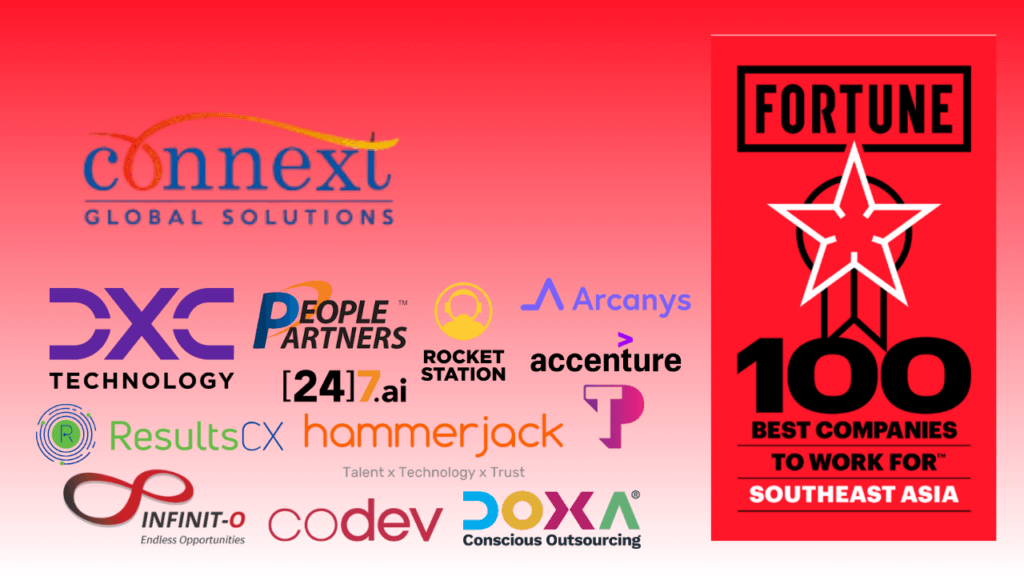
Workplace recognition: CoDev was named to the inaugural Fortune 100 Best Companies to Work For Southeast Asia 2025 list, ranking #95. The list is based on more than 550,000 employee survey responses, and 92% of CoDev employees said it is a great place to work, compared with 65% at a typical company in the Philippines. Its careers page also cites a #26 ranking on a list by Great Place to Work. For a staffing firm, these results matter commercially, because employee satisfaction drives the retention that CoDev sells to clients.
Retention practices: The company says experienced coaches meet employees in bi-weekly one-on-ones and that it is committed to long-term careers, not short-term placements. It also offers HMO coverage, annual increases, bonuses and a hybrid work setup. Regular coaching from CoDev, separate from day-to-day direction by the client, is how it tries to keep placed staff engaged when they work inside another company's team.
Talent claims: It reports that its teams stay 2.5x longer than the industry average and that its engineers average 48+ months with customers. These are company figures rather than audited data, but the Fortune survey offers independent support for the workplace culture behind them.
Technology & Innovation
AI-enabled staffing: CoDev's technology offer is people rather than software products. Its software delivery page markets AI-enabled offshore software engineers, and its go-to-market pitch is to scale a client's sales motion with AI-powered offshore teams. No proprietary platform was identified on its website; the value lies in placing developers who use current AI coding and automation tools inside client teams.
Technical breadth: The developer pool covers mainstream languages such as Python, Java, JavaScript, PHP, Ruby, C# and .NET, AI and machine learning work including NLP applications and chatbots, computer vision, image recognition and predictive analytics, and cloud migration, CI/CD pipelines and cloud-native development. That breadth lets it staff most of the needs of a growth-stage software company.
Implication: AI coding tools change the economics of offshore development, because clients may need fewer developers for the same output. Selling engineers who are already skilled in AI tools is CoDev's response, shifting the value proposition from cheaper hours to more productive ones. The risk is that, without its own platform, the advantage depends on training and retaining staff faster than competitors.
Strategic Assessment
Strengths
- Retention record: Teams that stay 2.5x longer than the industry average and engineers averaging 48+ months with customers address the main weakness of offshore staffing.
- Workplace recognition: A #95 place on the Fortune 100 Best Companies to Work For Southeast Asia 2025 list, with 92% of employees calling it a great place to work, supports its retention claims.
- Secure delivery: SOC 2-certified offices and ISO-certified facilities give software clients more control than freelance alternatives.
- Flexible models: Four engagement models let clients move from single hires to managed services with the same vendor.
Risks and Vulnerabilities
- Easy exits: A 30-day notice period lowers the barrier for clients to leave as well as to join.
- Small-client base: Named clients are smaller software firms, with no large enterprise references on its site.
- AI pressure on headcount: AI coding tools can reduce the number of developers clients need, the core of its revenue.
- Leadership visibility: Its website names no executives, which makes leadership continuity hard for buyers to assess.
Opportunities
- Managed services: CoTeams and Managed Service can move clients from staff augmentation to higher-value accountable delivery.
- AI-enabled teams: Engineers trained on AI tools and AI/ML project skills can lift the value per placement.
- Operations work: Support results such as an 84% cut in chat response times show room to grow beyond engineering.