
Human-centric Healthcare Staffing with Michael Yablonowitz of Snapscale

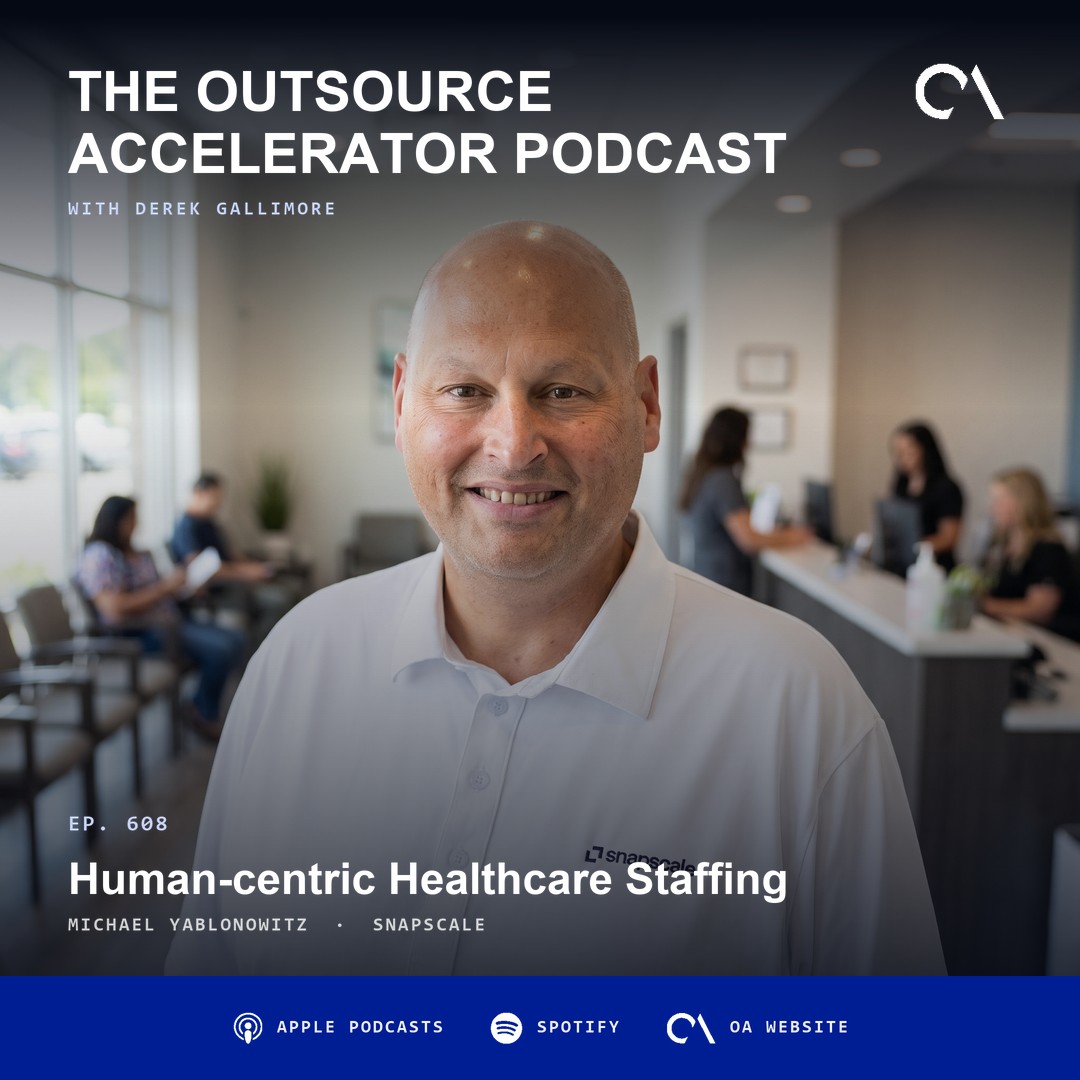
Michael Yablonowitz first turned to outsourcing in the early 2000s, when a company called GoDaddy started offering free 24/7 tech support and his small web hosting firm had to keep up.
As president and CEO of Snapscale, he now gives small and medium-sized medical practices their time back with dedicated offshore staff and technology. He joins the Outsource Accelerator Podcast to talk through how that model works for busy clinics.
The conversation covers why the foundation matters more than the hire, how HIPAA compliance works for remote staff, and why he believes you can’t take the human out of healthcare.
Inside Snapscale
Michael describes a business built to free doctors from the work they never trained for.
“Snapscale is a healthcare solutions company. We pretty much just give practice owners their time back with a combination of providing outsourced dedicated staffing and technology into one package for these small to medium-sized practices.”
Most of that work, he says, has little to do with medicine itself.
“The medical part is only a small piece of it. It’s really how you answer the phone, how you… interact with the doctors, patients, your follow-through.”
A lesson from web hosting
His own start in outsourcing came when he needed round-the-clock support he couldn’t afford locally. A friend gave him advice he still repeats.
“Make sure this foundation is sound, because if the foundation is sound… then you’re gonna have a great augmentation to your staff. If you wing it and you try to outsource your problems, you might as well close the doors the next day because it’s gonna be a disaster.”
He built an offshore front line for basic tickets and calls, and his local team moved up rather than out.
“The people that were there in my office, they still had jobs. In fact, they got promoted. They weren’t tier one. They were tier two or tier three.”
Compliance and buy-in come first
When he moved into healthcare, Michael started with the one thing he knew clients could not do without.
“The first thing you have to do is you have to help these doctors, your clients, be compliant.”
The other half of the foundation is the clinic’s own mindset, and he treats the sales process more like consulting.
“If the clinician or the doctor, forget about doctor and clinician, any company isn’t ready or doesn’t have the right mindset to, quote-unquote, ‘outsource,’ it’s gonna be a disaster from day one.”
That includes the people already in the office.
“If they don’t tell Sally or Jimmy in the office that they’re doing this, it creates a huge political issue that we have to manage. So everybody has to be on board and on base for this to work.”
A friendly face on a screen
One of Snapscale’s newer services, Kiosk Plus, puts an offshore team member on an iPad inside the clinic.
“The people walk into the clinics, they are greeted by a nice friendly face, and they put in, they fill out their paperwork, they pay their copay, and they move on.”
Michael is candid that on-camera work raises the bar for managing staff.
“When you start having to staff for people on camera, it’s a whole, like, level of diligence because it’s, you know, how are they presenting themselves?”
He credits Philippine staff with making it work.
“The hospitality is fantastic. These people are amazing. They’re patient.”
HIPAA compliance at home
COVID pushed Snapscale to build a compliant model for remote workers. Michael sees each home audit as more than a box to tick.
“It’s not just a, a compliance visit, it’s a combination of culture and compliance.”
Most home-based staff also live close to the office, so a power cut doesn’t leave a clinic short.
“We wanna minimize the downtime for our clients as possible.”
Private equity and the independent clinic
Many US clinics are being bought up by private equity funds. Michael sees plenty of doctors heading the other way.
“A lot of our clients… have left the big practices because they just couldn’t deal with the bureaucracy. They want to get back to practicing medicine.”
Still, he doesn’t cast the funds as villains.
“I don’t necessarily think they’re the devil. I just think that they don’t know what they don’t know.”
Cautious optimism on AI
Michael says his doctor clients are cautiously optimistic about AI, and his own company’s tagline sets the tone.
“You can’t take the human out of healthcare.”
He expects fewer people in some roles, but not none.
“There will be the need for less humans. But I still feel that there’s gonna be humans that are gonna be needed and there’s definitely gonna be some form of triage that’s gonna be needed from humans.”
For now, Snapscale is putting its R&D into verification of benefits and prior authorization, where filtering claims through the system first saves staff from calling on every one.
For Michael, offshore staffing works best when it is built on a sound foundation, kept compliant, and used to give doctors their time back for patients.
To learn more about Snapscale, visit snapscale.com or reach Michael Yablonowitz directly at [email protected]. And if you would like to learn more about what we do in the outsourcing space, send us an email at [email protected].






 Independent






